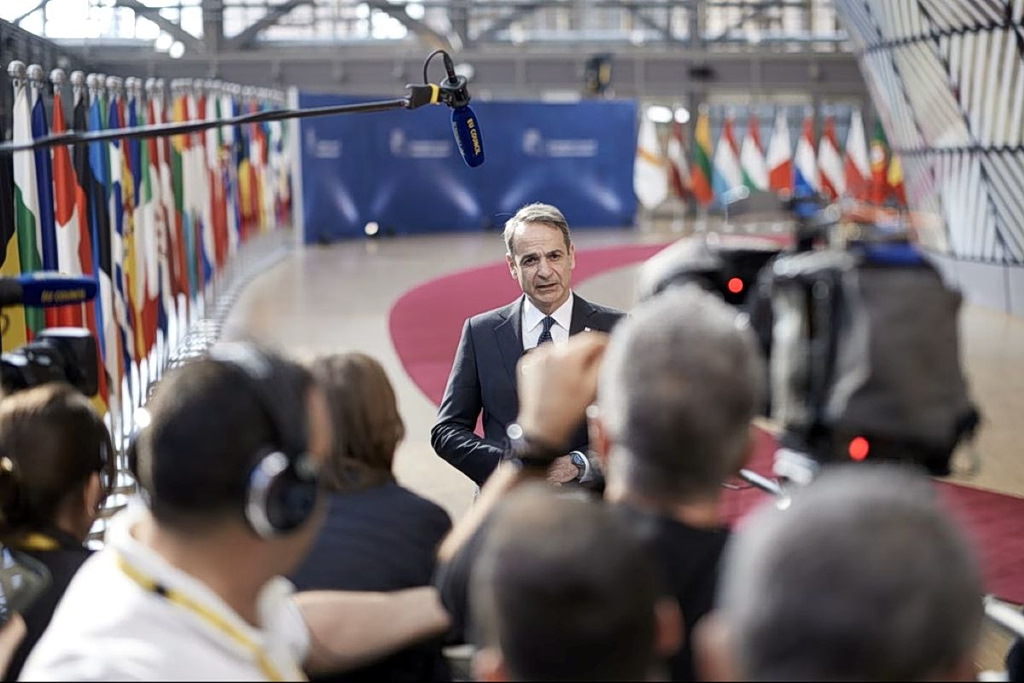
At a high-level United Nations Security Council session on the Protection of Civilians in Armed Conflict, Greek Foreign Minister Giorgos Gerapetritis delivered a joint statement on behalf of 80 UN member states. The statement marked a rare moment of consensus amid deepening global conflict, and came as the humanitarian crisis in Gaza escalates dramatically.
Gerapetritis, who chaired the session, underscored that the initiative stemmed from the dire conditions in Gaza, where the Palestinian population faces the brink of famine following a prolonged blockade on humanitarian aid.
“Nearly 2,500 years ago, Thucydides wrote that ‘war is a violent teacher’—words that still resonate,” Gerapetritis said, noting today’s global turmoil rivals that of WWII.
With over 50,000 Palestinians killed and Gaza cut off from aid for more than two months, he urged adherence to international humanitarian law, calling the Geneva Conventions “non-negotiable.” “Compliance is imperative,” he added.
Highlighting the risks faced by aid workers, Gerapetritis noted that 2024 has already seen the highest recorded death toll among humanitarian personnel, the vast majority of whom lost their lives in Gaza.
The Greek foreign minister stressed that aid delivery must be timely, safe, and guided by humanity, neutrality, impartiality, and independence. “Delays jeopardize the rights of future generations,” he warned, urging closer coordination among the UN, international community, and NGOs.
Turning to the issue of missing persons, Gerapetritis called for the full implementation of Resolution 2474, reiterating support for the UN’s work and the establishment of the Committee on Missing Persons.
He also highlighted the indispensable leadership of women during crises and stressed the importance of protecting them from gender-based violence, including women journalists.
On journalist safety, Gerapetritis was clear: they must work “with safety and dignity.” Marking the tenth anniversary of UN Resolution 2222, he cited a sharp rise in 2024 casualties among aid workers and journalists, over 16,000 new missing persons, and 52 million children out of school in conflict zones.
“Behind these numbers are human lives and the rights of generations to come,” he said.
He also highlighted the dire conditions faced by diplomatic staff, citing a recent Israeli strike on a foreign delegation in Jenin and underscoring the need to uphold the Vienna Convention. “Attacks or threats of attack are unacceptable,” he stated.
Concluding his speech, he emphasized the need to demand the obvious within the institutional framework of the Security Council: “the immediate, full, and unhindered flow of humanitarian aid to all areas of the Gaza Strip — including food, medicine, and essential supplies — alongside a sustainable ceasefire and the release of all hostages.”
He went on to announce that Greece, in its capacity as President of the Security Council, will use the Council’s monthly meeting on the Middle East, scheduled no later than May 28, to focus on the urgent humanitarian crisis in Gaza.