The two-day conference “Athens: Dialogues on Politics”, held under the theme “The Eastern Mediterranean Is Changing”, opened today in Athens, bringing together leading speakers and policy experts from Greece and abroad.
Organized by To Vima, the Council on International Relations, and the Delphi Economic Forum, the event runs 4–5 December, featuring high-level discussions on politics, security and the economy in Greece and the wider Mediterranean. With its strong roster of participants, the conference underscores Athens’ role as a hub for international political and strategic dialogue.
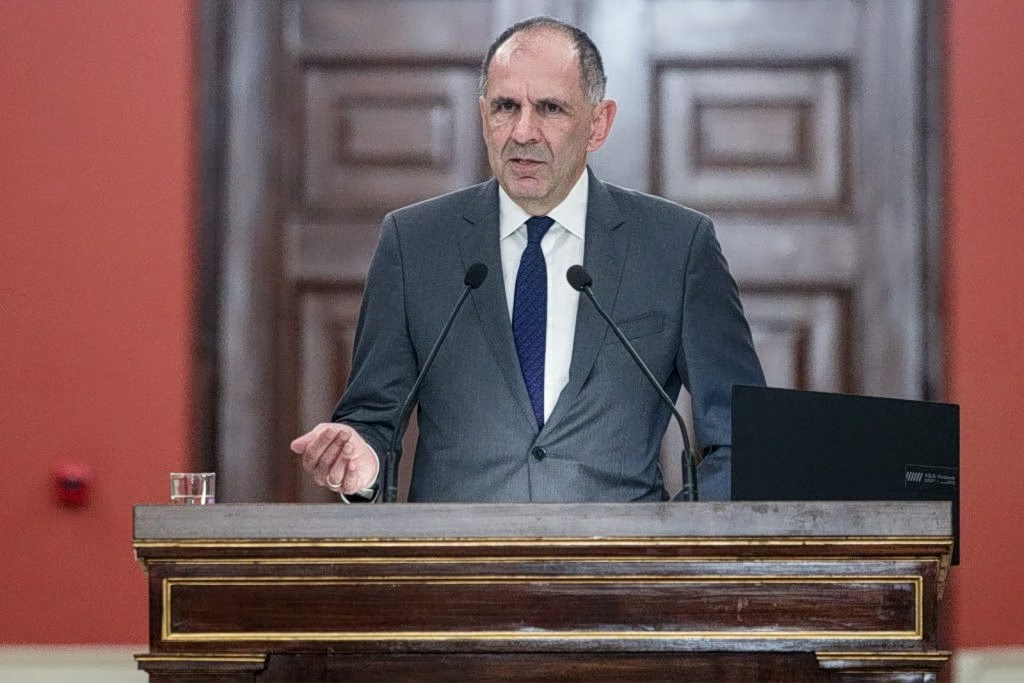
Following opening remarks by Symeon Tsomokos, Founder and President of the Delphi Economic Forum; Yannis Pretenteris, Publisher of To Vima; and Athanasios Platias, President of the Council on International Relations—along with the keynote address by Konstantinos Tassoulas, President of Greece—the conference launched its first panel discussion: “Gaza Peace Plan: Challenges of the Next Day.”

Yannis Pretenteris, Publisher of To Vima; and Konstantinos Tassoulas, President of Greece.
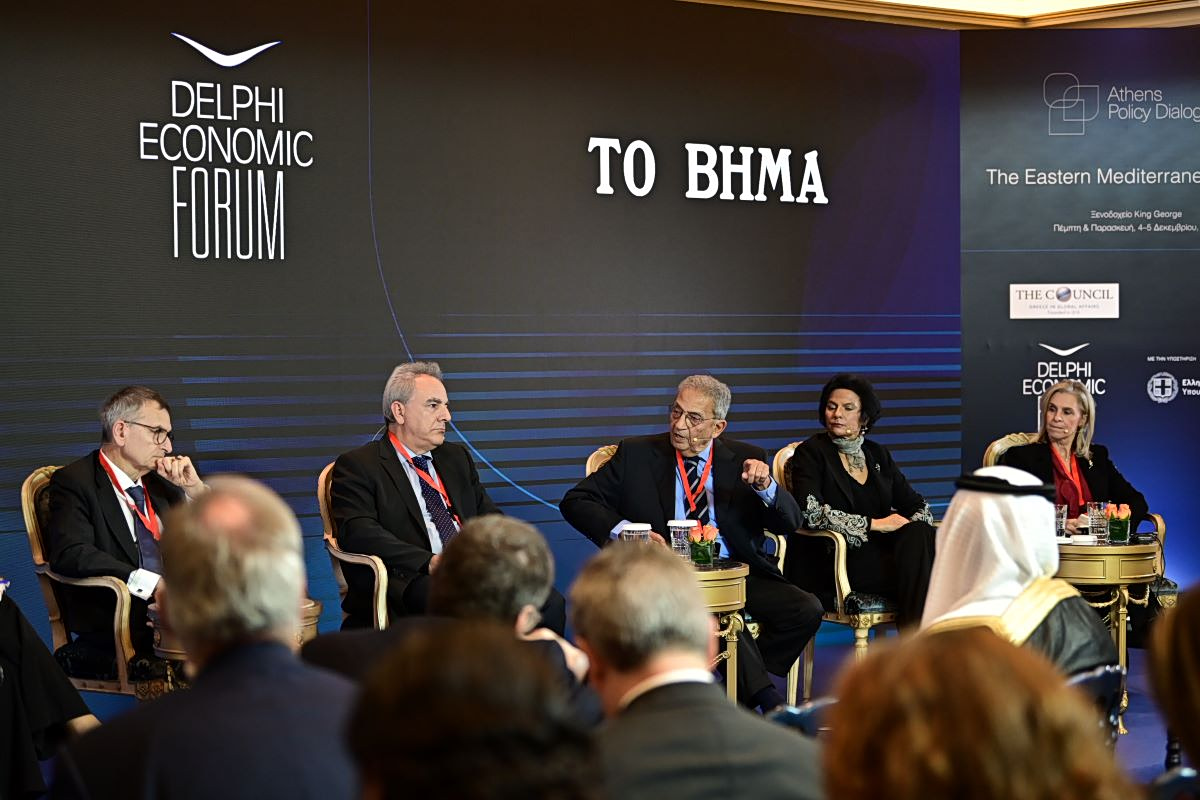
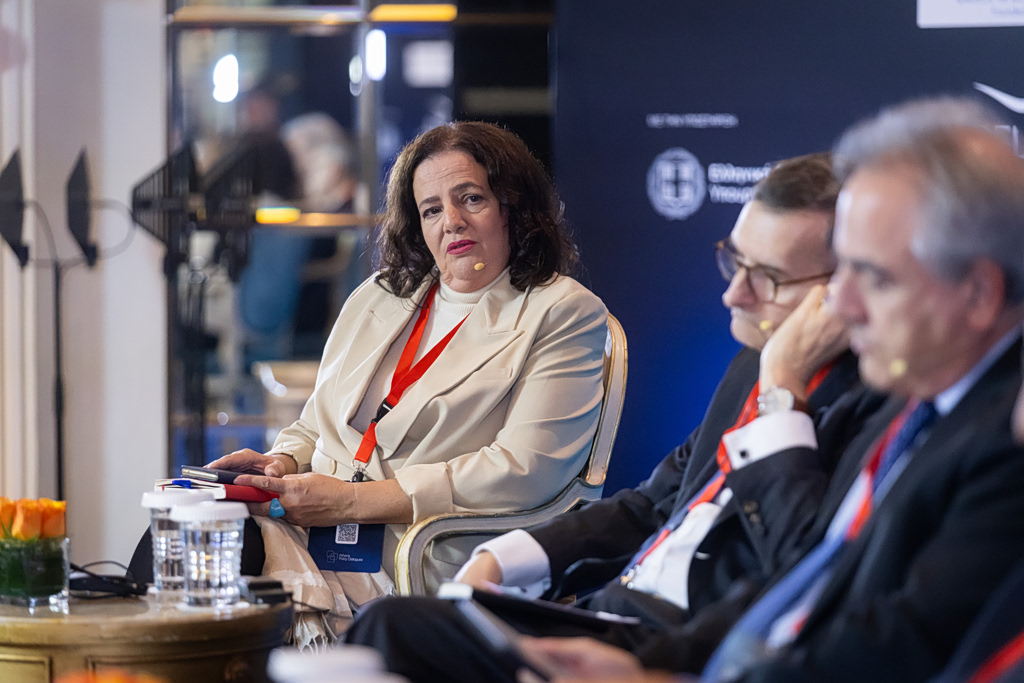
Speakers included Dora Bakoyannis, Member of the Greek Parliament and former Foreign Minister; Amre Moussa, Secretary-General of the Arab League (2001–2011) and Foreign Minister of Egypt (1991–2001); Thanos Dokos, Secretary General for National Security, Hellenic Republic; Volker Perthes, Senior Distinguished Fellow at the German Institute for International and Security Affairs (SWP); Yoel Guzansky of Israel’s Institute for National Security Studies (INSS); and Konstantina Botsiou, Director General of the Council on International Relations and Professor at the University of Piraeus.
The discussion was moderated by Tania Bozaninou, International Affairs Editor at To Vima.
Amre Moussa: “Without a solution to the Palestinian issue, there can be no peace in the Middle East”
Amre Moussa opened by stating:
“The situation in Gaza is part of a broader issue. Security and risks are one part of the problem in the Middle East. It is not easy, but it is feasible. If we want to move toward a better future, we must accept that if the Palestinian issue is not resolved properly, peace in the region will be unattainable.”
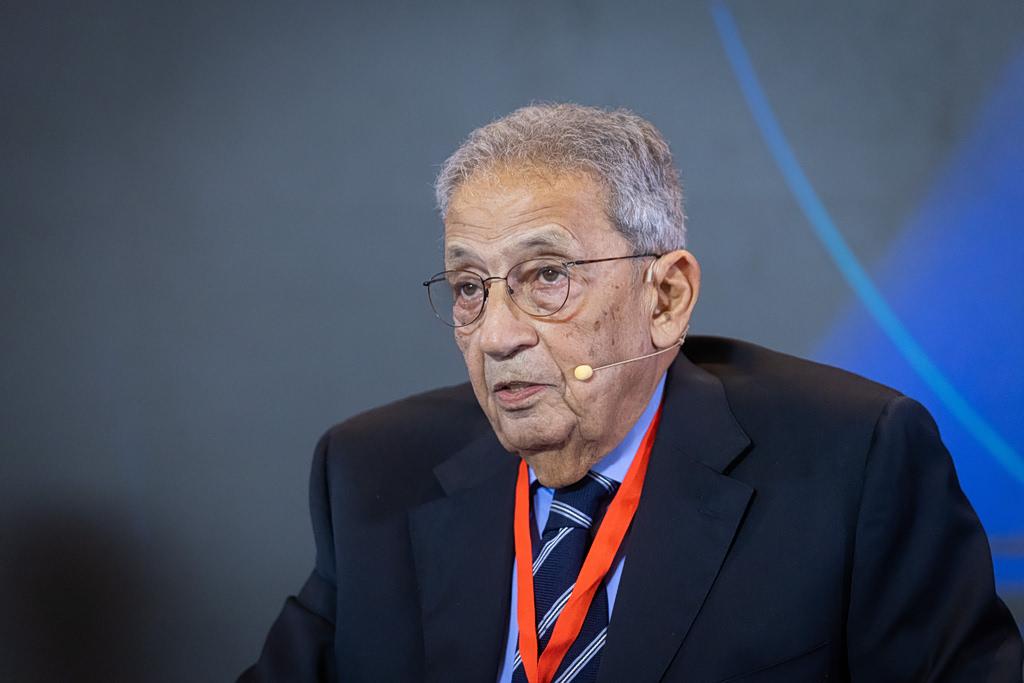
He added:
“There is a ceasefire in Gaza, which is violated daily by Israel. What is the real basis for the next day in Gaza? There are certain points mentioned in Donald Trump’s proposal. There is also the recognition of the Palestinian state, which was referenced last September. It was an important development.”
“We need a viable Palestinian state”
Moussa continued:
“We have a problem that we have not approached correctly. Can we negotiate on the basis of Trump’s 20 points? Yes, I believe so. This document seeks to calm the extreme tendencies that exist on both sides.”
“Another thing we must consider is the future of the Palestinian people. There is no doubt that the only solution is the creation of a viable Palestinian state. The region is almost a single region. So if there is no peace in the Middle East, there will be no peace in the Eastern Mediterranean or in North Africa. This can only happen with peace in Gaza.”
“We cannot want international law to apply in Ukraine but not in the Middle East. What Israel is doing in the West Bank and what it is doing in Gaza will not lead it anywhere. The Palestinians must not forget that they must negotiate.”
Thanos Dokos: “The Palestinians need hope for the future”
Thanos Dokos noted:
“I don’t see many volunteers for governance in Gaza. One prerequisite is, of course, elections, but in both Gaza and the West Bank the Palestinians need hope for the future—a roadmap that leads somewhere. For many years I worked on this solution, the two-state solution. I look at the map and wonder whether this solution is still viable.”
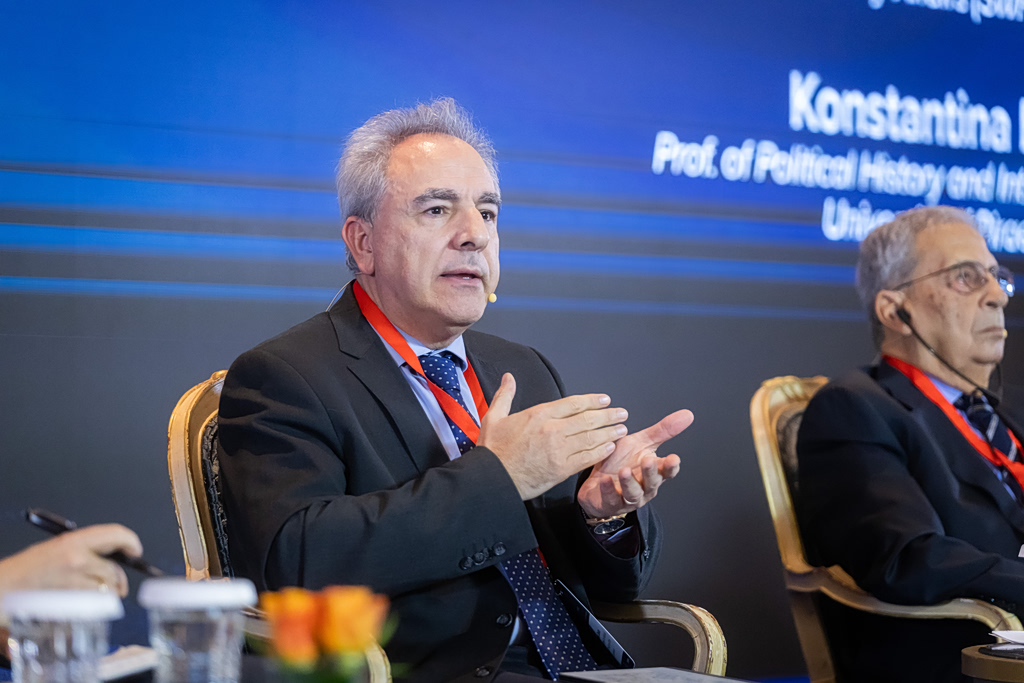
“We need some kind of military force, a security force. I try to think what this force could be. I try to think which country could be acceptable to both sides.”
“I don’t expect Europe to contribute significantly to Gaza’s reconstruction”
He added:
“Europe’s role so far has been discreet. I heard about double standards. It is difficult to disagree. However, at some point Europeans will be called to respond. The eastern flank, Ukraine, absorbs most of our funds. I don’t think anyone should expect significant financial assistance from Europe for Gaza’s reconstruction. That will come from the Arab countries.”
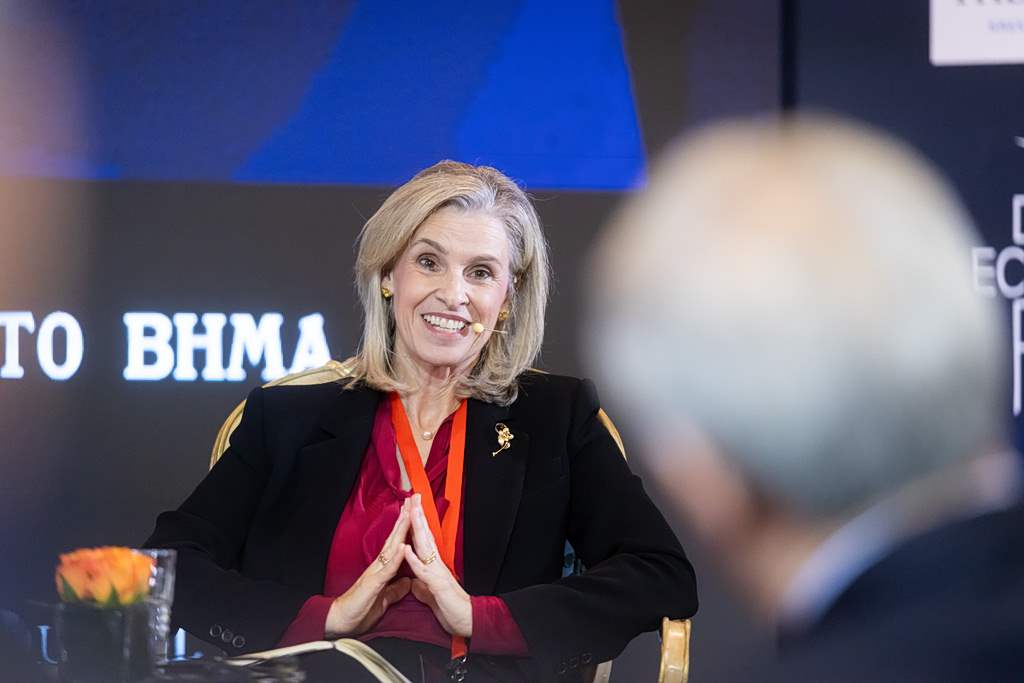
Naomi Bar-Yaacov: “There must be unity in the Arab world”
International negotiator Naomi Bar-Yaacov said:
“The Israeli government said that the opening toward Rafah would take place from one side. Egypt stressed that this must not happen.”
“There is an issue of agreement; it is a matter of justice. Israel continues hostilities. For the Palestinians to have a government, there must be unity in the Arab world on how this will happen. If there is unity, cooperation with the United States will be easier.”
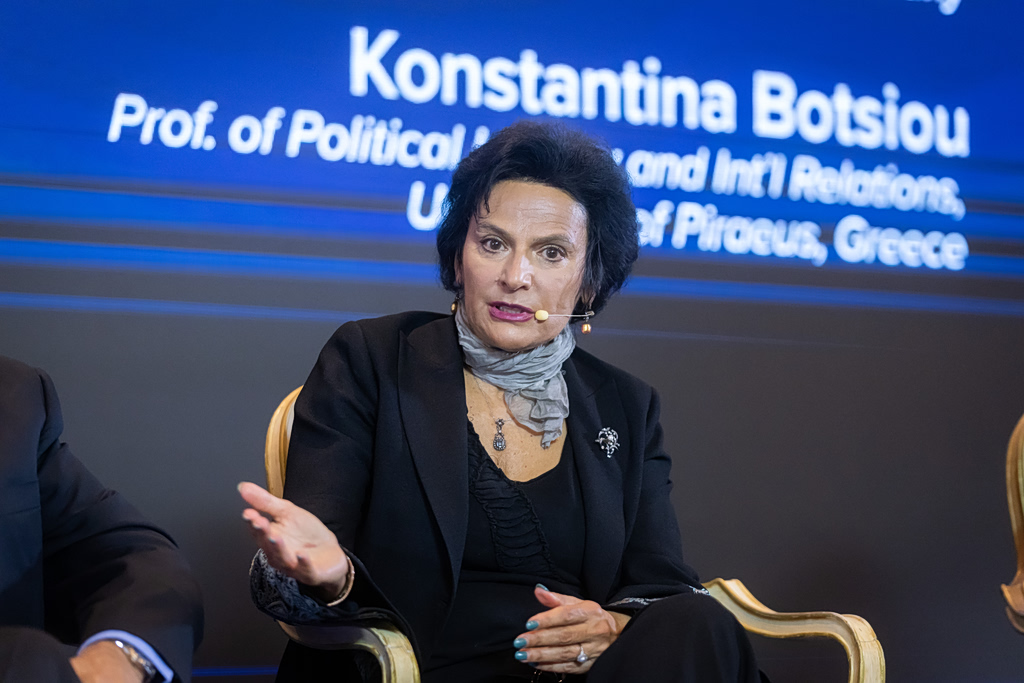
Konstantina Botsiou: “It is important to see Hamas move away from the Palestinians”
Konstantina Botsiou explained:
“What are the security safeguards provided for in Trump’s plan? For two years there will be a stabilization force. We have the removal of conflict hotspots.”
“The fact that the United States struck Iran’s nuclear program is significant. Beyond the Iranian regime, it also ‘hit’ the groups supported by it, such as the Houthis.”
“It is important to see the value the U.S. places on Israel’s rapprochement with Indonesia. Indonesia supports the two-state solution, which excludes Israel. We are seeing many changes in the Eastern Mediterranean.”
“I am optimistic about Trump’s plan. We must think not of the next day but the day after. The next day must definitely include a ceasefire—a substantive ceasefire. It is important to see Hamas move away from the Palestinians to create a landscape on which both could discuss ending hostilities.”
Volker Perthes: “What we considered constants in recent years is changing”
Volker Perthes observed:
“I think we must understand that the Eastern Mediterranean is changing. The pace is rapid. We have a kind of revolution changing what we considered constants in recent years.”
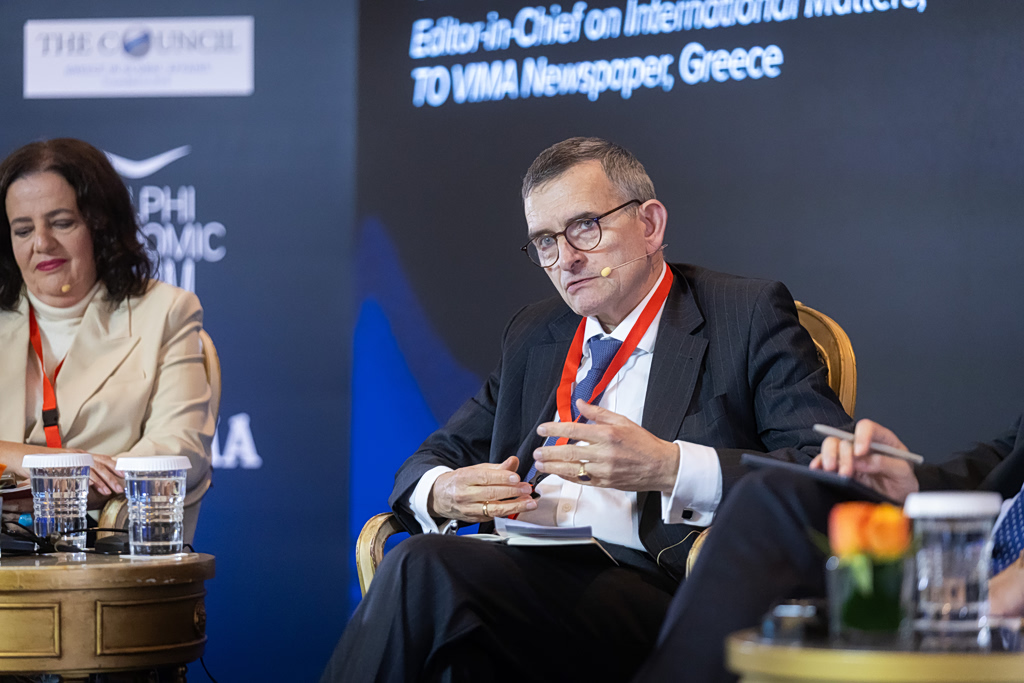
“We must agree that Hezbollah has never faced the political isolation it faces now. Hamas was militarily defeated, though not its ideology. I believe this ideology will not be defeated unless Palestine becomes a state. Even though Hamas was defeated militarily, the Palestinian issue has returned to the forefront.”
“Lebanon has remained close to Greece. For the first time in 30 years, Hezbollah does not have dominance. In Syria, the Assad dynasty collapsed like a house of cards.”
“No one will invest capital in Gaza unless there is security”
Perthes added:
“The leaders of the Arab world are the most important allies of the United States. The business model developing for a future without oil could become the model of the region. It is not based on war and blockade.”
“There is an economic corridor between India and the Middle East with positive elements. But there are prerequisites. No one will invest in these connections without peace. Maritime routes can be organized easily, but who will put their capital in if there is no security? Arab states are putting pressure on President Trump.”
Amre Moussa: “The expulsion of Palestinians from Gaza is a red line”
Moussa stressed:
“All sides have their own red lines. When we talk about the movement of Palestinians from Gaza, we all fear that they are essentially being pushed to leave so that the occupied areas can be cleared by them — for the residents to leave.
Not only Egypt, not only the Arabs, but most countries in the world would disagree with that.”
“Opening the doors for Palestinians to leave Gaza would suit Israel. We must work for a sustainable peace. For Egyptians and Saudis it is difficult to do what Israel wants. It could bring chaos to the Middle East. The expulsion of Palestinians is a red line. It would be a step toward chaos.”
Naomi Bar-Yaacov: “I do not believe they will be expelled from Gaza”
She added:
“In Israel there was an attempt at a coup against the judiciary. Everyone here on the panel said there are rules—rules linked to international law and its application. Yes, the current government would like to see Palestinians outside of Palestine, but I do not believe this will happen.”
Thanos Dokos: “Greece wants to be part of the solution in Gaza”
Dokos noted:
“Sometimes we forget it is our neighborhood. Greece must have a presence. Greece has said it wants to be part of the solution. We are not a superpower, nor do we have the money of the Gulf states. We want to have a presence.”
“I apologize for being the pessimist on the panel, but I see what the capabilities are, and I like the Gulf model. For Trump’s plan to succeed, we need the United States’ attention consistently. I see many things that could distract this attention—for example, the situation in the Pacific.”
Konstantina Botsiou: “Greece is welcome, unlike Turkey”
Botsiou added:
“Different fronts play a role. Also, U.S. guarantees include guarantees under Article 5 of NATO.”
“I do not believe President Trump will rush to win a Nobel Prize. There is immediate political interest for him to succeed in the midterm elections. This is the only plan. Trump’s plan is the only one that exists. The war between Israel and Hamas concerns solely the United States. Europeans are not welcome.”
“Greece is welcome, unlike Turkey. Israel has repeatedly rejected Turkey’s participation. I believe the Arab countries will be key to resolving the problem.”