 Μake us preferred on Google
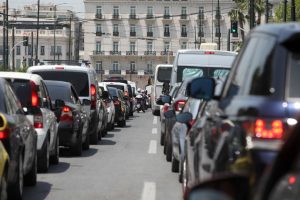
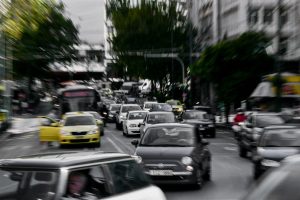
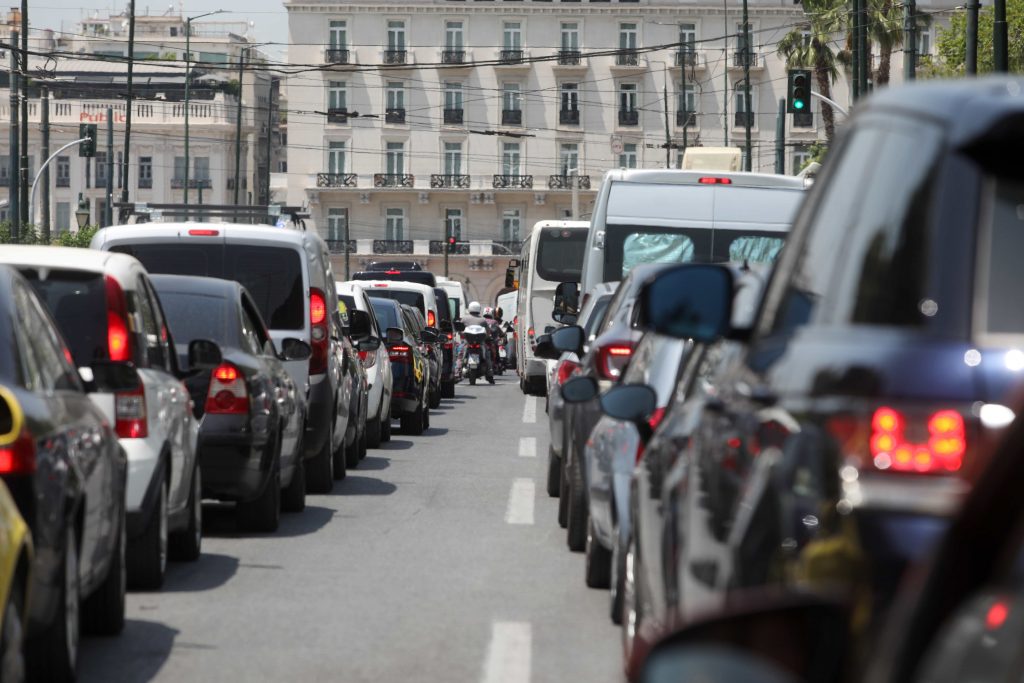
 For months, it appeared that the Greek government was finally taking Athens’ worsening traffic congestion seriously. Yet decisions emerging from a high-level interministerial meeting on Wednesday suggest a far more cautious—some would say lukewarm—approach.
Rather than pursuing structural solutions, the government is opting for short-term, “firefighting” measures—steps designed to ease pressure without opening new fronts in a politically sensitive, pre-election year. The result is a strategy that acknowledges the problem but stops well short of confronting it head-on.
Expert advice sidelined
Transport specialists have long presented clear recommendations, combining immediate interventions with medium- and long-term planning, updated regularly to reflect evolving traffic patterns in Attica—the greater Athens metropolitan area, home to more than four million people.
Even so, despite the urgency of the problem, the government has chosen to keep the issue largely under the radar.
Truck ban on Kifissos Highway put on ice
At Wednesday’s closed-door meeting—chaired by Prime Minister Kyriakos Mitsotakis—no substantive discussion reportedly took place regarding the daktylios, Athens’ long-standing traffic restriction zone.
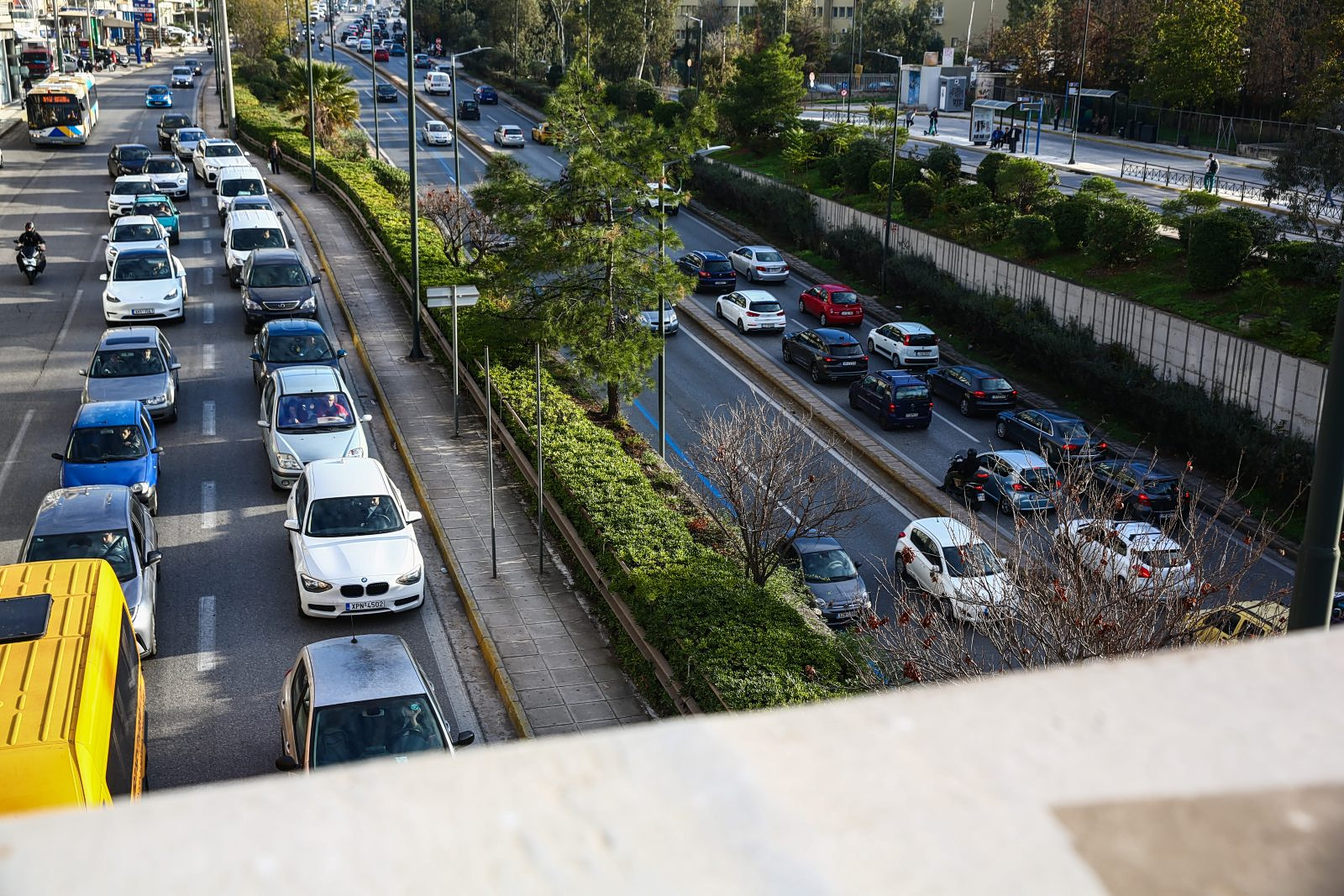
More notably, a proposal by Deputy Transport Minister Konstantinos Kyranakis to ban trucks and other heavy vehicles from using Kifissos Avenue during morning rush hours (7:00–10:00 a.m.) was only partially accepted. Kifissos is Athens’ most critical north–south artery and one of its most congested roads.
Participants ultimately ruled out a full ban on truck traffic, agreeing only in principle that measures should be taken to reduce congestion—without specifying what those measures would be.
Ministers, projects, and competing priorities
According to sources, the proposal met resistance from Development Minister Takis Theodorikakos and Labour Minister Niki Kerameus, who raised concerns related to retail operating hours and broader economic activity.
Infrastructure and Transport Minister Christos Dimas outlined ongoing and planned projects, including three new interchanges, a connection between the western Aigaleo ring road and the national highway, and traffic management upgrades at the Metamorfosi interchange.
Deputy Infrastructure Minister Nikos Tachiaos also presented plans for the Ilioupoli tunnel, which would link Kareas to Elliniko with three lanes in each direction—a long-discussed project aimed at easing congestion in southern Athens.
Why the government backed down
The main reason the truck ban stalled, however, lies outside government offices.
All major chambers of commerce came out strongly against the measure, warning that it would shift costs directly onto the real economy. In a letter to the relevant ministries, the president of the Athens Chamber of Commerce and Industry (EBEA), Yiannis Bratakos, cautioned that such a ban would increase delays, operating costs, and pressure on Athens’ already strained supply chain.
Instead, EBEA proposed six alternative measures designed to improve traffic flow without undermining logistics:
- Mandatory use of the right lane by trucks on Kifissos between 7:00–10:00 a.m.
- Enhanced traffic policing along the Kifissos corridor, with special focus on key entry and exit points such as the Rosignol Bridge, “Three Bridges,” and Acharnon Bridge.
- Allowing truck access to the old Thiva–Elefsina national road as an alternative congestion-relief route.
- Subsidies for businesses to purchase new-technology mini vans and develop organized employee transport schemes from central hubs, reducing private car use.
- Considering an odd–even license plate system for private cars on Kifissos during morning peak hours, without restrictions based on vehicle technology.
- Immediate removal of vehicles involved in accidents, using tow trucks to predefined locations to prevent prolonged traffic paralysis and secondary congestion.
What about Athens’ traffic ring?
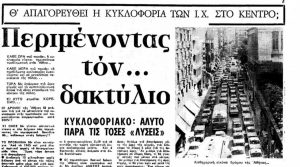
As for possible changes to the daktylios—including the scrapping of the outdated odd–even license plate system, which Deputy Transport Minister Kyranakis himself has described as obsolete—no progress appears imminent.
The measure has been in place for over 40 years, despite traffic experts stressing that such systems should be revised every two to three years to reflect real-world conditions.
It also remains unclear whether authorities will move forward with another long-standing proposal: the creation of a central coordination body to manage traffic across Attica. Regional Governor Nikos Hardalias has repeatedly argued that congestion can only be tackled through a metropolitan-wide approach that transcends individual municipal boundaries.
The measures on the table
The proposals discussed were divided into three categories:
- Immediate measures include reducing—though not banning—truck traffic on Kifissos and improving day-to-day incident management to limit delays.
- Medium-term measures feature the rollout of “smart traffic lights,” already credited with improving flow in Thessaloniki, and under consideration for Athens. The government also pledged a significant increase in public transport service frequency by the end of 2026.
- Long-term plans involve new bypass roads, completion of Metro Line 4, and the expansion of cycling infrastructure.
For now, however, Athens commuters remain stuck in traffic—waiting to see whether caution will once again trump urgency.