Cyprus officially assumed the rotating presidency of the Council of the European Union on Wednesday, marking the second time the island nation has held the role since joining the EU in 2004.
Each EU member state takes on the presidency roughly once every 13 and a half years, coordinating the Council’s work and helping shape the bloc’s legislative agenda. Cyprus will hold the post for six months, with an official opening ceremony scheduled for Jan. 7.
👋 Welcome to Cyprus, which has just taken over the Council presidency.
A new chapter starts today and we look forward to the next six months. 🇨🇾
Stay tuned!@CY2026EU #CY2026EU pic.twitter.com/8Qs2SnYDuY
— EU Council (@EUCouncil) January 1, 2026
Messages from Athens and Nicosia
Greece’s Foreign Ministry welcomed the start of the Cypriot presidency with a public message on X, offering “congratulations and warm wishes to Cyprus” and expressing hope for a “productive and successful” term. The ministry said it looked forward to close cooperation toward what it described as “an autonomous Union, open to the world,” acting in the interests of the European Union and its citizens.
Congratulations & warm wishes to #Cyprus🇨🇾, taking over the @EUCouncil Presidency today, for a productive & successful #CY2026EU!
We look forward to working closely together for “an autonomous Union, open to the world” in the interest of the 🇪🇺& its citizens.
— Υπουργείο Εξωτερικών (@GreeceMFA) January 1, 2026
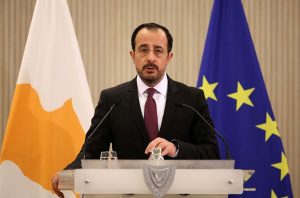
In a statement to the Cyprus News Agency, President Nikos Christodoulides framed the presidency as an opportunity to push Europe toward greater autonomy and deeper integration. He said Europe has repeatedly emerged stronger from major challenges and argued that the time has come for the EU to reinforce its ability to act independently while remaining outward-looking. Cyprus, he said, will work for “a Union strong from within,” capable of protecting its citizens, borders and interests, while also building partnerships and alliances “from a position of strength.”
Christodoulides emphasized a Europe that is open to the world and influential on the global stage, drawing its strength from stability, credibility and predictability, and grounded in principles such as international law, dialogue, diplomacy and cooperation. He outlined five interconnected pillars through which the Cypriot presidency aims to advance EU autonomy: security, defense and preparedness; competitiveness; openness to the world; shared values that work for all citizens; and a long-term budget supporting a more autonomous Union.
“Our presidency will work with determination to give new momentum to the European project,” Christodoulides said, adding that the goal is “an autonomous Union, open to the world, a Europe that is a continent of peace, security, prosperity and cooperation.”
Navigating Security, Diplomacy and EU Expectations
According to Politico, the presidency comes at a pivotal moment for Cyprus’ standing within Europe. The Brussels-based outlet reports that Nicosia has long faced questions over its geopolitical positioning, particularly given its historic ties with Moscow and the fact that it is one of only four EU countries that are not members of NATO.
In recent years, however, Cyprus has sought to demonstrate closer alignment with its Western partners. Politico notes that the government has revoked hundreds of citizenships previously granted to Russians under a controversial “golden passport” program that was discontinued in 2020.
Marilena Raouna, Cyprus’ deputy minister for EU affairs, told Politico that the governing centrist coalition sees the six-month presidency as a chance to reset the country’s reputation internationally. “We are well aware of what is expected of us and of the challenges the EU is facing,” she said, adding that the role offers an opportunity not only to influence the EU agenda but also to showcase Cyprus as “stable, resilient, with one of the strongest European economies,” and as the EU’s only member state in its region.