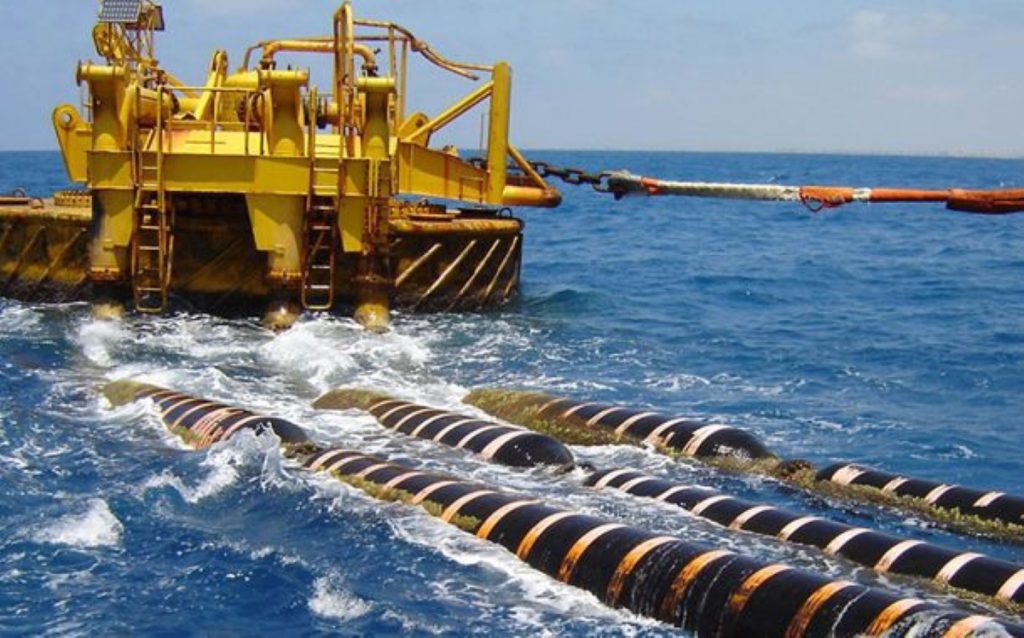
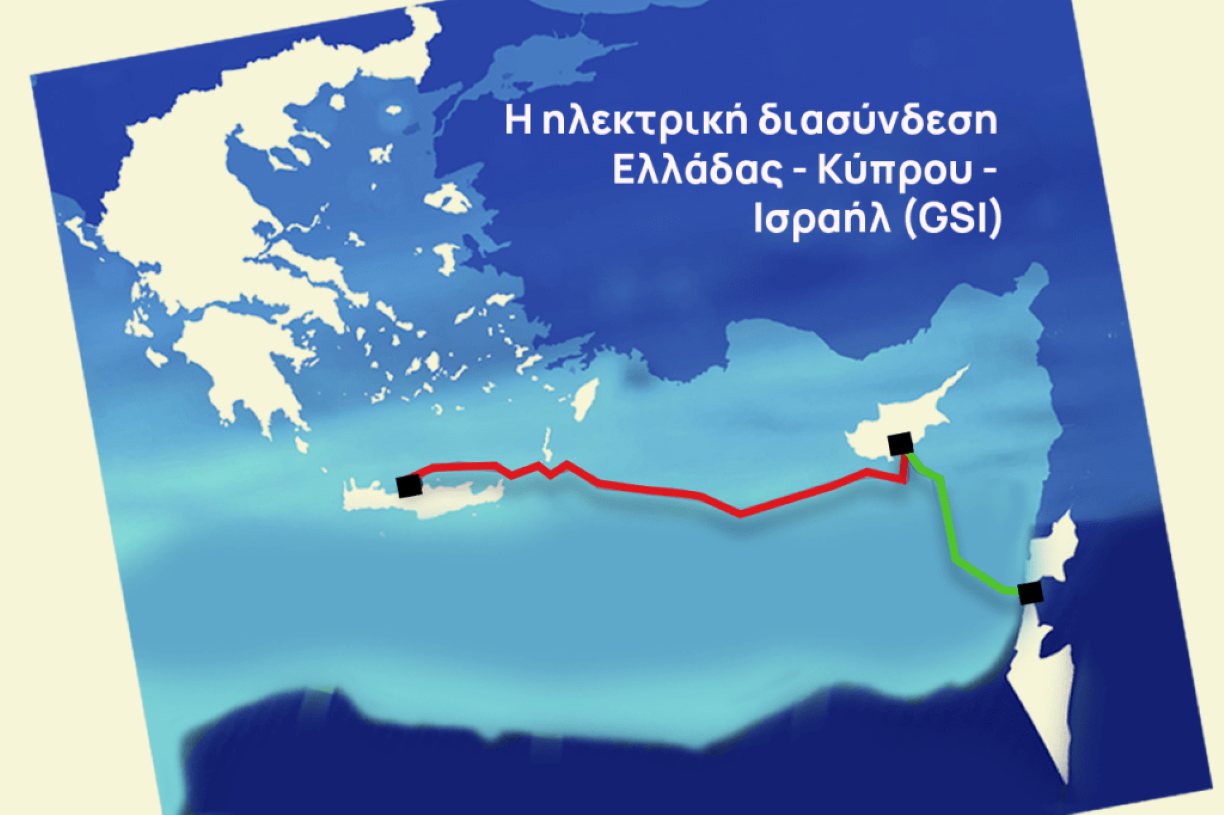
The Great Sea Interconnector (GSI) project, an undersea power cable connecting Greece and Cyprus, appears to be stalling again, despite recent reassurances by PM Mitsotakis and Cypriot President Christodoulides that investors have shown interest in funding it.
According to European sources, a videoconference, organized by the Commission as part of its responsibility for the implementation of projects of strategic importance for Europe, was held on Friday between the European Commission, the two regulators of Greece (RAAEY) and Cyprus (RAEK), as well as the project implementing body for the Greece–Cyprus interconnection cable, ADMIE.
Brussels sources familiar with the content of the discussions noted that, following clarifications that were requested, the Commission reiterated that no update of the studies for the GSI is required. At this point, Brussels reportedly reminded participants that the project is classified as a Project of Common Interest and that, in the recently announced Grids Package, the Greece–Cyprus electricity interconnection is included among the EU’s so-called “energy highways.”
This new recommendation from the Commission also contrasts with earlier statements by Mitsotakis and Christodoulides regarding the need to update the project’s studies in order to attract investors.
During the meeting, according to the same information, outstanding issues related to the implementation of the Greece–Cyprus cable project were also discussed.
The pending issues of the Great Sea Interconnector were reviewed, with those on the Cypriot regulator’s side being the most numerous and significant. RAEK has not moved forward with a decision on the €25 million revenue relating to 2025, while recovery of revenue for 2026 (another €25 million) is now also at stake.
Sources report that RAEK did not even commit to a decision on the 2025 revenue and, according to European sources, reportedly even questioned the amount itself.
In the wake of recent announcements by NEXANS— which stated that it is revising the project schedule, particularly with regard to the execution of its contractual obligations—the Commission made it clear to the regulators that outstanding issues must be resolved swiftly. For example, the longer the decision on revenues is delayed, the greater the investment risk becomes.
Given these circumstances, and more specifically the renewed hesitancy shown by Nicosia, all indications suggest that the project is, at this stage, unlikely to move forward.