The Greek government has ruled out any involvement in the Strait of Hormuz, despite escalating tensions in the Middle East.
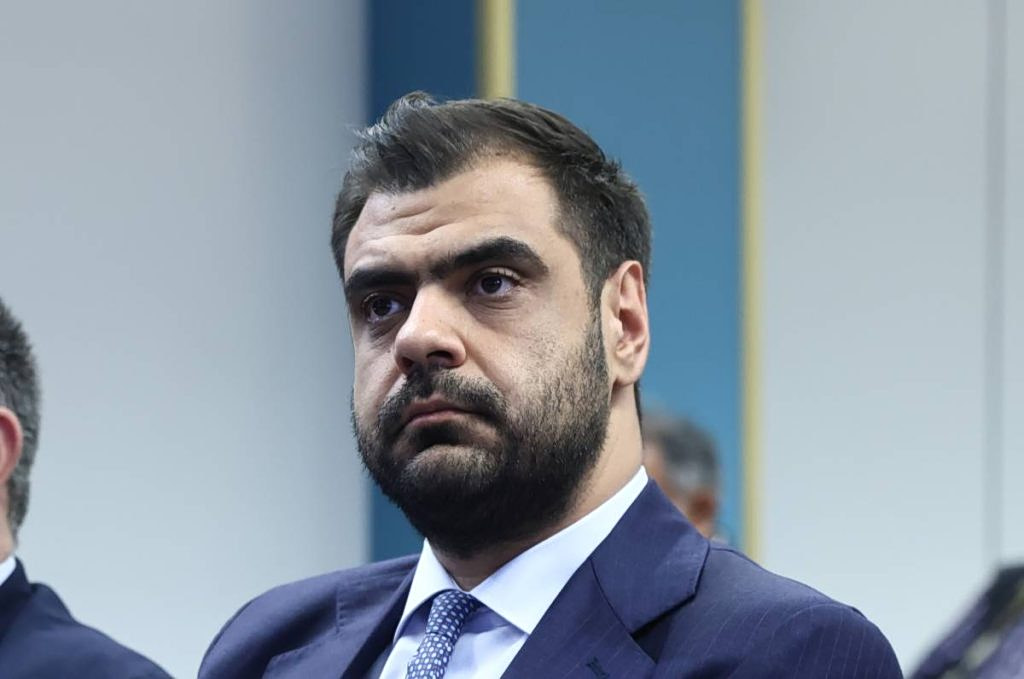
Speaking during a regular briefing to political reporters, government spokesperson Pavlos Marinakis said there is “no issue of Greece’s involvement in the Strait of Hormuz.”
He clarified that Greece’s participation in regional security operations is limited to Operation “Aspides,” which operates in the Red Sea and is aimed at protecting maritime security in that specific area.
Response to surveillance allegations
Marinakis was also asked about renewed media reports concerning a surveillance case. Commenting on statements by businessman Felix Dillian, he said the matter has already been examined at the highest level of the Greek judiciary.
According to the government spokesperson, the Supreme Civil and Criminal Court (Areios Pagos) concluded that no responsibility could be attributed to state officials.
He added that Dillian and four other individuals were referred to trial before a criminal court in Athens, where they were convicted at first instance. The case is now under appeal.
“It is not the role of the government or any of its officials to conduct a trial during press briefings or on television,” Marinakis said, stressing that the issue is being handled by the courts.
Parliamentary debate on rule of law
Responding to a question about a request by the opposition PASOK party for a parliamentary debate on the rule of law, Marinakis confirmed that the discussion will take place. The date will be set in the coming days in line with parliamentary rules.
Parliament approves energy agreements
During the briefing, Marinakis also referred to the recent approval by Parliament of a bill ratifying four energy agreements between the Greek state and a consortium formed by Chevron and HelleniqEnergy.
The agreements concern hydrocarbon exploration and potential exploitation in sea areas south of Crete and the Peloponnese. According to the government, the contracts will double the maritime areas available for exploration and increase the likelihood of discovering commercially viable energy resources.
Officials say the projects involve high-cost technological research funded by the companies, meaning they will not place a financial burden on the Greek state. The agreements are also expected to attract international interest in Greece’s energy sector and strengthen the country’s role as a regional energy hub, with the potential to become a natural gas producer.
If commercially viable deposits are discovered, the state’s share of profits is estimated to range between 38% and 41%.
Law enforcement and anti-crime operations
Marinakis also highlighted the work of Greece’s Directorate for Combating Organized Crime, which has handled 958 cases since it began operating in October 2024. Authorities have brought charges against 3,094 individuals, while 2,159 arrests have been made and 598 suspects have been placed in pre-trial detention.
Among the recent cases cited was the dismantling of a criminal group that allegedly ran illegal casinos in dozens of internet cafés in Athens, Thessaloniki, Patras and Agrinio, with estimated profits reaching €16 million.
Separately, Greece’s Independent Authority for Public Revenue uncovered a large fuel smuggling network that generated at least €9 million in profits, leading to 14 arrests. Authorities said the scheme caused an estimated €2.7 million in lost customs duties for the state.
Government initiatives in agriculture, education and employment
The spokesperson also pointed to several ongoing government programs.
Under Greece’s Common Agricultural Policy strategic plan, investment projects are being evaluated for the modernization and construction of greenhouses, with total investment expected to approach €500 million. Additional financial tools, developed in cooperation with the Hellenic Development Bank, are expected to mobilize investments exceeding €350 million.
In education, the School Meals Program now operates in 159 municipalities, covering 1,986 schools and providing daily meals to 184,368 students. The initiative has recently expanded to six additional municipalities, including Orestiada, Soufli, Grevena, Paionia, Istiaia-Aidipsos and Aegina.
Meanwhile, two new labor programs are expected to create 2,250 jobs in the Eastern Macedonia and Thrace region. One scheme will fund 2,000 full-time positions for unemployed adults, with subsidies of €875 per month for 12 months, while another program will provide six months of work experience for 250 unemployed individuals in the livestock sector, with monthly compensation of €748.
Marinakis’ remarks came ahead of a public event later in the day, where Greece’s prime minister is scheduled to speak at a gathering organized by the Ministry of Development at the Stavros Niarchos Foundation Cultural Center.