Greece is keeping the option of reintroducing fuel subsidies on the table as global oil prices rise, but officials say no immediate decision has been made.
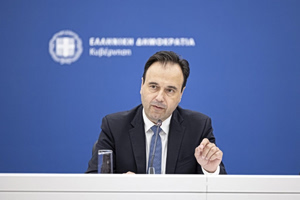
Speaking in a television interview, Finance Minister Kyriakos Pierrakakis said the government is closely monitoring developments before deciding whether to bring back the “Fuel Pass,” a subsidy program first introduced in 2022 to support households facing high energy costs.
“We are not there yet,” Pierrakakis said, stressing that any decision will depend on how long and how deeply the ongoing crisis in the Middle East impacts energy markets. Oil prices have already exceeded $100 per barrel, he noted, but more time is needed to assess the situation.
The minister indicated that the Fuel Pass could once again be used as a targeted measure to support the most vulnerable households if conditions worsen.
Tax cuts depend on EU approval
Pierrakakis also addressed the possibility of reducing fuel taxes, making clear that such a move would require coordination at the European level.
He explained that cuts to the Special Consumption Tax on fuel could only be implemented if there is flexibility granted by European institutions, describing it as part of a broader, coordinated response. Without such approval, Greece would instead focus on more targeted national measures, similar to those introduced in the past.
Concerns over prolonged impact
The minister warned that even if the conflict in the Middle East were to end immediately, it could take up to two months for markets to stabilize and for conditions to return to normal.
He outlined a three-pronged approach under consideration: direct support for households, measures to address inflationary pressures caused by rising energy costs, and potential European-level interventions if the crisis persists.
Particular attention is being paid to global supply routes, including key shipping corridors, as their disruption could significantly affect energy prices and inflation.