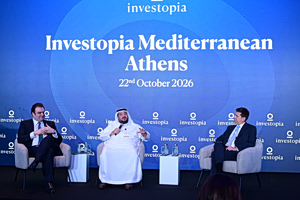
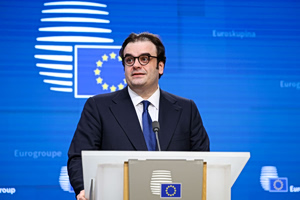
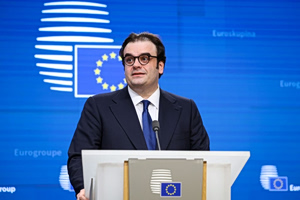
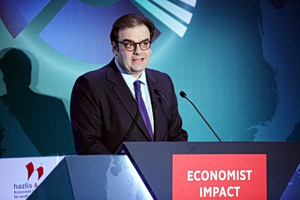
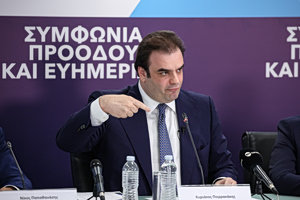
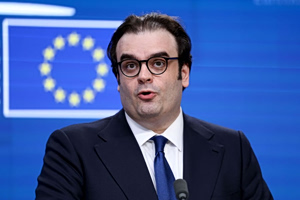
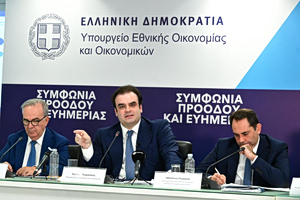
Greek Finance Minister Kyriakos Pierrakakis says closer ties with the United Arab Emirates could expand investment in energy, technology and logistics, while both countries explore cooperation in artificial intelligence, health care and defense. The two countries have announced €12.75 billion in deals, with Abu Dhabi planning a further €15 billion investment in Greece.
Greece’s economy minister and Eurogroup president discussed Europe’s economic pressures, artificial intelligence and strategic autonomy at an ELIAMEP event, where author Giuliano da Empoli praised Greece’s current political leadership as a hopeful European example.
Artificial intelligence, the growing power of tech giants, threats to democracy and Europe’s resilience in the face of sweeping change were at the centre of an ELIAMEP event
Speaking during a parliamentary debate on the 2027 budget, the finance minister acknowledged the pressure on household purchasing power and warned that global economic uncertainty has become a lasting concern.
Attacks by Yemen’s Houthi rebels have disrupted air travel and heightened risks to energy supplies, raising fears that a wider regional war could trigger a global economic shock and jeopardize Saudi Arabia’s ambitious development plans
The Greek finance minister and Eurogroup president says higher borrowing costs reflect a global shift away from cheap capital, while arguing that Europe has the fiscal framework to manage mounting pressures.
Greece’s finance minister and Eurogroup president will attend the IMF–World Bank Annual Meetings in Bangkok from October 15 to 17, joining discussions on global economic risks, financial stability and Europe’s competitiveness
The higher allowance will apply to hundreds of thousands of households, while a separate subsidy is intended to lower heating oil prices at the pump. The government is expected to provide details Wednesday, ahead of the October 15 start of the heating oil sales season
The decision opens the way for investment expected to reach about €1 billion by 2028, giving Greece extra room under the EU’s expenditure growth rule.
The decision opens the way for investments of €1 billion aimed at strengthening the country’s energy resilience
Brussels considers Greek and Italian bids for energy aid under the escape clause, but warns against new fiscal flexibility as bond markets tighten.
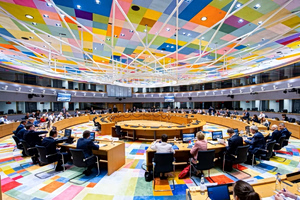
Finance ministers will discuss the impact of energy markets on the eurozone economy, the effectiveness of public spending and progress toward deeper capital-market integration at Thursday’s meeting in Luxembourg.
The finance minister said existing recipients will receive more, while the government is also preparing measures aimed at bringing heating oil prices below last season’s closing level
Speaking in Dublin, Greece’s finance minister and Eurogroup president called for deeper financial integration, a more competitive banking sector and faster action on defense, energy, AI, digital infrastructure and the green transition.
Finance Minister Kyriakos Pierrakakis said the “Synepeia” platform will allow citizens and businesses to see which public entities delay payments and for how long, as the government outlines further measures for businesses
Greece’s finance minister and Eurogroup president will join talks on eurozone productivity, growth, energy costs and competitiveness, as EU finance ministers and central bank governors discuss broader economic and financial priorities.
The Eurogroup president will meet German Chancellor Friedrich Merz and Finance Minister Lars Klingbeil in Berlin. Growth, competitiveness, fiscal coordination and deeper European financial integration are the main issues on the agenda
The proposed “1+1” program would match family contributions with state funding, with annual limits rising over time and savings invested until the child turns 18.
The tax on home purchases by third country nationals will jump from 3% to 15% starting July 2027, a five fold increase for buyers who fall outside Greece's existing exemptions
The measures will cost €605 million in 2026, rising to €2.2 billion in 2027 and €3.6 billion annually by 2030, with changes spanning wages, pensions, housing and business taxes