 Μake us preferred on Google
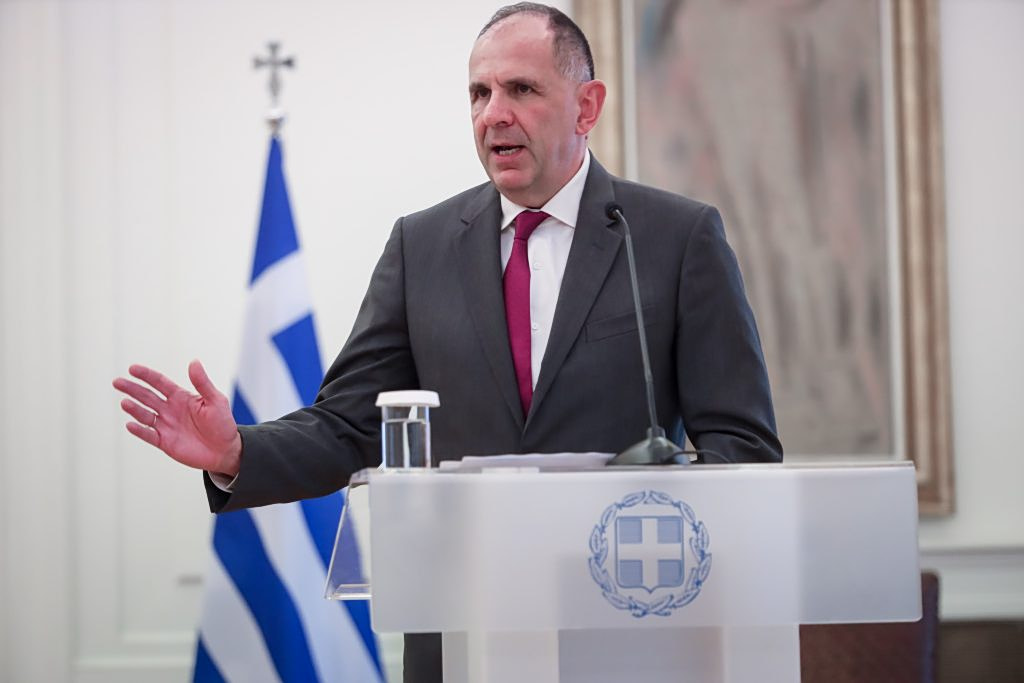
 Greece’s Foreign Minister Giorgos Gerapetritis on Wednesday laid out Athens’ positions on a wide range of foreign policy issues, underscoring the country’s commitment to international law, European unity, and diplomatic dialogue amid growing global uncertainty.
Speaking publicly, Gerapetritis addressed developments related to Greenland, a proposed international peace council, relations with Turkey, and Greece’s long-standing right to expand its territorial waters. Throughout his remarks, he emphasized Greece’s adherence to multilateralism and the rules-based international order.
On Greenland, the foreign minister highlighted Greece’s strong strategic relationship with the United States, noting that it is expected to deepen further. At the same time, he warned that any threat to the territorial integrity or sovereignty of an EU member state would face a united response from the European Union. He pointed out that Denmark, which oversees Greenland, is also a member of NATO, stressing that the postwar international security architecture is currently under strain.
While acknowledging that legitimate security concerns exist, as argued by the United States, Gerapetritis stressed that international agreements govern the status of the region and called for dialogue to prevail. “Greece will stand by any country that comes under threat in the future, under any circumstances,” he said, reiterating Athens’ firm alignment with international law and multilateral cooperation.
NEWSLETTER TABLE TALK
Never miss a story.
Subscribe now.
The most important news & topics every week in your inbox.
Turning to the proposed Peace Council initiative associated with U.S. President Donald Trump, Gerapetritis said Greece, along with nearly all EU member states except Hungary, has expressed serious reservations. He explained that concerns center on the gap between the proposal and a United Nations Security Council resolution on Gaza that Greece supported. According to the minister, the proposal lacks the temporary nature and geographic limitations outlined in the UN resolution.
He added that consultations with EU institutions, European partners, and Arab states indicate a near-universal reluctance within the EU to join the proposed council at this stage. Greece, he said, will align its position with its European partners and remain consistent with international law, particularly within the framework of the United Nations.
On Greek-Turkish relations, Gerapetritis confirmed that a high-level bilateral cooperation council meeting is planned for the first half of February, although the exact date has not yet been finalized. He stressed the importance of maintaining dialogue at the highest level, saying Greece believes it should remain in communication with its neighbors.
Addressing speculation about possible U.S. involvement in Greek-Turkish relations, the foreign minister dismissed the notion, stating that there has been no external intervention and that both Athens and Ankara believe they can manage bilateral issues without third-party mediation. He acknowledged, however, that differences remain, particularly regarding maritime boundaries, as Greece focuses on a single issue while Turkey raises additional concerns.
Finally, on the issue of territorial waters, Gerapetritis reaffirmed Greece’s reserved right to extend its waters up to 12 nautical miles, in line with the United Nations Convention on the Law of the Sea. He said the decision would be made at a time deemed appropriate by the Greek state and would follow consultations aimed at building political consensus.
He stressed that matters of sovereignty, including territorial waters, are not subject to negotiation with other countries and constitute a unilateral right. Any discussion, he said, will take place solely within Greece, between the government and parliament, and when the time comes, the relevant legislation will be submitted for debate.