The Athens Energy Summit took place Thursday in central Athens with ambitious declarations about Greece’s place in Europe’s evolving energy landscape, even as officials acknowledged that turning political strategy into market reality remains a work in progress. Held at the historic Zappeion complex, the conference brought together Greek ministers, U.S. government representatives, EU officials, and energy analysts at a time when regional gas flows, long-term security concerns, and high energy costs are reshaping policy priorities.
The summit’s main headline came early: confirmation that energy ministers from five countries involved in the Vertical Corridor will meet in Washington on Feb. 24 in an effort to push stalled negotiations forward. Greek officials also used the forum to defend the corridor’s strategic value, outline next steps on offshore hydrocarbon exploration with Chevron, and argue that Greece is steadily strengthening its role as a regional energy gateway, even as market interest and regulatory clarity lag behind political ambition.
Washington meeting set for late February
The planned ministerial meeting in Washington will bring together the energy ministers of the five countries participating in the Vertical Corridor initiative.
Announced jointly by Greek Energy Minister Stavros Papastavrou and U.S. energy officials, the meeting is being framed as a critical step toward moving from political declarations to binding agreements. Officials said the aim is to finalize long-term arrangements — potentially lasting at least 25 years — covering gas flows, infrastructure development, and regulatory alignment.
Discussions are also expected to include new infrastructure projects, such as an additional floating storage and regasification unit (FSRU), upgrades to existing pipelines, and the possible construction of new connections. The talks will take place at the White House and are set to involve the U.S. Energy Dominance Council, with participation from the U.S. International Development Finance Corporation (DFC).
Greek business leaders are also expected to attend, including Alexandros Exarchou, chairman and CEO of the AKTOR Group, as AKTOR deepens its involvement in LNG trading through joint ventures tied to long-term U.S. supply contracts.
Vertical Corridor: strategic project, uneven reality
Much of the summit focused on the Vertical Corridor, a project strongly supported by the United States and promoted as a new route for transporting liquefied natural gas from Greece to Eastern Europe and Ukraine.
Papastavrou described the corridor as a project of strategic importance for Greece, Europe, and the U.S., calling it “complex and demanding” and without historical precedent. He stressed that coordination among five different regulatory authorities is inherently difficult and acknowledged that the product still needs to become more attractive to market participants.
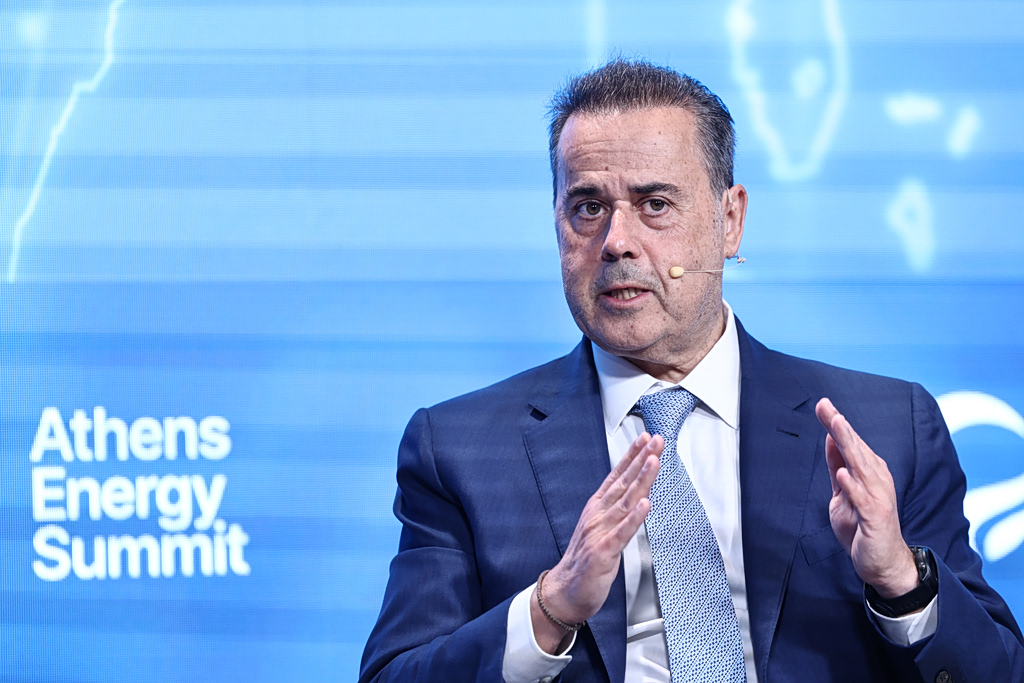
Athens Energy Summit 2026 in Athens. The conference focuses on energy security, climate change, and the transition to a more sustainable economy. Thursday, Jan. 29, 2026 (INTIME NEWS)
The minister pointed to progress on costs, noting that transit tariffs have fallen from around €9.90 per megawatt-hour to about €7.50. However, he conceded that competitiveness remains uneven across the corridor’s routes, particularly Route 2, which would carry LNG from the Alexandroupolis floating terminal north via the Greece–Bulgaria interconnector, and Route 3, linking the Trans Adriatic Pipeline in northern Greece with the same interconnector.
Recent auctions with very low participation have underscored those concerns. Papastavrou referred to the weak response as “growing pains,” arguing that persistence is required, especially as the European Union moves toward a formal end to Russian gas imports by 2027.
While he framed the corridor as a national priority that positions Greece as a key entry point for alternative energy supplies, the gap between political enthusiasm and limited commercial uptake remained a recurring theme.
U.S. envoy underscores political backing and long-term intent
Speaking at the summit, Joshua Volz, the U.S. Special Envoy for Global Energy Integration, sought to leave little doubt about Washington’s political commitment to the Vertical Corridor, framing the project as a strategic priority rather than a short-term commercial play.
Volz repeatedly pointed to Greece’s role, describing the country as “at the heart of one of the most critical corridors” for meeting shared energy goals. He placed particular emphasis on what he described as an unusually high level of political alignment. Thanking Stavros Papastavrou by name, Volz said the bar had been set “very high,” adding that Greece now sits at the center of both infrastructure planning and political decision-making around the corridor.
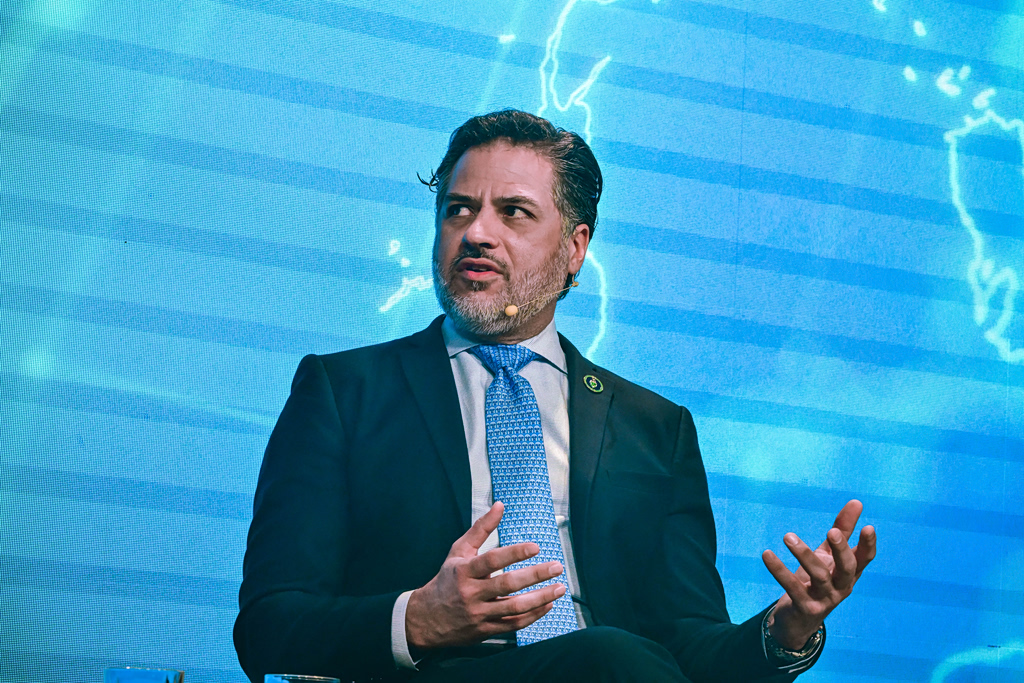
Athens Energy Summit 2026: The conference focuses on energy security, climate change, and the transition to a more sustainable economy. Thursday, Jan. 29, 2026. (Tatiana Bolaris / Eurokinissi)
Volz also framed the project within the broader context of U.S.-Greek relations, calling Greece a long-standing and reliable partner of the United States. He said bilateral ties were further strengthened during the Trump administration, a point he linked to personnel decisions such as the appointment of Kimberly Guilfoyle as U.S. ambassador to Greece, which he described as a clear signal of White House engagement.
At the same time, Volz acknowledged that political support alone is not enough. While stressing that the United States is “in this for the long term,” he added that the corridor must ultimately be grounded in commercial realism — a brief but notable recognition of the market challenges that have so far limited uptake.
Chevron deal highlights push for domestic hydrocarbons
Beyond gas transit, the summit also featured updates on Greece’s renewed push into hydrocarbon exploration, with Papastavrou confirming progress on agreements involving Chevron and Helleniq Energy.
According to the minister, Greece’s Court of Audit has approved four contracts covering offshore exploration areas south of Crete and the Peloponnese. The agreements are expected to be signed within the next two weeks and then submitted to Parliament for ratification.
Papastavrou said the government expects the process to move quickly, with preparatory work concluding in under 11 months and seismic surveys scheduled to begin in the fall of 2026. He added that if exploration in the Ionian Sea proves successful, the investment could reach €2 billion.
Addressing geopolitical concerns, he downplayed the impact of Turkey’s memorandum with Libya, stating that the exploration areas respect the median line. He also argued that opposition rhetoric is not decisive for investors such as Chevron, emphasizing that profitability prospects — not political noise — ultimately drive investment decisions.
Tsafos on Greece’s energy landscape
Deputy Energy Minister Nikos Tsafos outlined what he described as the three pillars of Greece’s energy strategy: resources, geography, and governance.
Tsafos said during the Athens Energy Summit that Greece intends to accelerate hydrocarbon exploration while continuing its push into renewable energy. He emphasized the country’s geographic advantage, citing expanded connectivity toward the Balkans, the Eastern Mediterranean, Cyprus, and Egypt as central to Greece’s regional role.
Energy prices, he said, remain the government’s top concern. Tsafos argued that Greece has narrowed the gap between its wholesale electricity prices and the EU average since 2019, crediting investments in renewables and improvements in market operation. He added that future initiatives will focus on easing costs for consumers and businesses, while remaining within EU regulatory constraints.
Broader European and global context
International speakers placed Greece’s ambitions within wider market trends, highlighting the rapid rise of LNG in Europe since the early 2000s and particularly after 2022, when U.S. LNG imports surged and LNG became a cornerstone of Europe’s energy mix.
European Commission officials pointed to Greece’s transformation from an energy importer to a net exporter as notable, while also stressing the role of EU funding tools such as the Recovery and Resilience Facility, a significant portion of which is earmarked for energy-related projects in Greece.