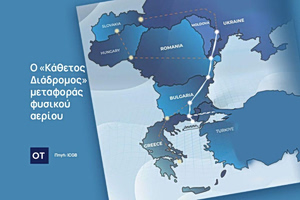
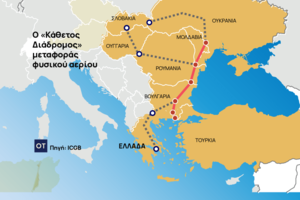
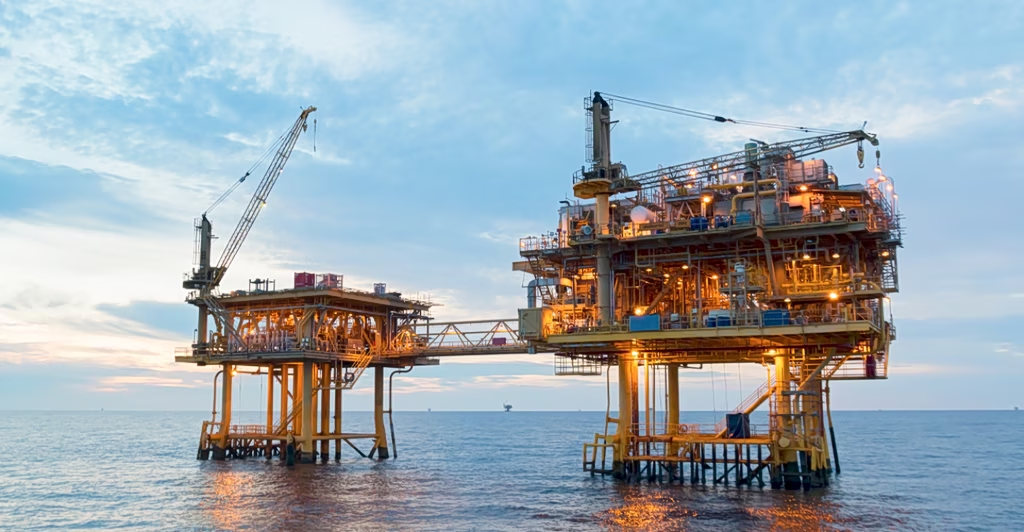
Competing US interests are clashing over Europe’s gas supply: LNG through Greece’s Vertical Corridor versus a revived Qatar–Turkey pipeline, with US envoys in Athens and Ankara on opposing sides.
A report by Greece’s embassy in Washington highlights expanding investment, rising trade and closer energy cooperation, with American companies playing a growing role in Greek infrastructure, tourism, technology and hydrocarbon exploration
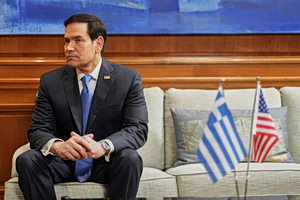
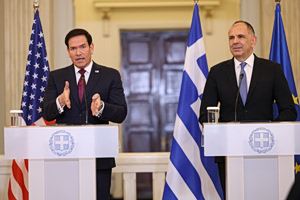
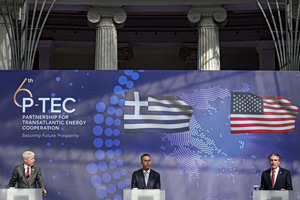
In joint statements with Giorgos Gerapetritis, Marco Rubio backed Greece's energy projects, with messages on the Vertical Corridor and diplomacy
Papastavrou says regional cooperation is essential for secure and affordable energy as Greece, Serbia, Bulgaria and North Macedonia seek to deepen gas and electricity links
Greece’s defense minister proposed using the route from Alexandroupoli northward as a model for moving military forces while protecting critical infrastructure, alongside stronger European missile defense and military command capabilities.
Grid operators will sign a memorandum in Thessaloniki bringing the two countries into the pipeline network carrying gas north from Greece, extending a route Athens is counting on to become Southeastern Europe's energy gateway
The partnership comes as Greece seeks additional LNG infrastructure to support regional supply routes and the expansion of the Vertical Corridor
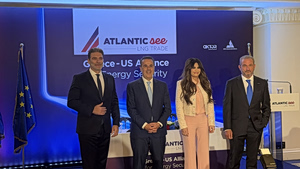
Atlantic See LNG Trade, the DEPA Commercial and AKTOR joint venture, says it booked 4.7 TWh of annual gas capacity in the 2026-2027 auctions, part of a plan to move American LNG toward the Balkans before 2030
The AKTOR-DEPA venture will buy gas from Venture Global and resell it to Albania and Bosnia, doubling volumes agreed last November under a 20-year deal from 2030
Global funds and US oil majors are moving aggressively into Greek energy companies, drawn by plans to turn the country into a natural gas supply hub for Central and Eastern Europe after Russian imports end in 2027
In an Atlantic Council essay, the energy minister rejects what he calls the 'false dilemma' between renewables and hydrocarbons, setting out a four-track agenda that ties Greek energy policy ever closer to Washington.
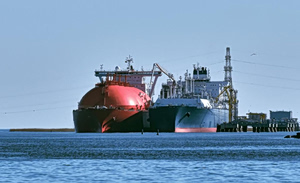
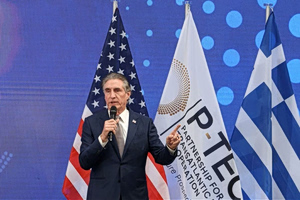
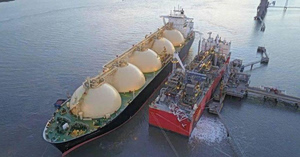
Referring to Greece’s Revithoussa LNG Terminal, Burgum noted that most recent LNG cargoes had come from the United States, adding that a single tanker could heat 200,000 German homes for a year.
In an interview with To Vima International Edition, the former U.S. ambassador argues that Southeast Europe needs corridors for power and data, not just gas, and that markets are underestimating how long the current energy crisis will last.
Officials and industry leaders highlight the need for stronger regional cooperation, infrastructure investment, and EU support to secure energy supply and diversify sources amid geopolitical uncertainty
Alpha Bank highlights the strategic role of regional energy routes as Europe faces supply risks, low gas reserves and mounting pressure to diversify away from vulnerable transit chokepoints
Greece reconsiders the Dioriga Gas FSRU as energy security pressures mount, with the project moving back toward inclusion in DESFA’s long-term infrastructure plan
Following multiple consultations with the European Commission (EC), the Hellenic Gas Transmission System Operator TSO (DESFA), along with the other 5 operators of the strategic Vertical Gas Corridor initiative, agreed on the commercial promotion of the project. The agreement, signed in Athens on Friday, marks a milestone for the wider region in an ever-shifting energy […]
Richard Goldberg, former White House National Security Council official who helped shape U.S. sanctions policy on Iran, tells To Vima that Greece’s shipping industry and energy infrastructure could play a decisive role in U.S. efforts to secure energy flows amid Middle East tensions
Stavros Papastavrou returns to CERAWeek in Texas to discuss next steps with Chevron and ExxonMobil – On the table are timelines for exploratory drilling, studies, and seismic surveys
Energy Minister Stavros Papastavrou calls for targeted EU action as Middle East tensions raise uncertainty, stressing preparedness, market unity, and fiscal discipline.