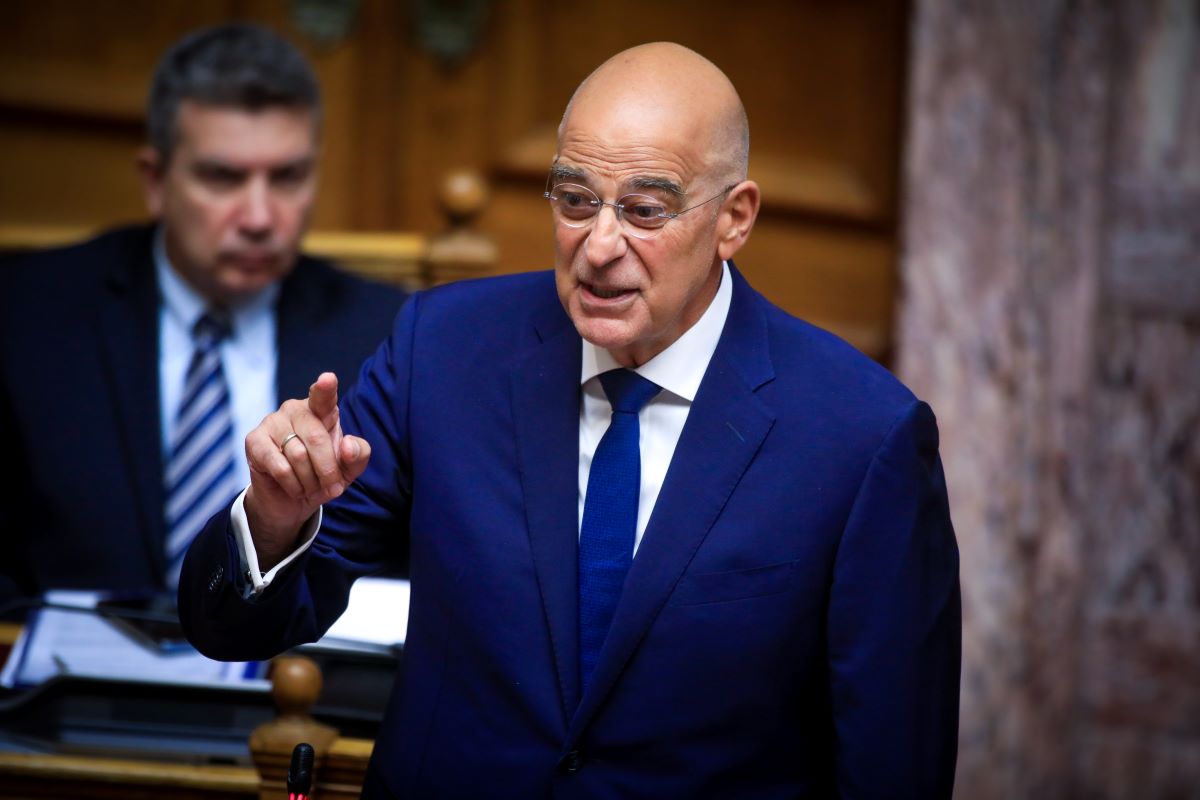
Greek Defense Minister Nikos Dendias intervened in parliament on Thursday regarding the case of Panos Ruci, a father on hunger strike demanding answers about the death of his child.
Dendias has revised his earlier statements regarding the case of Panos Ruci, the father on hunger strike seeking justice over his son’s death. In a renewed address to Parliament, Dendias stressed that the issue is one for the judiciary and not under the government’s direct control. “I do not understand the reproach toward the government when the matter concerns Justice. We would bear responsibility if this were a governmental act,” Dendias said
Earlier Remarks
Speaking during a parliamentary debate, Dendias said he could not imagine denying any parent the right to seek the truth about their child’s death. “We all have children. I cannot, sincerely, conceive of forbidding a father from investigating in any way he deems necessary the death of his child,” he said.
The minister emphasized that he was speaking not as a government official, but as a parent. “This man has suffered an immense loss. The last thing he needs is to see his situation made worse,” he added.
The issue sparked a heated exchange between Dendias and opposition MP Socrates Famellos. Famellos accused the government of recognizing the legitimacy of Ruci’s demands but failing to act.
Dendias countered that the matter lies within the judiciary, not the government. “I sympathize fully with the father, but I cannot accept that this is my responsibility as a minister,” he said.
Defense Policy Remarks
Beyond the Ruci case, Dendias addressed defense policy, underlining that protecting Greece’s sovereignty is an “existential issue.” He highlighted that the current government is the first since the post-dictatorship era to present a 10- to 20-year defense program within a fiscal framework.
He also defended recent procurement decisions, including the acquisition of Belharra frigates, against opposition criticism. “You accuse us of costs, but how could these improvements come free of charge? It creates a false impression that we are negligent,” he argued.