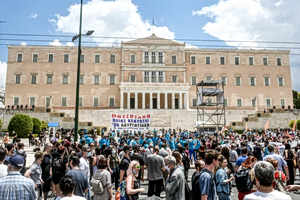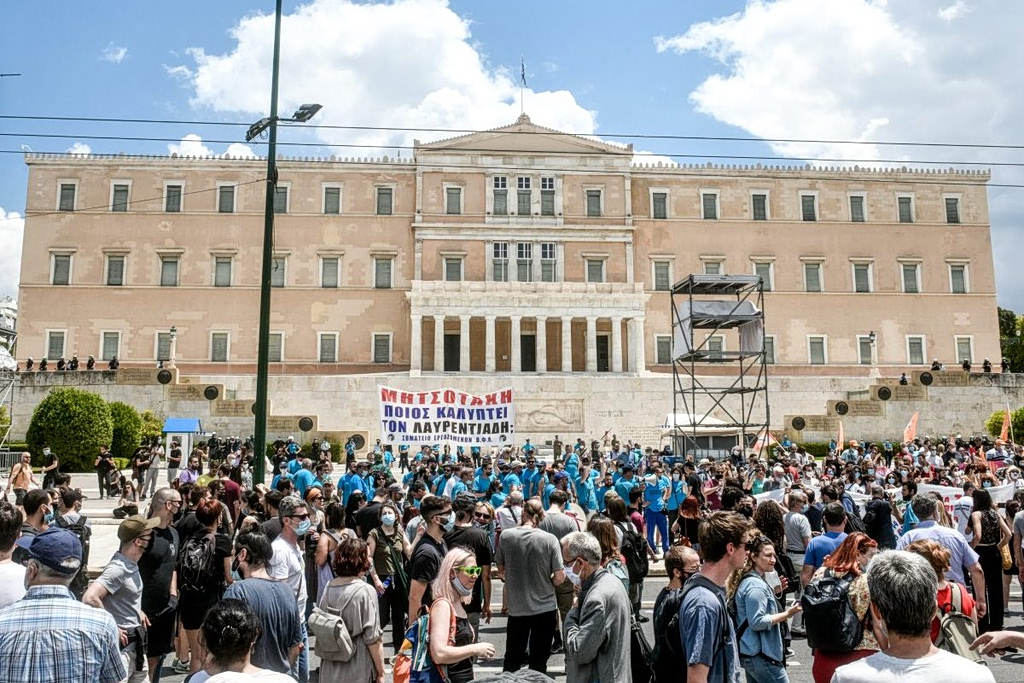
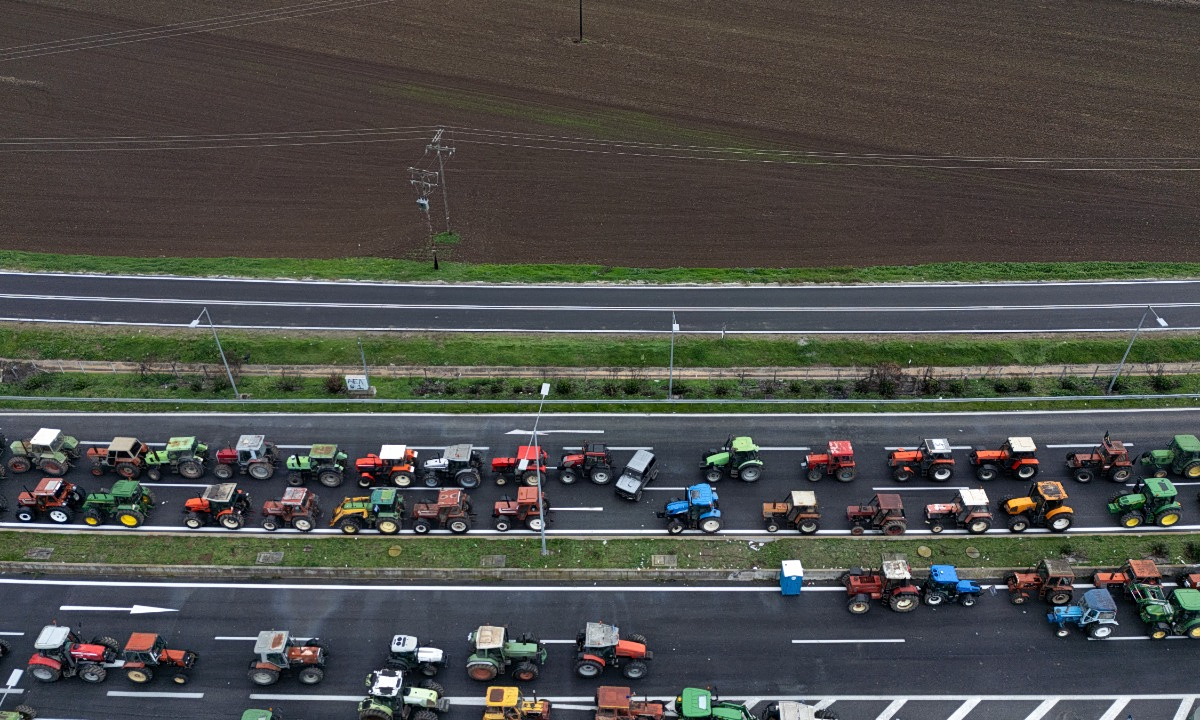
Life at the roadblocks goes on. Greek farmers have formally submitted to the government a renewed list of demands covering all branches of the country’s primary production sector. The list differs little from previous submissions. What has changed, they insist, is their growing anger: according to them, the government has taken no concrete steps to meet any of their demands.
From Nikaia, a key protest hub in Thessaly, farmers made it clear—before a closed-door coordination meeting—that they have no intention of going home unless they win. Farmers, livestock breeders, fishermen and beekeepers say they are fighting not only for themselves, but for the next generation that is at risk of abandoning the countryside altogether.
The “hidden” but biggest demand: staying on the land
Behind the long list of economic claims lies what protesters describe as their most existential demand. Young farmers fear they are being forced to abandon their ancestral land and a profession they love because it is no longer economically viable.
“It’s simply not worth ploughing anymore,” Giorgos Beis, a young farmer and agronomist, tells To Vima.
Nikos Pikros, also a young farmer and a graduate of the Thessaly Agricultural School, puts it bluntly: “The government must help so that young people can stay in their villages and on their fields.”
Anger, escalation and the farm subsidy scandal
Many outside observers conflate the farmers’ protests with the OPEKEPE scandal—the controversy surrounding Greece’s agricultural payments authority, accused of mismanagement and irregularities in EU subsidies. Protesters insist the reality is more complex.
They demand full transparency and justice in the case, stressing that developments in the parliamentary inquiry have only fuelled their anger. In their formal demands, they explicitly call for stolen funds to be returned to the real beneficiaries, for farmers not to bear the burden of fines, for political and criminal responsibility to be assigned, and for names to be made public. They also demand a thorough clean-up of OPEKEPE, a robust oversight mechanism, and that the agency not be absorbed into Greece’s tax authority (AADE).
Until they see what they call a “gesture of good faith” from the government, farmers say they will remain on the roads and escalate their actions.
On Monday, a call has been issued for a solidarity rally outside the courts of Larissa, where so-called “farmers’ trials” (cases against protesters) are being heard. According to To Vima sources, tractors are expected to return to the city centre within days, possibly remaining symbolically in place overnight.
A country split in two
As they plan their next moves, farmers are openly discussing actions that would place maximum pressure on the government. Among them: a renewed, open-ended blockade of the port of Thessaloniki, Greece’s second-largest port, and the possible closure of the Tempi tunnel—a key north–south transport corridor that would effectively split the country in two.
Representatives of the primary sector remain defiant, saying they are prepared to “pull the rope to breaking point” in pursuit of a dignified quality of life. They are bolstered, they say, by broad public support: some citizens bring food and drinks to the roadblocks, musicians organise impromptu concerts, while others simply send messages of solidarity and watch anxiously as the standoff deepens.
Farmers’ demands to the government
• An end to state repression, authoritarian practices and “farmers’ trials”; dismissal of all protest-related cases by parliamentary decision.
• Immediate payment of all outstanding sums owed by the government.
• Guaranteed minimum prices covering production costs and ensuring a viable income.
• Reduction of production costs: tax-free diesel at the pump, revised fuel allocations per crop, a cap on agricultural electricity prices at €0.07/kWh, abolition of the Energy Exchange, subsidies for inputs, and abolition of VAT on farming supplies.
• Compensation for lost income in 2025 for products whose prices have fallen below production cost.
• Completion of essential infrastructure projects (irrigation, flood and fire protection, rural roads).
• Reform of ELGA (the agricultural insurance body) to insure and compensate production and capital at 100% for all natural risks and diseases, at all stages, with adequate state funding.
• Linking subsidies to actual production in farming and livestock ownership in animal husbandry; subsidies to go only to real producers and be non-seizable.
• Abolition of ATAK–KAEK requirements for plots under 20 stremmas (2 hectares) due to fragmentation; legal framework for land exchanges; immediate checks and payment of all blocked tax IDs; payment of “Measure 23”; proper functioning of monitoring systems.
• An end to mass imports and “Greek-labeling” of foreign products without tariffs, including under EU agreements such as Mercosur.
• Freezing of debts to social security funds, tax offices, banks and utilities, with interest-free instalments and no down payment.
• No reduction of Common Agricultural Policy (CAP) funds for military spending.
• Abolition of the electronic dispatch note required to be sent directly from the field.
• Immediate doubling of farmers’ pensions.
Two urgent issues highlighted:
• Livestock disease (foot-and-mouth disease): vaccination, full compensation for culled animals, income replacement, free restocking of herds, and compensation for bluetongue disease.
• Farm subsidy scandal: return of stolen funds to rightful beneficiaries, farmers not paying fines, full political and criminal accountability, publication of names, institutional reform of OPEKEPE, and rejection of its transfer to the tax authority.