 Μake us preferred on Google
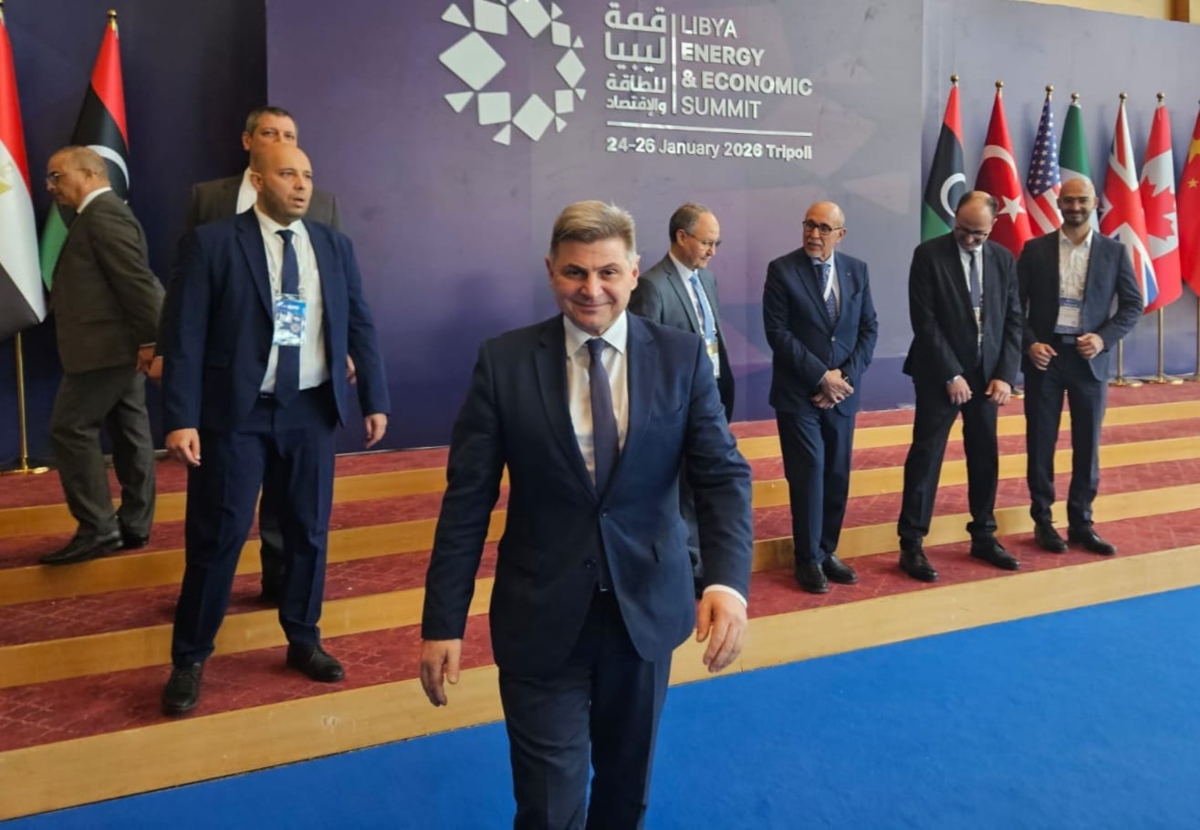
 Greek Member of the European Parliament Nikolas Farantouris visited Tripoli, Libya, on Sunday for high-level meetings with the Prime Minister Abdul hamid al-Dbeibah, Oil and Gas Minister Khalifa Rajab Abdul Sadiq, and other government officials. The meetings took place following an official invitation from the Libyan government.
Farantouris, a member of the European Parliament committees on Budget, Security and Defense, as well as EU-American and EU-African relations, focused on energy cooperation, migration, and Libya’s transition to democratic governance. He also raised concerns about the illegal Turkey-Libya maritime memorandum, which he described as a significant obstacle to investment and regional collaboration.
During the discussions, Farantouris emphasized the importance of international law as the foundation for secure economic relations. “Libya and the European Union can become effective partners for development and stability across the Mediterranean and North Africa. However, respect for international law is a prerequisite for progress. The illegal Turkey-Libya maritime memorandum must be removed to allow investments and cooperation to flourish,” he said.
In talks with Minister Abdul-Sadeq, energy issues were a priority, including the utilization of Libya’s energy resources, diversification of energy sources and markets, and the recent cycle of oil concessions announced by the Libyan state oil company. Farantouris stressed that legal certainty is essential for safe and reliable investment.
Farantouris’s visit comes amid ongoing instability in Libya, a country still grappling with the legacy of the 2011 uprising that toppled Muammar Gaddafi. Since 2014, Libya has been divided, with two competing governments and armed factions in the east (under Khalifa Haftar) and west (under the UN-recognized Dbeibah government), often supported by foreign powers and mercenary forces.
Prime Minister Dbeibah has led the Government of National Unity since February 2021, aiming to guide Libya toward national elections, which have yet to be held. Farantouris highlighted that the European Parliament and EU are committed to supporting Libya’s developmental and democratic path in line with international law.