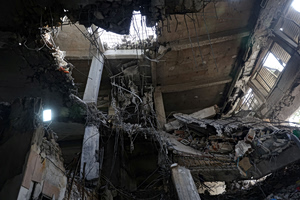
In a few days, it will be one month since February 28, when the United States and Israel launched military strikes against Iran. It is still too early to say whether the images of violence and destruction on our screens are gradually becoming part of a “normality” that for years has absorbed, like small or large doses of poison, the successive crises of our time. This time, however, the shock seems particularly strong.
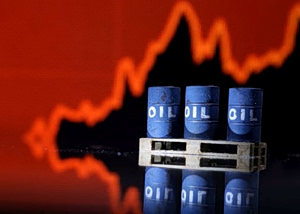
Although Iran is geographically farther away—for example, compared to Ukraine, where another conflict has been raging for four years—the outbreak of the war triggered a shockwave that quickly spread through the global economy and international geopolitical balances. In our country, this wave added to a long series of threats and shocks over the past decade and a half. Naturally, the first question that arises is: how concerned are we about its effects?
The concern is evident and widespread, expressed by the large majority of respondents at multiple levels. At the same time, it also shows a degree of escalation. The dimension that seems to worry us the most is the impact of the war on the country’s economy: more than 9 out of 10 respondents say they are “very” or “quite” concerned (93%).
This finding is fully consistent with the image we have of social discontent in our country over the previous period. Economic issues and high prices—in essence, the purchasing power of households—have long been what occupy citizens more than anything else. Considering that consumers have already seen increases in gasoline prices and other essential goods, one can assume that our attitude toward this new crisis will largely evolve in connection with its economic effects.
Somewhat less, but still intense, is the concern for our country’s security, expressed by more than 7 out of 10 respondents (72%). This is likely influenced both by Greece’s geographical position—which, although distant from the war theater, is close to the Middle East—and by the geopolitical complexities the conflict could generate, given the actors involved or potentially involved in the future. This finding should also be considered alongside another: 6 out of 10 respondents are also “very” or “quite” concerned (62%) about the possibility of Greece becoming militarily involved in the war, should the conflict expand further.
For the vast majority, therefore, it appears that nothing guarantees Greece will remain unaffected by the war on all possible levels—from indirect economic impact to the undesirable direct military involvement. It is also worth noting that concern about the country’s security and potential military involvement is stronger among those who report a lower level of political trust, that is, less confidence in the political system. This raises, at the same time, the question of whether the political system will be able to convince citizens that it can guarantee the country’s geopolitical security.
From this perspective, we can also interpret the answers to the other two questions in the survey presented here. The deployment of naval and air forces to Cyprus, following a request from the country and in response to the drone attack on the British base, is positively evaluated by 80% of respondents (even marginally a majority among left-leaning respondents, whose anti-war sentiments are stronger). This move, which took on dimensions of European solidarity as it was accompanied by deployments from countries such as France and Spain, meets broader approval to the extent that it highlights a protective reflex for the wider Greek community in a moment of heightened security concerns. In fact, it appears particularly strengthened among older generations, over 60, for whom the historical memory of the trauma of the Cyprus invasion remains vivid.
At the same time, evaluation of these moves is framed by a shared sentiment that clearly prioritizes an immediate ceasefire on the Iran front (71%) over a preference for the war to end with the fall of the current Iranian regime (26%)—and this is true across the ideological-political spectrum, though less so among center-right respondents, who place more weight on regime change. One may therefore assume that the U.S.–Israel military operation, justified on the grounds of the nuclear threat posed by Iran’s theocratic regime, does not suffice to legitimize it.
This assessment is reinforced by the fact that Greek public opinion seems increasingly critical of President Trump’s policies, with only 10% positive and 86% negative evaluations in the available Metron Forum 2.0 data for March, and a steadily declining trend over several months. While Greece is probably not an exception—since internationally, even within the U.S., the attack on Iran is largely considered unjustified, lacking a clear objective, and carrying unpredictable and potentially destructive consequences—we are, in short, in the shadow of a dangerous and threatening war with an uncertain political and moral basis.
Giannis Balabanidis is a political analyst, head of political and social research at Metron Analysis.