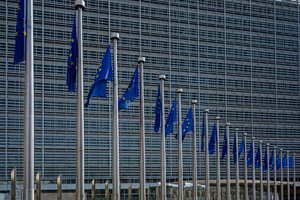
From Brussels after the EU summit on the energy crisis and the situation in the Middle East, Prime Minister Kyriakos Mitsotakis said Greece was prepared, within its fiscal means, to cushion the impact of rising fuel prices and possibly higher electricity costs.
He said EU leaders had held an extensive discussion on the economic fallout from the prolonged geopolitical crisis and the war in the Middle East, warning that the longer the conflict endures, the greater the damage to the global, European and, inevitably, Greek economy.
Mitsotakis added that language included in the European Council conclusions leaves the door open to greater flexibility for both national and European measures to address the emergency, though he stopped short of detailing any immediate steps.
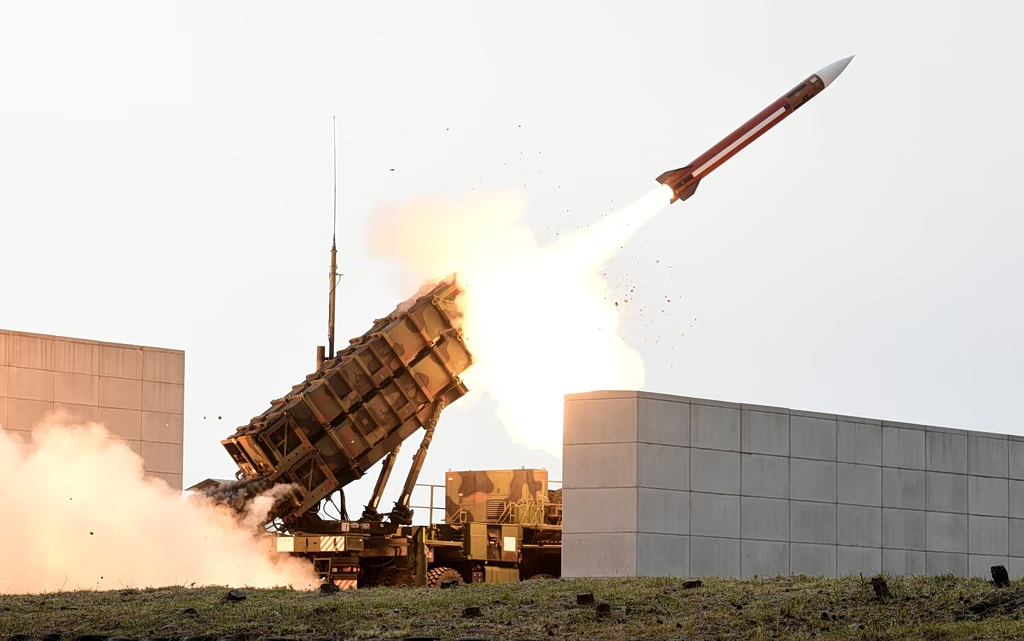
Asked about Turkish media reports claiming Ankara had sent letters to NATO, the EU and the United States objecting to the redeployment of a Greek Patriot missile battery to Karpathos, Mitsotakis dismissed the allegations as legally baseless and ill-timed given the broader geopolitical context. Greece, he said, does not negotiate with anyone over the operational deployment of its defensive forces.
On the Greek Patriot systems in Saudi Arabia, he noted that they have been stationed there since 2021 under a decision by the Government Council for Foreign Affairs and Defense, as part of a broader effort to protect critical infrastructure linked to fuel supply security. He described the latest interception as a strictly defensive action carried out under Greece’s agreement with its strategic partner, Saudi Arabia. Mitsotakis said the operation had also demonstrated the operational readiness of the Greek armed forces in a highly demanding environment.
He argued that Greece’s involvement served a direct national interest: had a key Saudi refinery been struck, oil prices would likely have risen far more sharply, underlining the importance of shielding vital energy infrastructure. In that context, he said Greece and France took a leading role at the summit in pressing for a moratorium on strikes against energy installations, whether in Iran or in Gulf states.
Turning to Cyprus, Mitsotakis welcomed what he described as a highly positive response by European partners after the attack on the British base at Akrotiri, saying several countries, with Greece first among them, moved quickly to provide air and maritime support so that Cyprus would feel fully secure. He said this amounted in practice, if not formally, to an activation of Article 42(7) of the Treaty on European Union, the bloc’s mutual assistance clause.
The prime minister said there was now recognition of the need to move quickly, within months rather than years, toward a clear operational roadmap setting out how the clause would function depending on the nature of any threat. He described this as an important development for both Greece and Cyprus adding that the crisis had created an opportunity to advance a discussion that clearly serves their national interests.
On migration, responding to a BBC question about allegations of migrant pushbacks from the Evros region into Turkey, Mitsotakis said he had no knowledge of the specific claims but firmly defended the government’s hard line on border control. Greece, he said, has a duty to protect both its own borders and those of the European Union, and he would not apologize for those policies.
He added that the European Council’s conclusions made clear that the EU as a whole would not repeat the mistakes of 2015 and would not allow a mass influx of migrants and refugees into the bloc.