
It passed largely unnoticed in the headlines, yet it may prove to be one of the most consequential developments to emerge from the emergency trilateral summit in Paphos between Greek Prime Minister Kyriakos Mitsotakis, Cypriot President Nikos Christodoulides, and French President Emmanuel Macron.
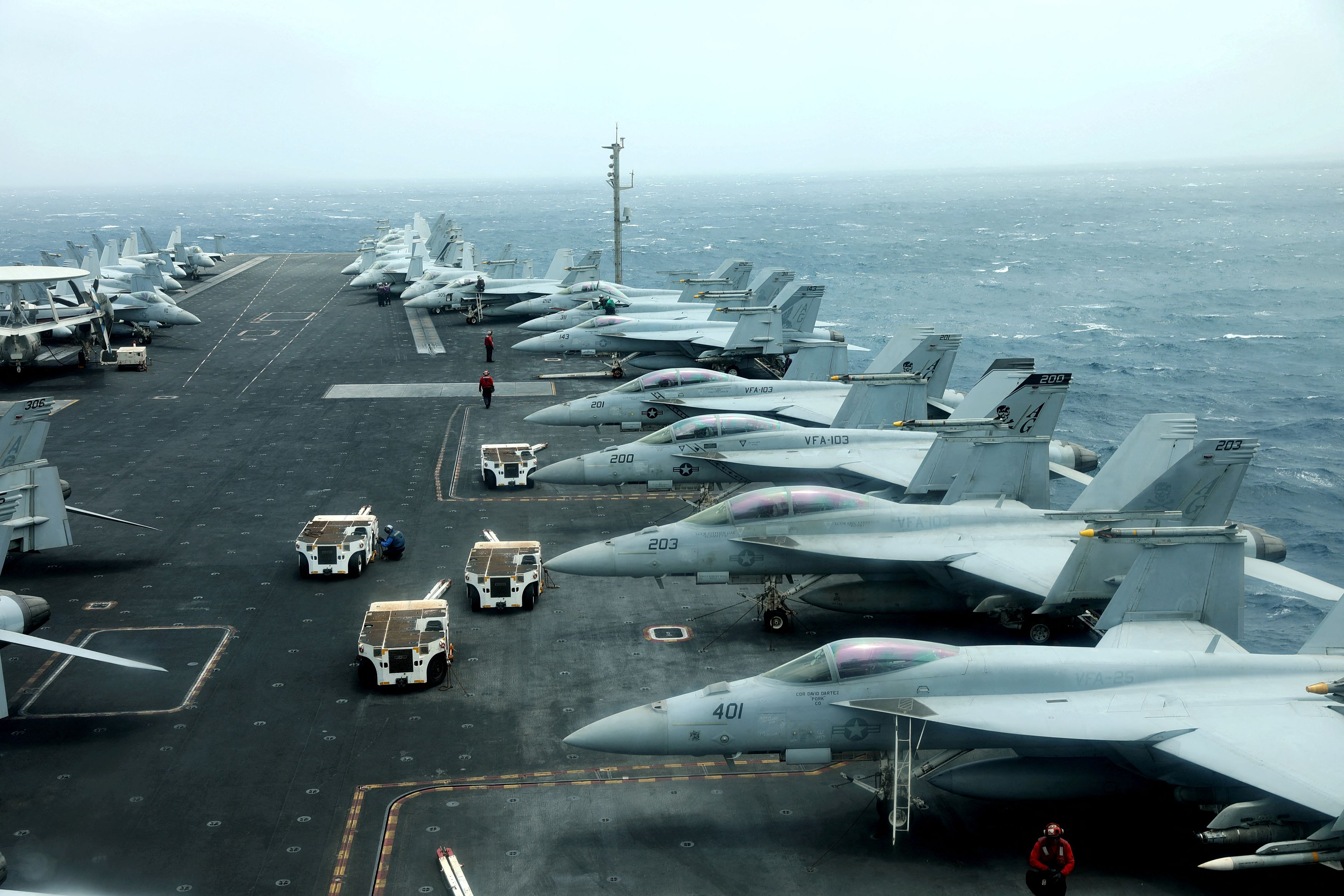
Macron revealed that, behind closed doors, the three leaders had discussed the creation of a purely “defensive” naval force. The proposed mission would involve European and potentially non-European states, tasked with escorting oil tankers and cargo vessels so that global maritime trade could continue “as smoothly as possible.”
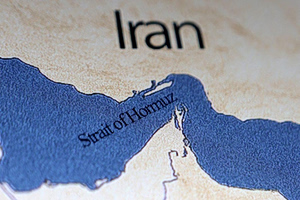
While Macron did not explicitly name the route in question, the reference was clear: the increasingly volatile Strait of Hormuz, a narrow waterway linking the Persian Gulf to global markets and one of the most strategic shipping lanes on the planet.
According to the French president, such an operation is “absolutely necessary” to safeguard both national economies and the global economy.
The Setting in Paphos
The symbolism of the Paphos summit was difficult to ignore.
Standing beside Macron was Mitsotakis, whose country is already among the key contributors to Operation Aspides, the European mission tasked with protecting ships in the Red Sea and near the Suez Canal from missile attacks by Yemen’s Houthi rebels.
Just a few miles away from Cyprus, Greek and European frigates had recently been deployed, giving tangible form to what had previously been largely theoretical European efforts to defend regional maritime routes.
The broader context also matters.
The Greek-owned merchant fleet is the largest in the world, while the Cypriot fleet ranks 11th globally. At the same time, more than 15 Greek vessels with dozens of Greek sailors were operating in the Persian Gulf under fire.
In other words, the audience Macron addressed was almost perfectly chosen.
Greece’s Careful Response
Athens reacted almost immediately—though informally—just minutes after the joint press conference ended.
“There is currently no operation in the Strait of Hormuz. Nor do we intend to send any ship there,” Greek government sources said. “Operation Aspides has a very specific mandate and limited geographical scope—the Red Sea.”
The response was clear but not definitive. It left open the possibility that discussions could take place in the near future, reflecting what had apparently been discussed privately between Mitsotakis and Macron in Paphos.
Macron’s Political and Economic Motives
Macron’s eagerness to push such an initiative is driven by both political and economic considerations.
With roughly a year left in his presidential term, the French leader continues to position himself as Europe’s most proactive leader on defense and security policy. He aims to leave behind a stronger France and a more capable European defense architecture.
But the crisis in the Strait of Hormuz also carries a direct economic cost for France. Prolonged instability threatens both the broader French economy and the country’s major oil companies, which rely on uninterrupted energy flows.
Greece’s Strategic Signal
For Greece, the calculus is different but equally strategic.
Athens maintains a close defense partnership with France and is awaiting the renewal of the Franco-Greek defense agreement, which includes provisions for mutual assistance in the event of an attack.
At the same time, Greece has increasingly positioned itself as a country willing to act “on the ground”—most recently through its involvement around Cyprus.
The signal is aimed not only at Europe but also at the United States: Greece is willing to participate in security frameworks that directly affect its own security architecture.
Mixed Messages From Athens
Despite the government’s official rejection of involvement in a Hormuz mission, Greek officials have not spoken with one voice.
Government spokesman Pavlos Marinakis firmly ruled out participation.
Yet earlier the same day, Foreign Minister Giorgos Gerapetritis struck a more nuanced tone.
“It is not Greece’s intention to become involved in the war,” Gerapetritis said. However, he also described the moment as “extremely critical” and urged Europe “to rise to the occasion and assume a leadership role.”
The contradiction was obvious. Leadership and complete non-involvement rarely coexist.
The Reality of the Strait of Hormuz
Conditions in the Strait of Hormuz differ dramatically from those in the Red Sea.
Iran possesses far greater military capabilities than Yemen’s Houthi movement. Control of the strait has taken on an almost existential importance for Tehran, serving as its most powerful strategic lever.
For the West, the stakes are equally high. Roughly 20% of the world’s oil supply passes through the Strait of Hormuz. Any disruption immediately reverberates across global energy markets.
The forces involved in this equation are immense—and so are the risks.
Trump Raises the Pressure
Then came Donald Trump.
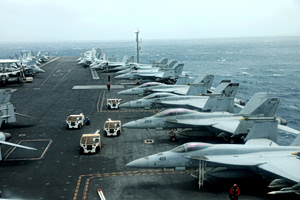
Speaking to Fox News last Friday, Trump suggested that Washington might consider escorting commercial ships to make Iranian attacks less effective.
“We would do it if necessary,” he said. “But hopefully things will go very well. We’ll see what happens.”
By Monday morning, however, his tone had hardened into a familiar message: those who are not with us are against us.
Trump warned that the United States would “remember” which countries failed to assist American operations in the strait.
The image of a vengeful U.S. president issuing such warnings in the middle of a war sits uneasily with the traditional logic of the Western alliance—an alliance Trump himself has repeatedly strained.
Europe’s “Reluctant” Response
At the EU level, the tone was cautious.
“It is in the European Union’s interest to keep the strait open,” said Kaja Kallas as she arrived at the Foreign Affairs Council.
She explained that if expanding Operation Aspides were considered part of the solution, more EU member states would need to participate.
Kallas also raised the possibility of forming a “coalition of the willing,” a concept increasingly discussed in Brussels as a way for smaller groups of countries to act when consensus among all 27 EU members proves impossible.
Europe’s Quiet Refusals
Throughout Monday, however, national refusals began to accumulate.
The United Kingdom, led by Keir Starmer; Germany, under Friedrich Merz; as well as Italy and Spain—core NATO members—signaled that while they had approached the waters near Cyprus, they were unwilling to deploy to the Strait of Hormuz.
The same reluctance appeared outside the Western alliance as well.
Japan also declined participation.
“This Is Not Europe’s War”
Most European governments believe the only way to prevent further escalation is a return to diplomacy.
In other words: the war must end—something unlikely to happen in the coming days.
“Nobody wants to participate in the war of the United States and Israel against Iran,” Kallas later said after the Foreign Affairs Council, noticeably adjusting her earlier stance.
The argument in Brussels is straightforward:
“This is not Europe’s war.”
In essence, European leaders are saying they are not willing to share responsibility for a strategic decision that, from their perspective, may already be going badly.
A Growing Rift in the West
Even if EU foreign ministers expressed interest in strengthening Operation Aspides in the Red Sea, the same does not apply to the Persian Gulf.
European navies may technically possess the operational capability to operate in such a conflict zone. But politically, the appetite is lacking.
Trump, meanwhile, is certain to judge each ally’s refusal in his own way.
Regardless of how the war ultimately unfolds, the issue has already taken on broader significance. Like the dispute over Greenland, it exposes a widening fracture within the core of the Western alliance.
And Macron’s proposal?
For now, Paris has gone silent.
Yet the initiative launched from Paphos remains on the table.