
Europe is taking a historic step toward establishing a long-term human presence on the Moon. Thales Alenia Space, a Franco-Italian aerospace company, has signed a contract with the Italian Space Agency to develop the first permanent lunar station, set to launch in 2033 under NASA’s Artemis program.
The lunar outpost, designed to operate autonomously for at least 10 years, marks a significant milestone in international space collaboration. The Artemis program, led by NASA, aims to establish a sustainable human presence on the Moon while developing technology for future crewed missions to Mars.
Europe’s Role in Lunar Exploration
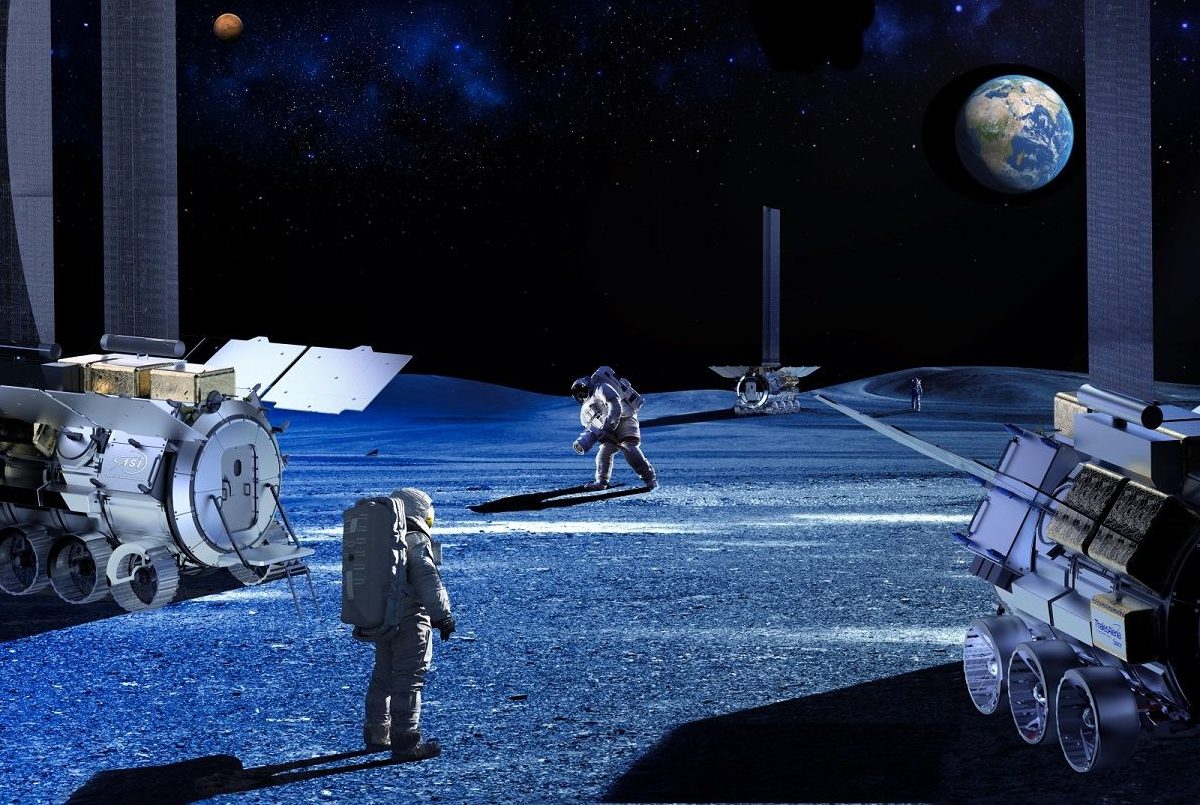
Thales Alenia Space – a joint venture between France’s Thales Group and Italy’s Leonardo – will develop the Multi-Purpose Habitat (MPH). This mobile station will not only provide living quarters for astronauts but will also be capable of navigating and exploring different regions of the Moon on its own.
The station’s first development phase will focus on creating technology resilient to the Moon’s harsh environment, which includes extreme temperature changes, high radiation levels, weak gravity, and fine dust that can interfere with equipment.
Broader European Involvement
Italy and Greece are among the many countries that have signed the Artemis Accords, a U.S.-led framework for international cooperation in space. The first crewed Artemis landing is expected no earlier than 2027.
In February, Thales Alenia Space was also awarded a $900 million contract by the European Space Agency (ESA) to develop “Argonaut,” Europe’s first lunar lander. Although it will not carry astronauts, the Argonaut will transport equipment and supplies, with its launch scheduled for 2031.
Global Race to the Moon
While Europe and the U.S. work together through Artemis, China and Russia are developing their own lunar program. China aims to land astronauts on the Moon by 2030 and is cooperating with Russia to establish a lunar research station.