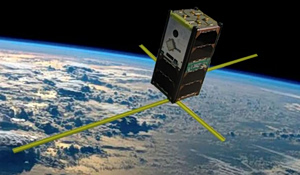
Greece expanded its presence in space earlier this month, placing six new microsatellites into orbit aboard a SpaceX Falcon 9 rocket launched from California on May 3 as part of the Hellenic Space Dawn mission, bringing the country’s total constellation to 17 satellites.
The €200 million program, funded through the EU Recovery and Resilience Facility, was developed entirely using Greek technology by the National and Kapodistrian University of Athens and Greek private companies. Officials said the program positions Greece for the next phase of its space ambitions — the development of larger satellites with Greek industrial participation exceeding 50 percent.
A key feature of the constellation is inter-satellite and satellite-to-ground laser communication, which eliminates the risk of signal interception. The technology has drawn attention from other countries, according to program sources.
Four of the six newly launched microsatellites carry thermal sensors capable of detecting a fire source just a few meters in size almost at the moment of ignition, officials said. The sensors can also detect moving vehicles, a capability with potential military applications. The remaining two satellites, named Selene and Helios, are 8U CubeSat-type craft designed to demonstrate laser communication technologies and real-time data processing for Earth observation — capabilities that sources said bring Greece closer to developing a dedicated communications satellite for the Defense Ministry under the SAFE program.
From Bystander to Active Space Power
Greek officials described the launch as a turning point. For decades, they said, Greece’s presence in space was limited to participation in international organizations and reliance on foreign infrastructure. That changed with the Hellenic Space Dawn mission.
The constellation now feeds continuous real-time data streams to ground operators. Fire service operations centers no longer need to wait for reports from witnesses on the ground; hotspot alerts arrive directly from orbit, including from terrain that would otherwise be inaccessible, officials said, calling early detection the decisive factor in preventing large-scale wildfire disasters.