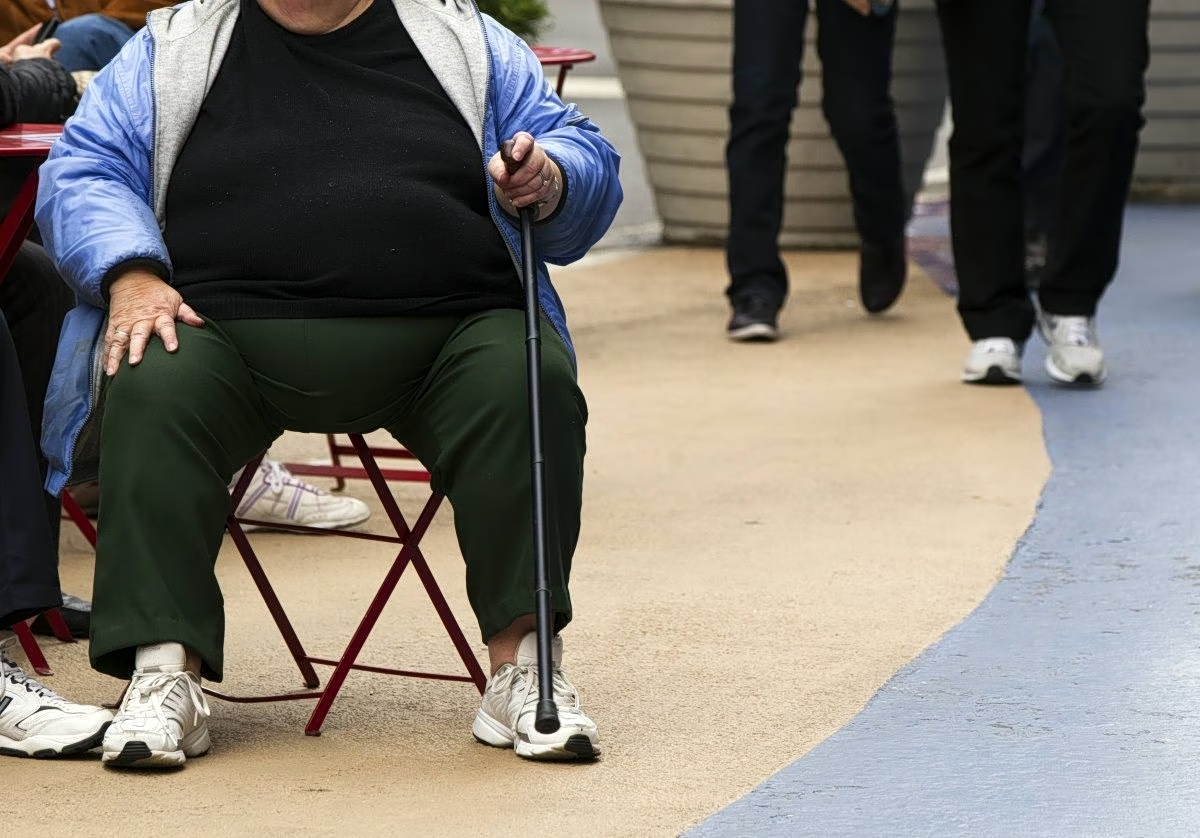
A free obesity treatment program in Greece is facing uncertainty, leaving around 46,000 beneficiaries waiting for a solution after its funding officially ended at the end of June.
The Ministry of Health is seeking emergency European funding to secure a two-month extension of the program, but no final decision has yet been reached.
If the request is rejected, participants may have to either cover the cost of their treatment themselves for at least two months or stop their therapy, potentially losing the benefits they have already achieved.
The government has committed to restarting the program in September using national funds, provided there are no further delays. However, the months of July and August remain unresolved.
Funding gap linked to delayed launch
The financial gap was reportedly caused by a delay in the programs launch.
The initiative was originally expected to begin in September but eventually received approval in December, despite the fact that funding from Greece’s Recovery and Resilience Fund — which supported the wider prevention programs known as “Prolamvano” — was scheduled to end in late June.
The timing issue has raised questions over the programs planning and long-term continuity.
Doctors warn interruption could affect patients’ progress
The medical community has expressed concern that a lengthy interruption could undermine the progress already made by participants.
Stavroula (Lina) Paschou, assistant professor of Endocrinology at the Medical School of the National and Kapodistrian University of Athens, said the program represented an important step toward prevention and improving public health.
She called for a solution that would allow continued funding for obesity medications and ensure that patients who need treatment can continue receiving it.
Experts have also raised questions over whether the programs current eight-month treatment period is sufficient for effectively managing obesity and maintaining long-term results.
Who qualified for the program?
The program targeted citizens considered at higher risk due to severe obesity and related health conditions.
Participants included people with a body mass index (BMI) of:
- 40 or higher; or
- 37 to 40 with obesity-related conditions such as type 2 diabetes, sleep apnoea or hypertension.
Eligible citizens received text message invitations in December to participate in the program.
Experts call for longer treatment periods
The programs rules currently set a maximum of eight medical appointments and eight medication treatments, with no exceptions.
However, experts argue that this timeframe may not be enough for all patients, particularly those with severe obesity or related medical conditions.
Paschou said extending treatment beyond eight months is often clinically necessary to achieve and maintain weight loss, as well as the related improvements in metabolic health.
The future of the program now depends on whether additional funding can be secured to prevent a gap in treatment before its planned restart in September.