

 Μake us preferred on Google
 Obesity does not only affect the scale, our metabolism, or our heart. According to a compelling new study published in the scientific journal Nature, it can cause extensive, and until now invisible, damage throughout the entire body, including in unexpected areas such as the nerves of the face. This finding was reached by a team of scientists in Germany using the pioneering artificial intelligence platform MouseMapper.
How MouseMapper Works
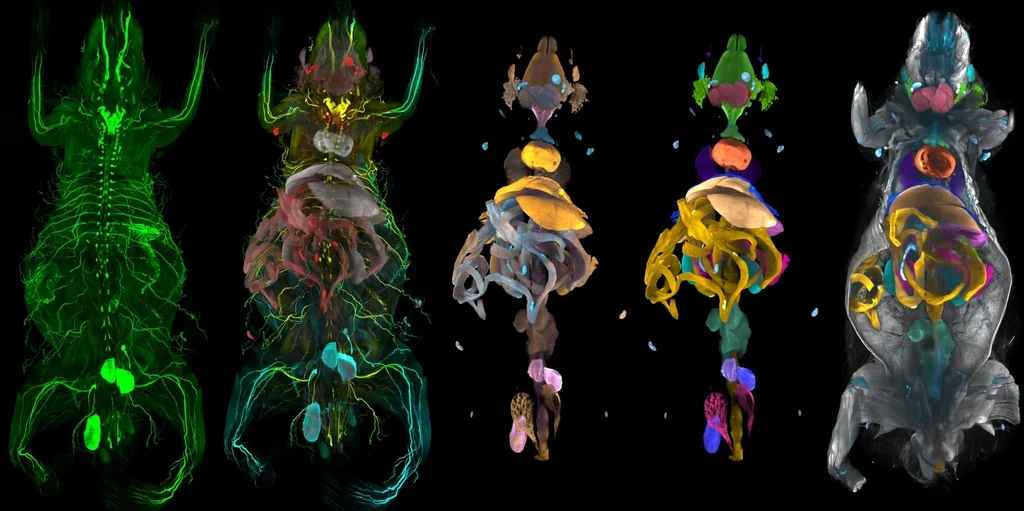
Led by Professor Ali Ertürk of the Helmholtz Research Center, the team developed this innovative experimental platform to investigate how obesity attacks multiple vital organs and systems simultaneously. As the study’s lead author, Dr. Doris Kaltenecker, explained to Vima-Science: “Traditional approaches usually analyze small tissue regions or individual organs. MouseMapper allowed us to study the entire organism (of mice) at the cellular level. We were thus able to identify obesity-related changes across multiple systems at once and discovered unexpected connections that would otherwise have remained invisible.”
The process began with full-body imaging of the lab animals after a special chemical treatment of their tissues, which allowed light to penetrate more deeply and enabled specialized microscopes to capture the entire body of the mice with precision. Detailed, three-dimensional maps of the animals’ organs, nerves, blood vessels, and cells were then generated. At that point, the artificial intelligence took over: MouseMapper processed the enormous volume of visual data and identified sites of inflammation, structural alterations in tissues, and damage to the nervous system.
An Unexpected Finding
One of the most surprising discoveries was that obesity appears to affect the facial nervous system. In obese mice, the structure of the nerve endings in the trigeminal nerve region was found to have been altered, a change that may be accompanied by potential dysfunction of the facial senses. Notably, comparable changes were also observed when human tissue samples were examined.
“One of the most significant conclusions of our research was that many of the core molecular processes disrupted in obese mice also appeared to be disrupted in the trigeminal ganglion of humans with obesity. This finding reinforces our belief that the experimental model reflects meaningful biological aspects of the disease in humans as well,” Dr. Kaltenecker noted.
A New Model for Understanding Disease
In its current form, the technology is not used as a diagnostic tool for humans. Nevertheless, as the researcher pointed out, the system is “flexible” and can be adapted to map different biological systems. This platform could prove particularly valuable in the study of conditions such as neurodegenerative diseases, cancer, cardiovascular disorders, autoimmune conditions, and chronic inflammatory diseases.
Looking ahead, MouseMapper technology could be applied in clinical practice in combination with common imaging procedures such as MRI and CT scans. It would then be possible to create a “digital map” of the human body, contributing to the early detection and deeper understanding of complex diseases without the need for invasive procedures.