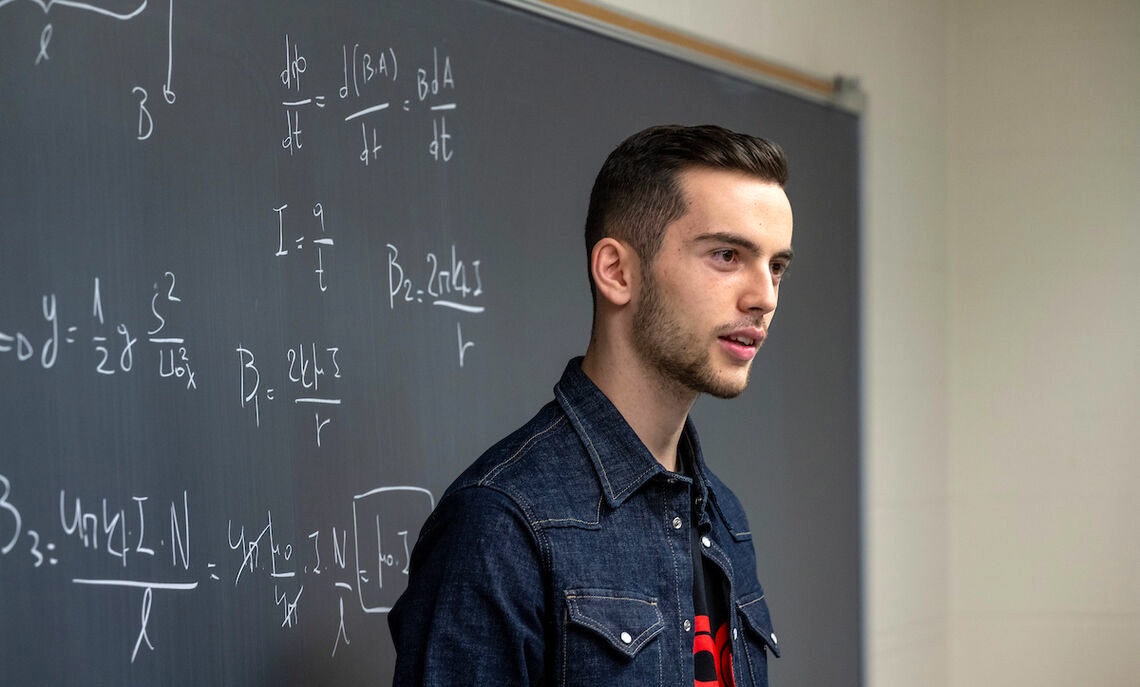
Menelaos Raptis, a Greek physics student at Franklin & Marshall College (F&M), has made a groundbreaking discovery in cosmology: the detection of oxygen in two galaxies located 12 billion years away, a find that is reshaping scientific understanding of the early universe.
Raptis made his discovery after joining a team of F&M students analyzing data for NASA’s James Webb Space Telescope (JWST), the largest and most advanced space telescope ever launched, under the tutelage of Ryan Trainor, assistant professor of physics.
The Thessaloniki-born student published his results in The Astrophysical Journal Letters under the title “CECILIA: Ultra-Deep Rest-Optical Spectra of Faint Galaxies at Cosmic Noon.”
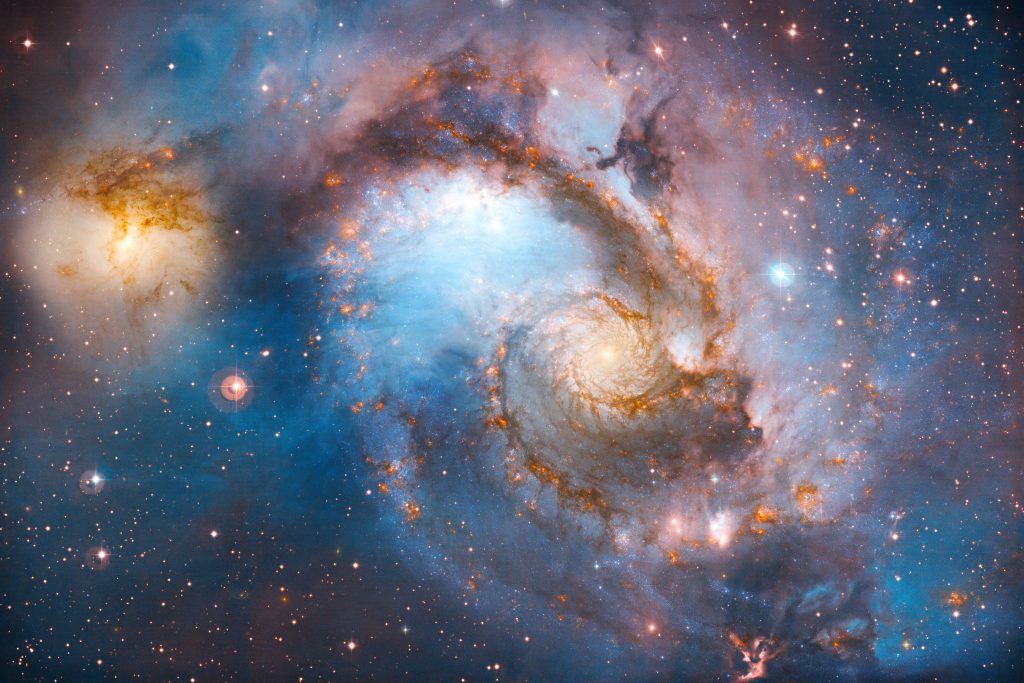
“This study pushes the boundaries of what we know about some of the faintest, smallest galaxies in the early universe — over 10 billion years ago,” Raptis explained on LinkedIn. “Using ultra-deep JWST spectroscopy, we captured the most sensitive rest-optical spectra of individual faint galaxies at this epoch, providing new clues about their chemical and physical conditions.”
The discovery marks the first time oxygen has been detected in such distant and low-mass galaxies, tracing the element we breathe today back to the universe’s earliest stages.
“It is like watching the Universe take its first breath — like a newborn child,” he said in an interview to ERT News.
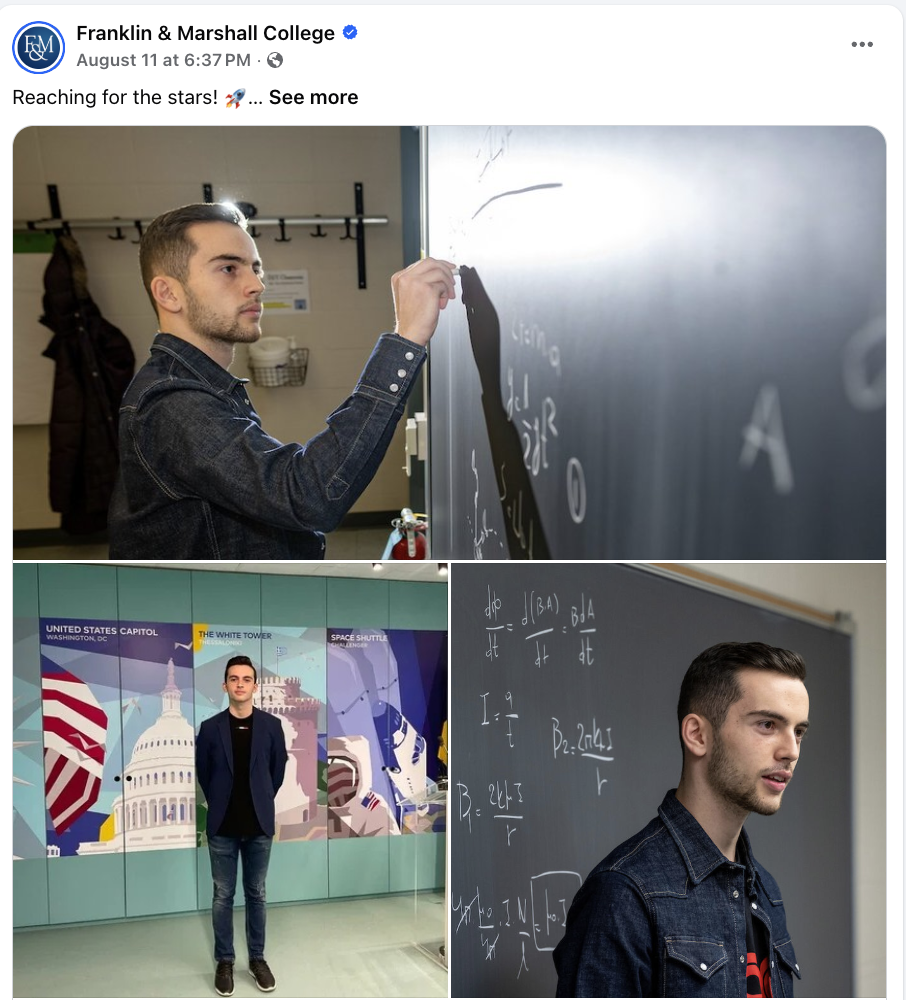
Raptis has long been passionate about space exploration. At just seven years old, a telescope gifted by his father sparked his curiosity about the cosmos. In 2017, he became the youngest European Space Ambassador after winning the Odysseus II competition, he has represented Greece in the national robotics team and participated in the NASA Hackathon.
Beyond his research, Raptis is active in STEM advocacy at F&M, promoting opportunities in science and technology for young people.
His work opens new avenues for exploring the chemical makeup of the early universe and its potential for sustaining life.
Raptis hopes to become an astronaut, following in the footsteps of Thomas Pesquet, a French aerospace engineer, pilot and European Space Agency astronaut.