
Tyrannosaurus rex dominated its prey with sheer jaw strength, but not all giant meat-eating dinosaurs followed the same blueprint. A recent biomechanics study examined 17 predatory dinosaur species, revealing a surprising range of feeding strategies across millions of years.
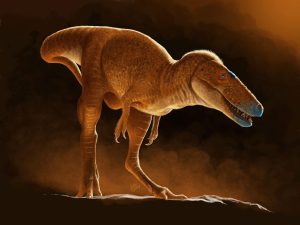
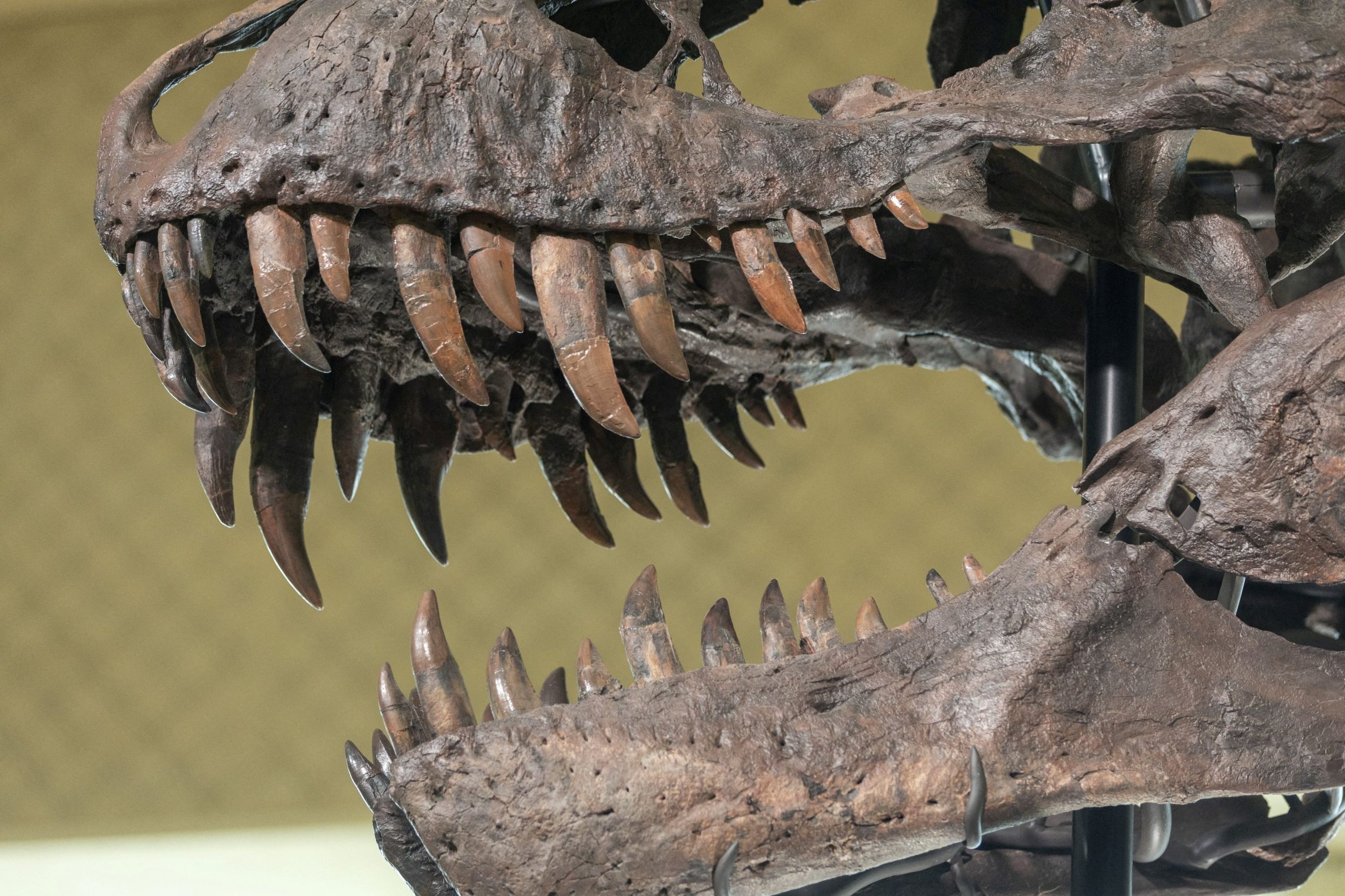
Researchers found that T. rex possessed the highest estimated bite force, with a heavily reinforced skull and massive jaw muscles, perfectly adapted to crush bone. In contrast, other predators like Giganotosaurus relied more on slashing and tearing flesh, while Spinosaurus, with its long, narrow snout, specialized in catching fish.
“Large predatory dinosaurs didn’t all evolve the same kind of skull to deal with the challenges of feeding at massive size,” said vertebrate paleontologist Andre Rowe of the University of Bristol, lead author of the study published in Current Biology.
Using three-dimensional skull models and digital muscle reconstructions, the team simulated bite forces and stress distribution across different theropod lineages. The research spanned from early species like Herrerasaurus, living 230 million years ago, to T. rex, which roamed western North America just before the asteroid impact 66 million years ago.
Early theropods, including Herrerasaurus and Dilophosaurus, had lightly built skulls that couldn’t handle extreme bite forces. Over millions of years, skull strength and bite mechanics gradually increased, peaking with tyrannosaurs such as T. rex, Daspletosaurus, and Albertosaurus, which developed deeper skulls, robust bone structures, and stronger jaw muscles.
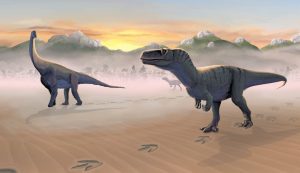
Despite similarities in size, T. rex, Giganotosaurus, and Spinosaurus evolved distinct skull adaptations. Giganotosaurus, which lived in Argentina, lacked the reinforced skull of T. rex, while Spinosaurus, inhabiting North Africa, used its slender jaws for fishing, though fossils indicate it also hunted other animals like pterosaurs.
Rowe emphasizes that there was no single way to be a giant predator. Some dinosaurs relied on brute strength, others on agility or repeated strikes. This evolutionary flexibility allowed diverse predatory dinosaurs to thrive in ecosystems across the Triassic, Jurassic, and Cretaceous periods.
“What we’re seeing is a spectrum of ecological adaptations,” Rowe said. “These animals weren’t all trying to be T. rex clones. They solved the same problem in different ways, which likely helped them dominate for so long.”