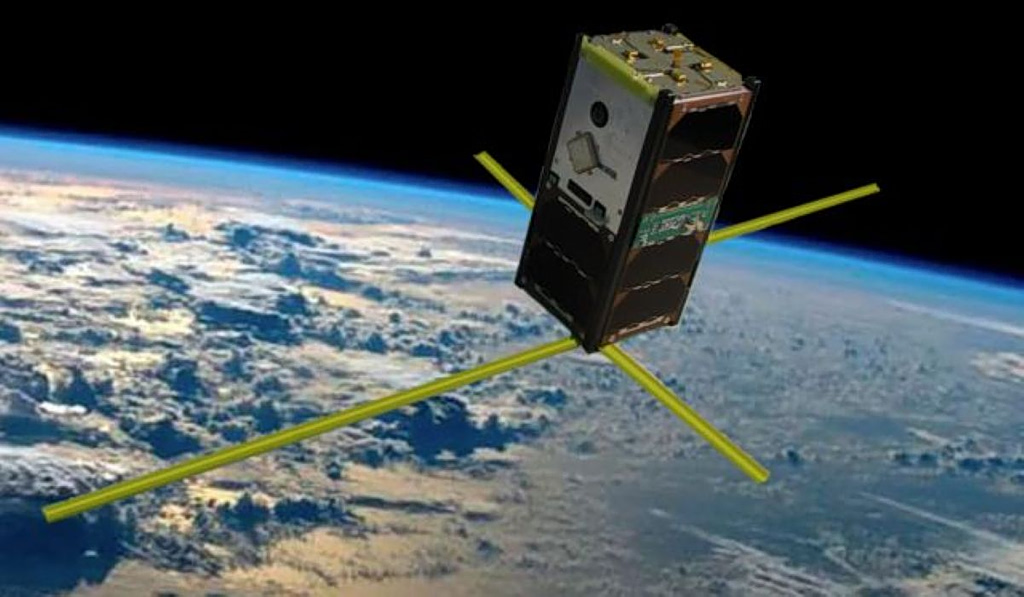
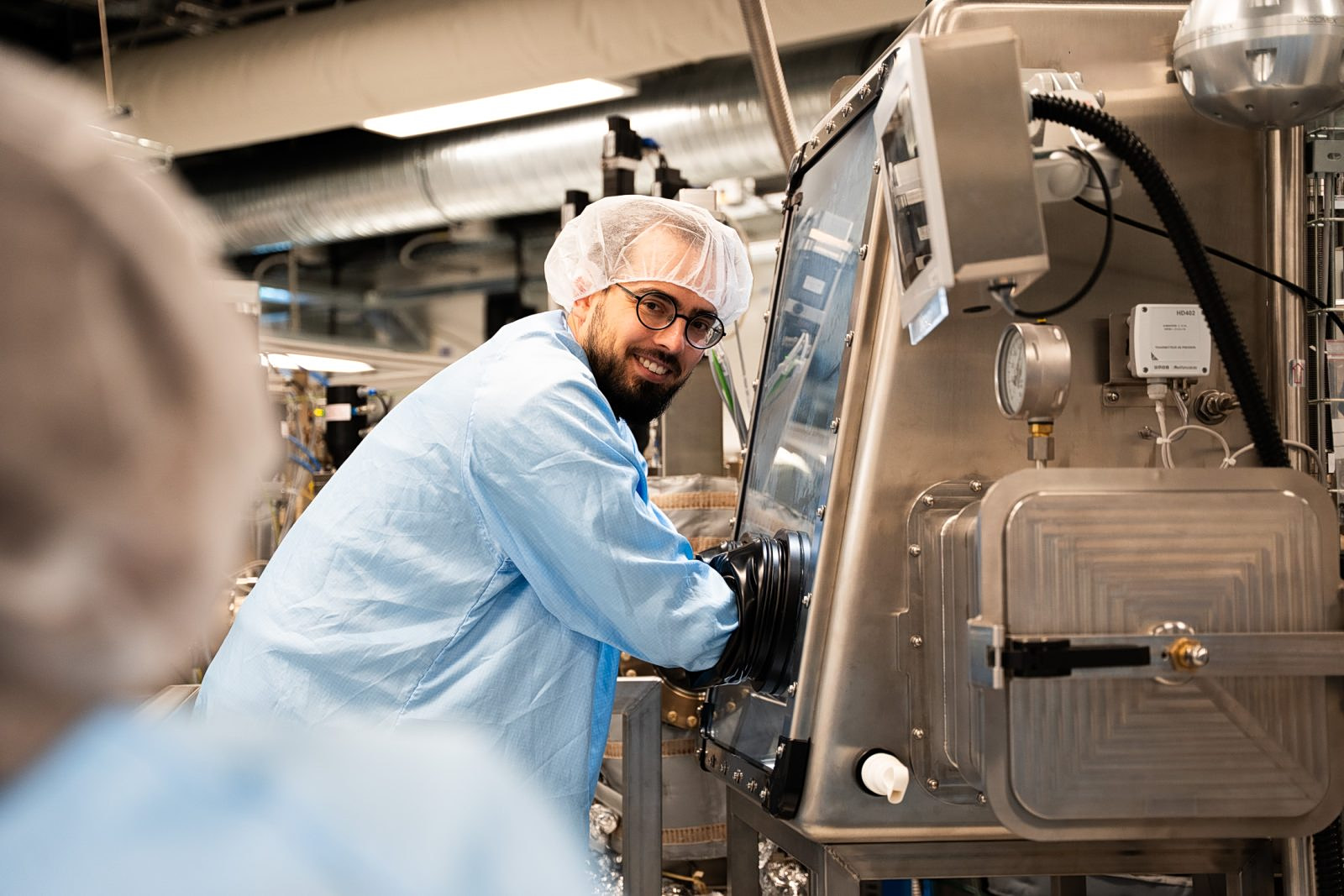
To Vima gained exclusive access and became the first Greek media outlet to visit Microsoft’s Quantum Lab in Copenhagen, which officially opened on Wednesday, 13/11, in the presence of the country’s political and state leadership.
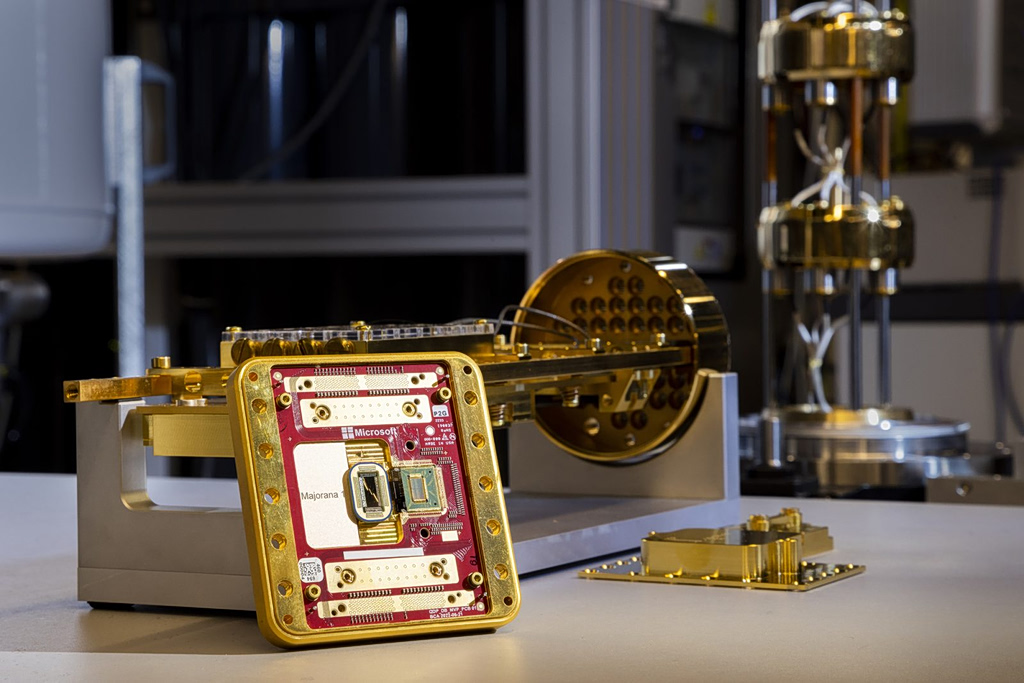
The Quantum Lab is Microsoft’s largest quantum computing laboratory in the world, and it is where Majorana 1 was designed and built—the chip aiming to transform quantum computing by enabling the transition of quantum computers to large-scale applications and research fields.
Majorana 1 was first presented in February in a study published in Nature.
During the visit, To Vima closely observed all stages of Majorana 1’s construction—a process involving materials and techniques used nowhere else and at the forefront of quantum computing—and spoke with Chetan Nayak, head of research on topological processors and one of the founders of quantum computing; Lauri Sainiemi, head of the Quantum Lab; and Nathan Baker, head of quantum applications.
Quantum Lab in Lyngby
In one of the many meeting rooms at Microsoft’s Quantum Lab in Lyngby, a small town just outside Copenhagen, Nathan Baker, head of quantum applications, explains to a group of European journalists why qubits—the smallest unit of information in quantum computers—are noisy and unruly, making them prone to errors.
On his slide, he illustrates them with the same spinning top used by director Christopher Nolan in Inception—not by chance. The final shot, with the top spinning as it appears to lose its balance, remains one of cinema’s most ambiguous endings, but also a memorable depiction of the fluid and multidimensional nature of quantum mechanics.
A Rapidly Growing Field
Quantum computing seeks to simulate the principles of quantum mechanics in computational systems—a task demanding and difficult due to the limitations of classical computers. Nevertheless, the field is among the fastest-growing, making significant leaps in recent years.
One of the most innovative developments has been the creation of Majorana 1, the first quantum computer chip operating with topological qubit cores, capable of holding up to 1 million qubits—a breakthrough expected to accelerate the transition of quantum computing to large-scale research applications. News in quantum computing is always met with excitement, because the utilization of quantum computers promises solutions in areas such as chemistry, medicine, and engineering that classical computing cannot provide.
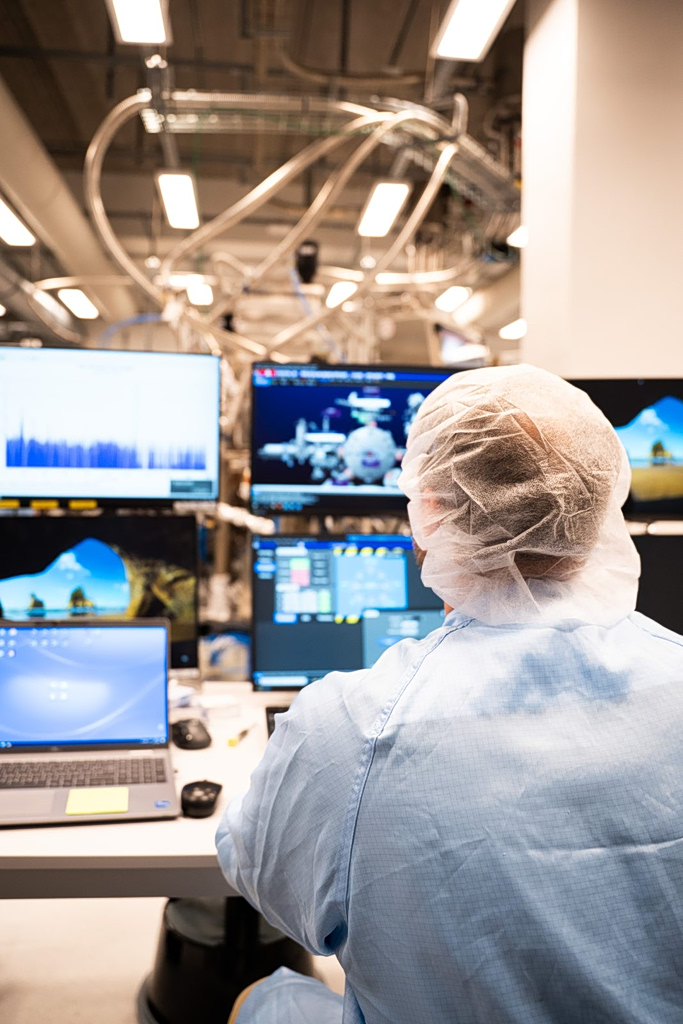
“Thanks to topological qubits, we will need just a few years—not decades—to reach large-scale computations,” noted Chetan Nayak, head of the Majorana 1 research, in response to a question from To Vima.
A New World in a Few Years
“It will change the world,” Baker emphasized vividly. Imagine such a thing happening beneath your apartment—this is everyday life for those working in the auxiliary building of the Quantum Lab, which houses two of the labs where Majorana 1 is built.
With quantum computing entering research, problems that once took years to solve will now be addressed within weeks thanks to quantum computing power. Drug discovery will accelerate exponentially, offering solutions for previously incurable diseases. In industry, cleaner combustion will be achieved, reducing carbon dioxide emissions directly and significantly. Meteorology will be able to predict extreme weather months in advance. Battery life and capacity will increase, advancing electric mobility. Innovative self-repairing materials will be deployed across aerospace and large-scale construction. The development of special catalysts for producing potable water will bring transformative changes to food scarcity issues.
Majorana 1 is likely one of the most reliable paths to achieving these breakthroughs. The chip was presented in February in the scientific journal Nature, alongside Microsoft’s next steps in quantum computing. Drawing a parallel between the evolution of quantum computers and classical computers, Nayak noted, “We are at the stage analogous to when vacuum tube computers were replaced by transistor-based machines.”
The “Quantum Fever” of Companies
2025 has been marked by numerous developments in quantum computing. Competition among tech giants such as Microsoft, Google, IBM, and Amazon is fierce, with announcements about each company’s progress following rapidly.
Another major player, IBM, aims to create quantum computers with up to 2,000 qubits by 2033. Currently, in terms of sheer numbers, it is ahead of competitors, having already presented the IBM Condor, a 1,121-qubit quantum processor. Recently, Google announced the Quantum Echoes algorithm, running on the Willow chip, a superconducting quantum processor supporting 105 qubits. Google’s immediate goal, though not officially dated, is to scale Willow’s capabilities to 1,000 qubits.
This “quantum fever” is reflected in investment figures. Today, the revenue cycle is around $500 million, expected to exceed $4 billion by 2030. The U.S. government closely monitors developments, as the development of quantum computers and their large-scale application potential will, like AI, become another instrument of geopolitical influence.
The EU is also engaged. The Quantum Act is imminent, and it is significant that a crucial part of research occurs within its territory, at the Quantum Lab. “We need trusted partners to turn scientific excellence into skills, jobs, and competitiveness, while also working on new security standards required for quantum computing use,” commented Michael Ekman, a senior Microsoft executive, to To Vima.
A 50-Qubit Computer Next Year
Quantum Lab researchers have already demonstrated how 28 qubits can function together in a computational system. As Lauri Sainiemi, head of the Quantum Lab, noted, “Next year we will have built a 50-qubit computer in Denmark,” a milestone for enabling quantum computers to solve complex scientific problems beyond the reach of classical computing.
Asked about Microsoft’s broader timeline for large-scale scientific applications of quantum computing, Nayak, following Microsoft’s usual approach, declined to provide specific dates. He emphasized, however, that the timeline has been approved by the U.S. Department of Defense’s DARPA as part of its quantum computing utilization program. Notably, DARPA has approved only two approaches for developing quantum computers in the coming years: Microsoft’s and PSIQuantum’s.
Nayak denied that the collaboration extends to military applications for the U.S., noting that DARPA “is kept informed of developments in this field.”
Making Nothing into Something
Often, impressive headlines generate expectations and excitement, even making scientists uneasy, as research does not conform to media and marketing narratives. Quantum computing is not new—it dates back to the 1980s, and Nayak, a founding figure in the field, has been working on it for over 20 years. News often simplifies decades of research and work.
Multiple Verified Models
How does Microsoft know it is on the right track? Nathan Baker cited multiple verified models: “We know precisely the capabilities of computers with 50, 100, or 1,000 qubits, and the solutions they will provide across applications. Our data on quantum computing application development is reliable, and both hardware and algorithms will continue to evolve to enable these applications.”
In quantum computing, unlike classical bits, qubits do not take a value of 0 or 1 but can simultaneously take both—making quantum computers powerful yet complex. Moreover, qubits are extremely sensitive to their environment, easily corrupted, and prone to errors.
Nayak, as noted, is a founding figure in the field and has collaborated with Microsoft for over 20 years to create qubits from the Majorana pseudo-particle, found in academic texts and university experiments. The choice is innovative because, practically, the Majorana pseudo-particle is… nothing.
To illustrate, imagine a cinema with 100 seats, 99 occupied and one empty. If each spectator moves to the next seat in sequence, the empty seat seems to move. It doesn’t exist, yet it moves. Quantum Lab researchers have worked to make “nothing into something.” “With Majorana 1, we managed to turn complex theoretical physics concepts into tangible technology,” Nayak emphasized.
The Eccentric, Shy Particle
Microsoft is currently the only company using the Majorana particle for qubits. The choice may seem eccentric, but Microsoft’s expertise and the pseudo-particle’s characteristics make it reliable for providing research solutions.
Topological qubits are small, fast, and reliable, with performance fully controlled digitally. “If Majorana were a person, it would be a shy guy who doesn’t speak in a group, but once you meet him, you immediately notice a very interesting personality,” said Sainiemi.
How Majorana 1 is Built
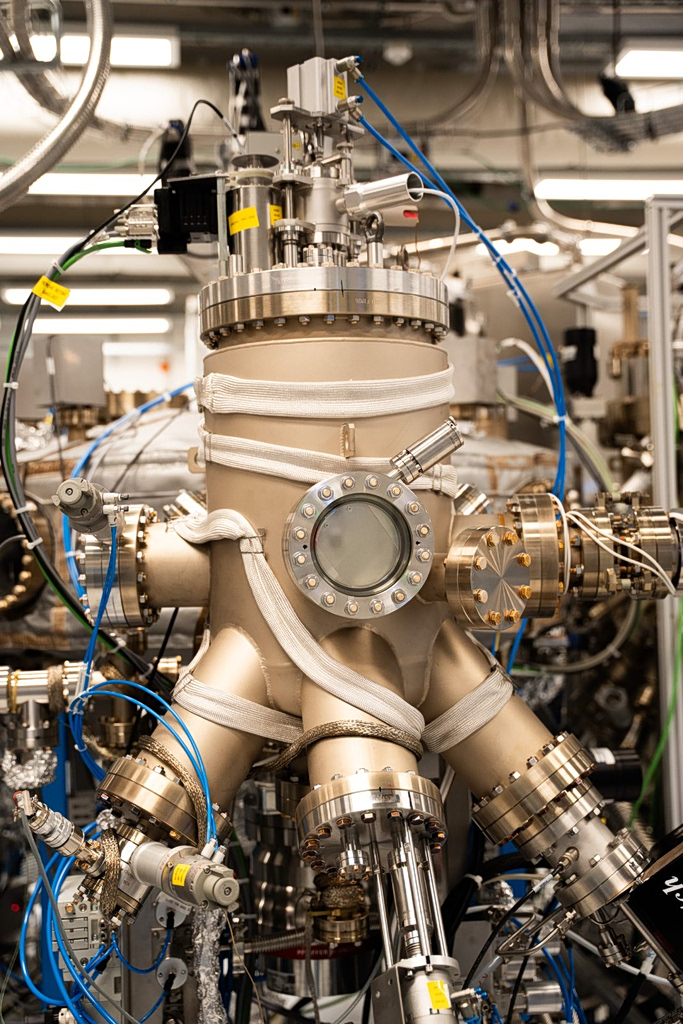
The chip’s construction has three stages. Stage one involves material production in the Quantum Lab’s Materials Lab. The setting is futuristic, with large chambers connected to vacuum pumps for building nanowires and other materials, and liquid nitrogen tanks for cooling.
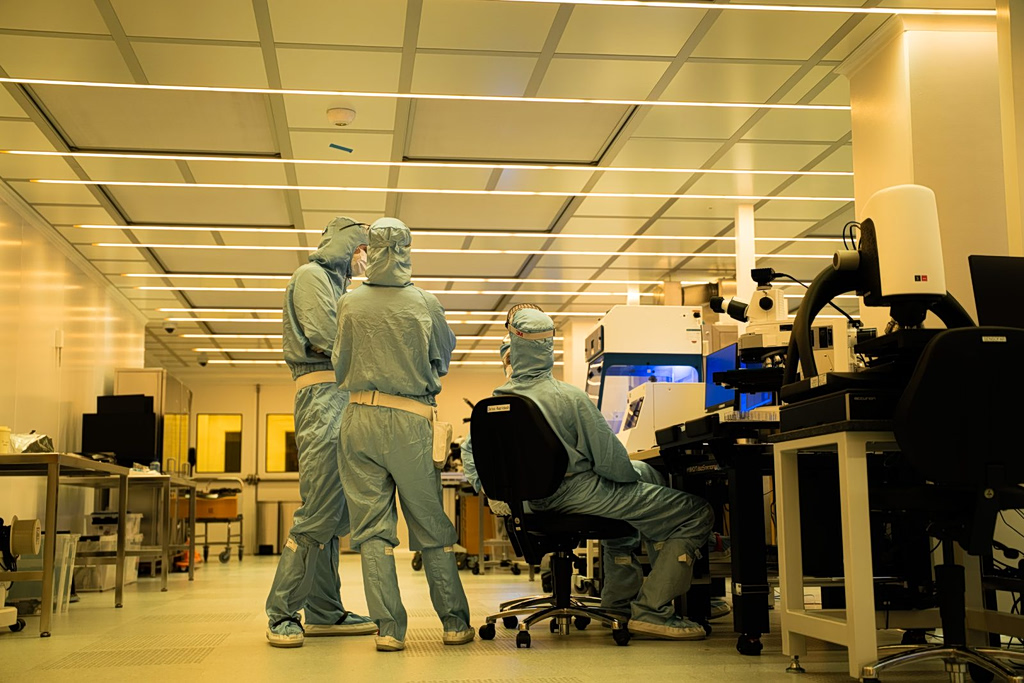
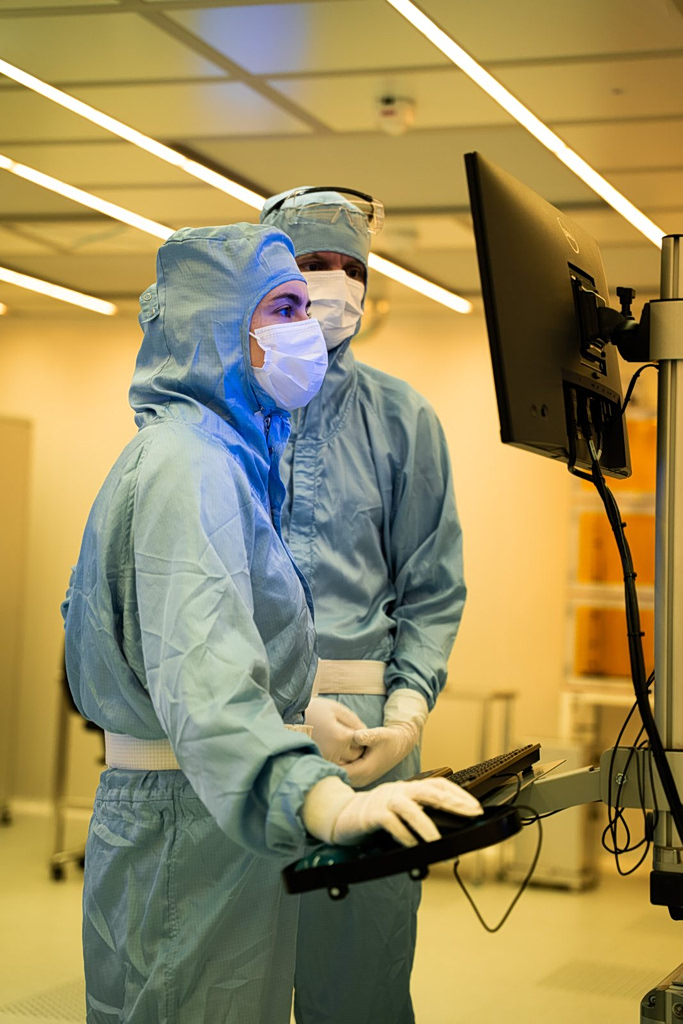
Stage two occurs in the sterilized Cleanroom, where metal surfaces are stainless steel, air is filtered and renewed every six minutes, and lighting is dim yellow due to photosensitive materials. Researchers wear special suits, gloves, and masks. Components are assembled into the chip here.
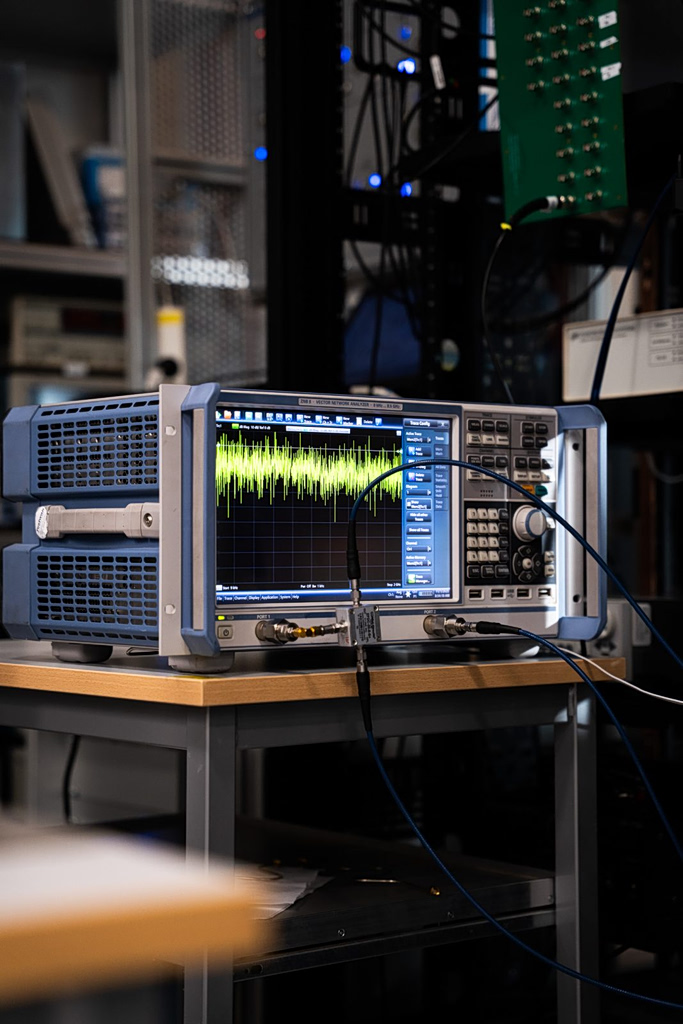
Stage three involves testing in the Measurement Lab. Chips are cooled to extremely low temperatures in cryogenic chambers and undergo tests to ensure suitability.
Comprehensive Process Control
Sainiemi noted: “Having all qubit manufacturing in one place and all teams working together is crucial. We control the entire process and can build topological cores faster, paving the way for error-free computation and hardware architectures for large-scale quantum computing.”
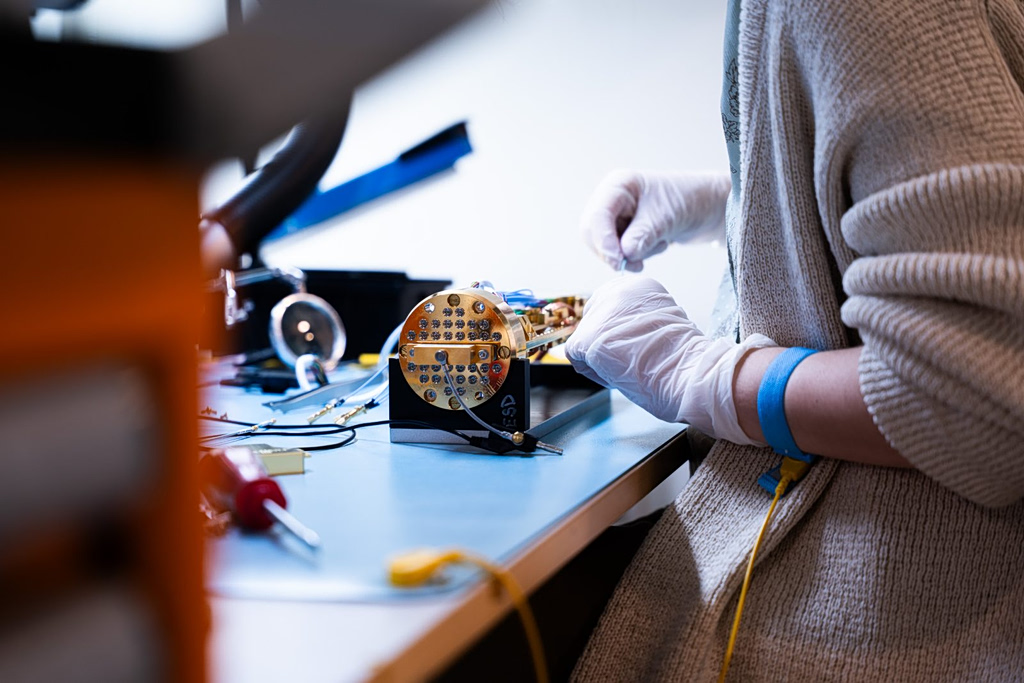
Over 100 researchers from at least 20 countries work at the Quantum Lab. Founded in 2018, it brought together teams from the Niels Bohr Institute and the Technical University of Copenhagen. Scientific milestones are not created in isolation but are the sum of years of collaborative effort.
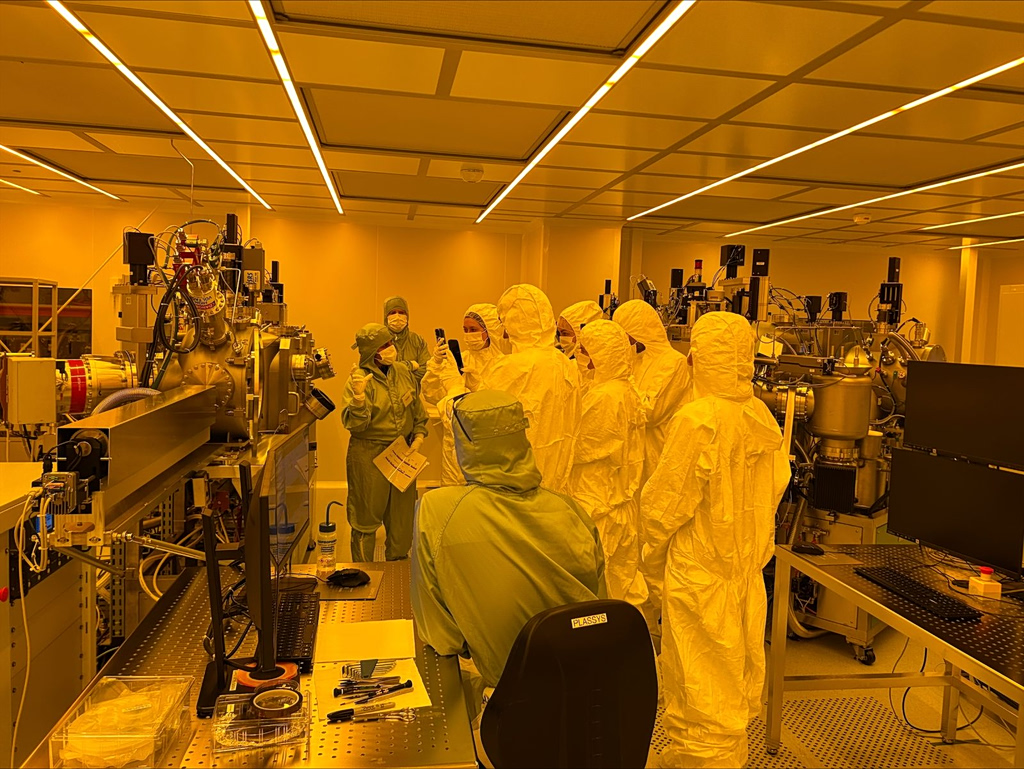
“From the start, our goal was to turn individual university researchers and small groups into one large team. Academic freedom is valuable, but here we all had to move toward the same goal. Achieving a discovery of this scale would have been impossible without complete trust and alignment,” Sainiemi explained.
Moving through these labs, one senses something extraordinary: researchers use cutting-edge technology and advanced AI, advancing knowledge in ways previously unimaginable. They are at the research frontier, yet their meticulous, hands-on work remains deeply human. Quantum computers for humanity’s benefit are, at their core, handmade.