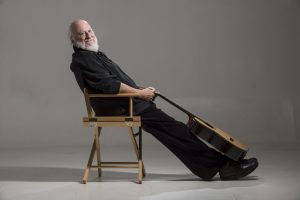
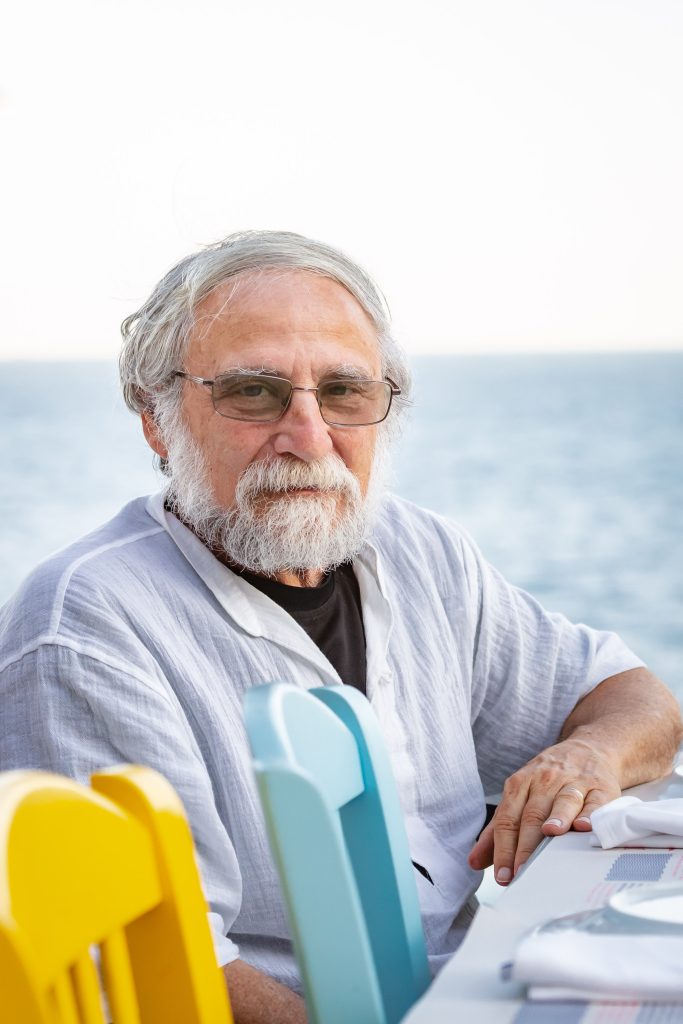
Professor Brian Joseph of Ohio State University has spent over five decades studying the intricate relationships between the languages of the Balkans.
His new book, co-authored with Victor Friedman and published by Cambridge University Press, as open access, explores how Greek, Albanian, Turkish, Romani, and other languages have influenced each other over centuries.
In this exclusive interview, Joseph explains why the Balkans represent a unique linguistic laboratory and discusses his efforts to preserve Greek dialects before they disappear forever.
Professor Joseph, congratulations on your new book on Balkan languages. It’s already being called groundbreaking and destined to become a classic. What makes this work so significant?
Thank you. The Balkans have fascinated linguists for over two centuries because of something quite remarkable that happened here. The languages spoken in this region-Greek, Albanian, Bulgarian, Romanian, Turkish, and others-have influenced each other so deeply that they’ve developed parallel grammatical structures, even though they come from completely different language families.
This goes far beyond simple word borrowing, which we see everywhere-like English words entering modern Greek today. In the Balkans, we see entire sentence structures becoming parallel across different languages. Some linguists once said this could never happen, yet here it is, documented and studied.
Modern Greek, for all that it’s recognizably Greek, is very different in many respects from ancient Greek. The same is true for the languages derived from Latin in the Balkans, like Romanian, and also South Slavic languages like Bulgarian.
Can you give us a concrete example?
Certainly. Take the Greek verb “anoigo” (to open). In modern Greek, we use this with colors to mean “light”-“anoixto ble” for light blue. This is different from ancient Greek, which used suffixes like “-opos”-so “erythropos” would be reddish.
That construction still exists today as well.
Yes, but what’s fascinating is that Turkish, Albanian, and Macedonian all use their equivalent of “open” with colors in exactly the same way. Greek has moved away from its ancient pattern toward what we find in neighboring languages.
So we essentially copy the syntax or grammar of other languages, but keep our own linguistic terms.
Exactly. As early as 1829, the Slovenian linguist Jernej Kopitar described several Balkan languages-Albanian, South Slavic, and Romanian – as “three languages with one grammar.” The vocabulary and pronunciation differ, but the underlying grammatical structures have become remarkably similar.
The Multilingual Balkans: A Historical Perspective
How did this linguistic convergence happen? Is it because people in this area became multilingual and borrowed from each other?
Multilingualism has a lot to do with it. In any multilingual society, not everyone speaks both languages perfectly. If I’m speaking with you using maybe 75% of your language, you might adjust your speech to help me understand. I might use a word from my native language, and you adapt. These seem like conscious processes, but they happen naturally when people interact regularly.
And they happen over centuries, day after day, with many people, until somehow they become cemented.
Exactly. Victor Friedman and I believe that for understanding the current linguistic shape of the Balkan languages, the period of Ottoman administration was quite significant from a linguistic perspective. While this was certainly a complex historical period with many dimensions, from the standpoint of language contact, the extensive territorial unity under a single administrative system appears to have created conditions that facilitated certain types of linguistic interaction.
There was also increased mobility for people and trade.
Yes, there was greater administrative integration. With a single document-a tezkere-you could travel throughout the Balkans. This facilitated internal trade and interactions.
The Ottoman administrative approach included recognition of different religious communities through what was called the Millet system. While the historical record shows a complex picture that included both destruction of some religious sites and preservation of others, this system formally recognized different religious groups as administrative units. Whatever its broader historical implications, this appears to have contributed to maintaining distinct language communities while also facilitating contact between them.
So if you’re in a village where two or three languages are spoken, and there are mechanisms for interaction between communities, you’ll begin to use their language when needed or use your own language and let others draw on it.
Living Languages in the Field
You’ve done fieldwork in southern Albania among Greek-speaking populations. What have you discovered?
Fascinating linguistic blends. During the economic crisis, Greek speakers there referred to it as “εκονομική κρίση” – the first part in Albanian (“ekonomik”) and the rest in Greek. For “diploma,” they’d use the Greek ‘d’ sound but Albanian stress patterns. It shows how bilingual speakers naturally create compromises.
They want to make themselves understood to others, to find a middle ground.
Yes, it’s a compromise, a kind of lowest common denominator phenomenon.
In ancient times, there weren’t language schools like today. This probably promoted more natural exchange.
Exactly-it was all natural, through experience. A 1930s French study we cite observed that in a Vlach village, men were multilingual but women weren’t, because women stayed home with children while men traveled for trade. But women knew enough to recognize different languages. The scholar recorded an amusing story where a Vlach child used “όχι” for “no,” and his mother mocked him, saying, “Ochi, what is this?” She could only have known it was wrong because she recognized it as a Greek word filtering into her son’s speech.
The women gave early education to children, but boys eventually followed their fathers.
Their fathers would travel to different villages and trade routes. Therefore, we believe that from a purely linguistic perspective, this period of territorial integration created circumstances conducive to the multilingual contact that led to the convergence patterns observed today.
Turkish functioned like English does today in the Balkans-as a lingua franca.
Exactly! Victor once wrote that “English is the Turkish of the 21st century in the Balkans.” But even into the 20th century, you can still find language interaction situations. In northern Greece today, in Thrace, interactions between Roma and Greeks have led to changes in Romani.
The Greek Connection
Why did you choose to study Albanian-Greek populations specifically?
My interest in the Balkans began with Greek over 50 years ago when I was a college student. I started with ancient Greek, then spent my third year studying in Athens through the College Year in Athens program. It was transformative-studying ancient and modern Greek together was like having a laboratory for studying language history.
I actually wrote my dissertation on one feature found across all Balkan languages-the use of “na” verb forms instead of the infinitives that ancient Greek had.
So you studied Balkan languages to understand what made Greek evolve over its 3,000-year history.
Yes. That led me to other languages, and I studied Albanian more carefully because it’s actually very closely related to Greek, but very different in pronunciation and vocabulary-an interesting point of contrast.
Are Albanian and Greek the two oldest languages in the Balkans?
There’s much debate. We know Greeks arrived around 2000 BC, and by the time we first find Greek attested-Mycenaean Greek from the 14th-15th centuries BC-it’s already clearly Greek. Other groups’ prehistory is more recent. The Slavs entered in the 6th-7th centuries AD-we have historical records.
With Albanians, we don’t have much historical record. The first written Albanian is from 1462 AD-just a baptismal formula-and the first large text from 1555 AD. We know they had contact with Latin speakers and ancient Greeks from loanwords, but where Albanians were in 2000 BC when Greeks arrived? We don’t really know. There are claims about connections to ancient Illyrians, but we have no Illyrian inscriptions, just references to two or three Illyrian words in Latin literature.
Languages as Living DNA
Do you think language is like spoken DNA of people, showing where they’ve been?
It can be. All Romani varieties across Europe have Greek words for seven, eight, and nine. When Romani speakers first moved westward into Anatolia, they came into contact with Byzantine Greeks. Some stayed in the Balkans, others moved on, but they all carried these Greek numbers. Even Romani in Russia and Spain has this telltale sign of Greek contact.
Language can give you clues about where speakers have been, who they’ve interacted with. It shows how complicated the situation is-this really needs scientific study. Languages don’t change randomly. If you study carefully, you can understand the social histories of peoples through their languages.
This social interpretation of language is one of your book’s innovations.
Yes, that’s key. We also decided to include languages like Romani and Judeo-Spanish that don’t get much attention in Balkan literature, and to focus on regional dialects rather than just standard languages. The actual contact took place between speakers in villages, towns, and neighborhoods. You can’t understand what’s happening by looking only at modern standard languages.
A Book 30 Years in the Making
I heard this is one of the few books repeatedly quoted before publication.
[Laughs] That’s partly our fault. We started this book almost 30 years ago, thinking we could put it together quickly. Every year we told people “it’ll be out next year,” but we kept realizing there was more to say. As recently as 2020, we were saying “for real, next year”-and here it is, finally in 2025.
We were encouraged by the interest even before publication. We hope anyone interested in the Balkans or language contact will look at it. We tried to focus on the Balkans while connecting to developments worldwide.
Do you plan translations?
We weren’t planning to translate it ourselves, but if someone wanted to undertake that, it would be great. It’s available as open access-we raised money through Ohio State and the University of Chicago to cover those costs. We realized the people most interested in this book are in Eastern Europe, and they’re least able to afford a 200-euro book. It took work to get funding, but we’re grateful to our universities.
Preserving Greek Heritage
Tell us about the Brian Joseph Fund for Greek Dialectology. You’re documenting dialects from places like Cephalonia and Chios before they disappear. Why is this urgent?
The fund was my way of giving back to Ohio State and Greek studies. Language is a local and national treasure, deeply tied to identity. The ancient Greek distinction between Greeks and “βάρβαροι” shows language was key to distinguishing peoples – national, local, and individual identity are all connected.
Especially for Greeks, who are very proud of their heritage.
We rightly pride ourselves on ancient monuments, but language is an ancient monument too. Losing regional dialects would make things less interesting. Some say losing a language or dialect means losing a vision of how the world works-there’s interaction between how we interpret the world and how we talk about it.
The fund brings Greek speakers and scholars to campus annually. We’ve also given scholarships for our week-long seminar teaching classicists to use ancient Greek knowledge to understand modern Greek. We’ve done this three times now, most recently in Nafplion at the Harvard Center for Hellenistic Studies.
The Contribution of the Miltiadis Marinakis Professorship
The Miltiadis Marinakis Professorship encourages students to record grandparents speaking traditional dialects. How has this practice contributed to our understanding of the diaspora?
My colleague Christopher Brown leads these projects where Greek-heritage students interview grandparents about language use. We’re trying to understand how Greek has been used historically in Ohio and how it’s used now-related to Greek-American identity and whether families still speak Greek with children.
By encouraging students to talk with grandparents, we give them a vehicle for understanding what their families went through coming to America. Language is part of the Greek experience in the diaspora, along with religion, community, and tradition.
The Future of Language Study
What’s your view of linguistics’ future, given university budget cuts? How might AI research affect the field?
There’s computational linguistics-applying language knowledge to develop computational models. The AI boom emerged from that tradition. I’m not sure we learn much about human language from computational modeling, but our knowledge feeds into it.
If language is a national treasure, then linguistics is like art history-no one would say art history or archaeology isn’t important. There’s also practical application. AI has had huge impact already. But there will always be place for historical interests. People want to know: where did this come from? What’sr this word’s etymology? Place names-why is this called X and not something else?
People look at personal history, the history of their communities.
There’s natural human curiosity about these things, and linguistics can provide illumination.
Understanding where we come from.
Exactly. Not necessarily where we’re going, but definitely where we’ve been.