Regional authorities in Attica decided on Thursday to launch an emergency action plan to address the mosquito problem and limit the risk of further spread of the West Nile virus (WNV) following a sudden increased in cases this week.
The decision comes after the National Public Health Organization (EODY) reported a sharp rise in virus cases and hospitalizations. The virus is primarily transmitted through the bites of infected mosquitoes.
An emergency meeting was held under the leadership of Attica Regional Governor Nikos Hardalias, with the participation of health experts, epidemiologists, doctors and representatives of EODY.
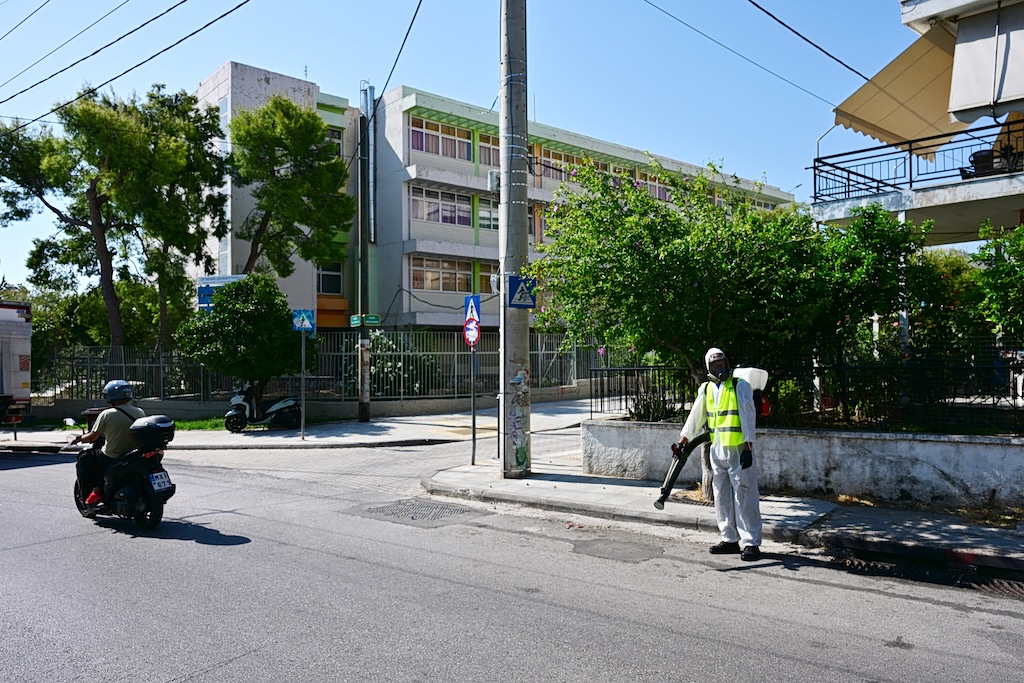
The current phase of the emergency response plan includes large-scale ground spraying using specialized vehicles equipped with turbines. The operations, to begin Thursday night, will cover approximately 2,471 acres in areas and settlements of Eastern Attica, where a higher number of cases has been reported.
Youngest case
On Wednesday, a 13-year-old was hospitalized after developing symptoms associated with West Nile virus. The child is the youngest victim so far this year. The child was hospitalized after developing complications, responded to treatment and was discharged late Wednesday, according to officials.
EODY experts are expecting the number of cases to increase in the coming weeks, particularly in Attica, where most of the incidents have been reported. The Region of Attica said that it has already boosted mosquito-control measures by 30%, adding that interventions would continue to be reassessed and adjusted based on epidemiological data.
Precautions Necessary
Health experts are urging residents to take precautions, particularly during the evening and nighttime hours, when mosquito activity can be high. People are advised to wear long-sleeved clothing and use mosquito repellents.
Pulmonologist and tuberculosis specialist, and head of the EODY Scientific Council, Theodoros Vasilakopoulos, confirmed during the meeting that there has been a significant increase in West Nile virus cases. The Region is also working closely with the Benaki Phytopathological Institute on systematic surveillance and monitoring of mosquito populations across the region. The aim is to ensure that mosquito-control interventions are designed and adjusted on the basis of scientific data.
According to Hardalias, the Region has carried out 102 cycles of ground applications using specialized spraying vehicles and equipment, as well as 20 aerial applications with a spraying helicopter. He said hundreds of flights have also been conducted using specialized spraying drones, allowing mosquito-control operations to reach breeding grounds in areas that are difficult or impossible for ground crews to access.
Residents are advised to remain vigilant and follow public-health recommendations to reduce exposure to mosquitoes and help limit the spread of West Nile virus. This is what you should know about the West Nile virus symptoms.