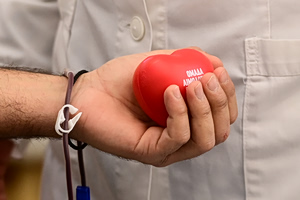
Serious blood shortages have been reported at hospitals across Greece in recent days, leading to the postponement of scheduled transfusions or the administration of smaller quantities of blood to patients who require regular transfusions.
Patients with thalassemia, also known as Mediterranean anemia, are raising the alarm and appealing for voluntary blood donations. They stress that transfusions are a necessary and scheduled part of their treatment that must be carried out without interruption, as maintaining the treatment schedule is essential to managing the disease and preventing serious complications.
Transfusions postponed at several hospitals
According to reports received by the Greek Thalassaemia Federation about 15 patients at the Thalassaemia and Sickle Cell Disease Unit of General Hospital of Nikaia have had their transfusions postponed for about a week.
At Laiko Hospital in Athens, approximately 19 patients have not received transfusions according to their prescribed treatment schedule, while another 20 patients at the University Hospital of Rio have also not been transfused as scheduled.
Postponements have also been reported at units on the islands of Rhodes and Mytilene.
At Agia Sofia Children’s Hospital, whose unit serves approximately 800 patients requiring regular transfusions, patients are being given their first unit of blood and are then asked to find a blood donor in order to receive the second unit prescribed under their treatment plan.
In other units, patients are receiving one unit of blood instead of the amount specified in their treatment plans. As a result, they have to return to the hospital sooner and more frequently.
Summer blood shortages
Thalassemia patients point to the seasonal decline in blood donations as a key concern, while stressing that demand for blood continues throughout the summer.
“It is known that during the summer, the number of blood donors decreases, while the need for blood continues,” they said. “When available supplies decline, the consequences are reflected both in the postponement of scheduled transfusions and in the administration of smaller quantities of blood.”
They urged the public to donate blood, emphasizing the potential impact of even a single donation.
“One blood donation can help up to three of our fellow human beings,” they said.