A new phase in road safety enforcement is set to begin with the introduction of roadside drug testing for drivers, as authorities move to strengthen controls over dangerous driving behaviors.
The measure is in its final stage and will be implemented once a Joint Ministerial Decision is issued. This will define the technical thresholds for detecting substances, in cooperation with toxicology experts and forensic services.
Officials emphasize that driving under the influence of drugs will be treated with the same severity as alcohol-related offences, described as a “silent but deadly threat” on the roads.
Stronger enforcement and new risks on the road
Traffic police are also adapting to emerging forms of reckless driving, including incidents organized through social media. A dedicated monitoring unit now tracks online calls for illegal street racing and intervenes preventively to avoid high-risk events.
Despite progress in reducing fatalities, road safety data remains mixed. Last year, road deaths fell to 517 from 665 in 2024 nationwide, while serious injuries also declined by 12%.
However, overall accident involvement has remained largely unchanged, suggesting that incidents are not decreasing in frequency but are becoming less deadly.
High levels of violations remain
Traffic violations continue to rise, exceeding 400,000 in 2025—an increase of 13.6%. Speeding remains the leading risk factor, with more than 37,000 violations recorded and a sharp rise of over 60%.
Concerns also persist over low compliance with basic safety rules. Seatbelt violations increased by 25%, while helmet use among motorcyclists is still inconsistent.
Expanded checks and digital policing
Enforcement efforts have intensified significantly. In 2025, police conducted 363,000 alcohol breath tests—more than double the previous year—resulting in over 11,500 cases of drunk driving.
At the same time, new technologies are reshaping policing. Digital traffic tickets will replace handwritten citations, allowing instant recording and notification via SMS, linked to the government services platform.
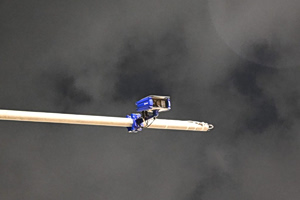
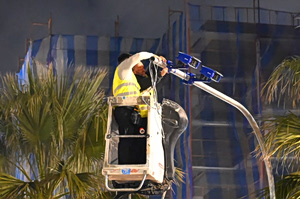
Artificial intelligence cameras are also being introduced to automatically detect offences such as mobile phone use while driving and failure to wear seatbelts or helmets.
Accident management is also expected to improve with the adoption of 3D laser scanning technology, aimed at faster and more precise documentation of crash scenes.
Part of broader European safety goals
All measures are aligned with the European Union’s goal of reducing road deaths and serious injuries by 50% by 2030. However, officials acknowledge that achieving this target remains challenging, particularly in densely populated urban areas.