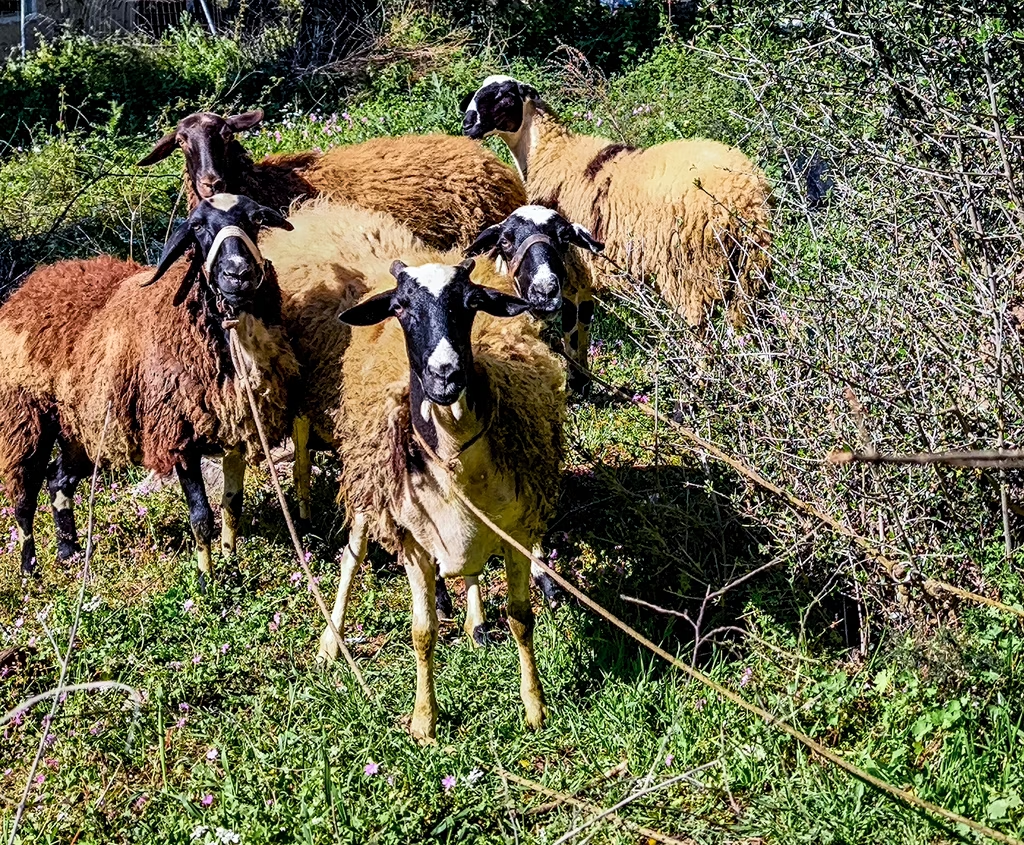
Foot-and-mouth disease has devastated livestock farming on the Greek island of Lesbos over the past six months, leading to the slaughter of around 90,000 animals, according to local authorities.
The figure represents about one-fifth of the island’s total livestock population and has left farmers facing severe financial losses, particularly as milk production has fallen sharply.
Livestock farmers say they have so far received no financial support or compensation for their losses.
Thousands of animals slaughtered
Kostas Aronis, Lesbos’ deputy regional governor for the agricultural sector, said the outbreak had destroyed a large number of herds and left farmers in despair.
“We are almost six months after the appearance of this disease on the island, which has destroyed a large number of herds. People are now in despair. Around 90,000 animals have been slaughtered. The damage that livestock farmers suffer every day is enormous,” Aronis said.
He added that authorities had completed about 80% of the tracing process aimed at identifying areas with the highest number of cases.
The goal, he said, is to concentrate measures in areas with the most infections and potentially apply less restrictive measures in areas where the disease has not been detected.
Why entire herds are being culled
Spiros Protopsaltis, General Secretariat of Rural Development and Food described foot-and-mouth disease as a highly dangerous and highly contagious disease, saying it is even more transmissible than sheep and goat pox.
He said that since March 15, Greece has been implementing a strict European eradication plan required under European legislation for Category A animal diseases.
Under the rules, entire herds can be slaughtered when an outbreak is detected, including healthy animals in affected herds.
Protopsaltis also explained why fresh meat cannot currently be transported off Lesbos.
“This is not a matter of consumption. It is a matter of the product leaving Lesbos. There is a risk of transmission of the disease and, obviously, this is the veterinary guidance,” he said.
He added that concerns include the slaughterhouse chain and the storage and transportation of trucks, noting that the disease can be transmitted mechanically and through the air in different ways.
Government compensation
Protopsaltis said the government has already paid €3.5 million for the value of slaughtered animals and another €1.5 million to compensate for lost income.
The state has also provided €2.5 million to cheese producers for the period when their facilities were closed because mature cheeses could not be transported off Lesbos.
According to Protopsaltis, the situation has since normalized.
He said Greece’s compensation for slaughtered animals is the highest in Europe, adding that the amount paid per animal is “by far the highest in Europe.”
The government is also preparing further support for livestock farmers. Protopsaltis said compensation for animal feed and lost milk income will be paid within the next month.
Calls for a new livestock model
Alongside financial support, Protopsaltis said Greece needs a new model for rebuilding and modernizing its livestock sector.
He stressed the importance of strict compliance with biosecurity measures and improvements to infrastructure as part of the effort to strengthen Greek livestock farming following the outbreak.