Greece accounted for more serious incident investigations than any other country monitored by Frontex in 2025, according to the annual report of the agency’s Fundamental Rights Officer. Published in July, the report titled “2025 Annual Report of the Frontex Fundamental Rights Officer Protecting, promoting and monitoring fundamental rights in the European Border and Coast Guard community” describes persistent fundamental rights risks in Greek operations and a reluctance by Greek authorities to fully engage with its recommendations.
The Office preliminarily assessed 204 potential serious incidents alleging violations of fundamental rights during the year, most of them occurring in Greece or Poland. Of the 47 cases that met the criteria for a formal serious incident report, 12, or 26% concerned Greece, the largest share of any country. The Greek cases involved alleged pushbacks at sea, violence against migrants, incidents relating to search and rescue, and the theft or destruction of belongings. They also included the most serious allegations of collective expulsion assessed at the EU’s southeastern borders, findings the report says were largely supported by concrete evidence.
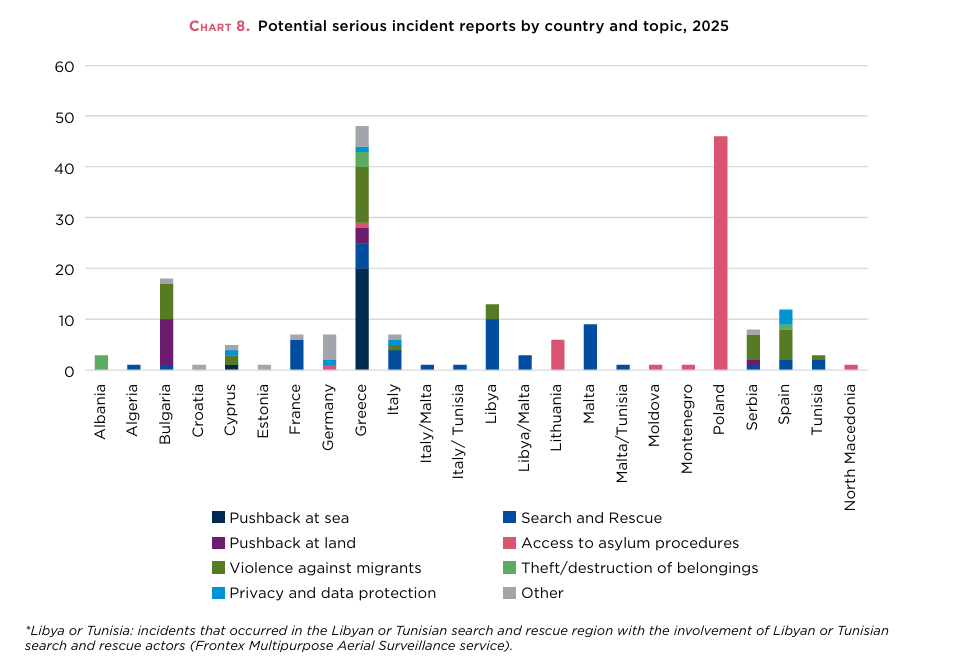
2025 Annual Report of the Frontex Fundamental Rights Officer.
Greece was also the subject of the highest number of finalized serious incident reports, followed by Albania. Ten such reports were completed during the year, and in four of them the Office verified at least one fundamental rights violation.
A standoff over safeguards
One of the most consequential passages of the report concerns the breakdown of efforts to secure Greek commitments on accountability. Working through the Fundamental Rights Compliance Panel, the agency and the Office drew up an action plan to address what the report describes as “serious fundamental rights risks that the Office has repeatedly flagged” in Frontex operations in Greece. The Greek authorities did not formally endorse the plan and “rejected several actions therein, especially as regards measures to strengthen accountability during maritime operations and search and rescue activities.”
A more limited set of actions was agreed and incorporated into the Operational Plan of Joint Operation Greece 2026. The Fundamental Rights Officer deemed this progress insufficient. He advised the Executive Director “to refrain from launching operational activities in the Eastern Aegean, with a specific reference to the withdrawing of the financing to Frontex co-financed maritime assets,” unless certain additional safeguards were fully complied with.
As “serious fundamental rights risks persist,” the report states, and given “the reluctance of the Greek authorities to fully engage with its recommendations,” the Office will continue to closely monitor all Frontex operational activities in Greece.
The advice echoes a warning Leijtens himself issued in April 2025, when he told Balkan Insight he would not co-finance Greek vessels unless outstanding commitments, including the activation of onboard cameras installed on Coast Guard vessels, were fulfilled.
The asylum suspension law
The Office concluded that Greece’s asylum suspension law violated both EU and international law. Law 5218/2025, adopted on July 11, 2025 and in force until October 14, 2025, imposed a temporary ban on asylum claims by people arriving in Greece from North Africa by sea, provided for the deportation of migrants without registration, and allowed for their detention solely on the basis of irregular entry.
In two Opinions issued in July and September, the Fundamental Rights Officer stated that the law “was not in compliance with EU and international law” and recommended that Frontex refrain from assisting in its implementation, including through screening, debriefing or return activities covered by its provisions. At the same time, the Office advocated for continued Frontex support to search and rescue operations off Crete.
Before the law’s asylum ban took effect, Frontex screening officers had supported Greek authorities in reducing a backlog of migrants awaiting screening at Malakasa, according to the report. The Office noted positively that Frontex teams referred 333 cases of persons in vulnerable situations out of 2,509 migrants screened. The agency resumed its support for screening activities after the law’s application period ended.
Rescues at sea, failures on shore
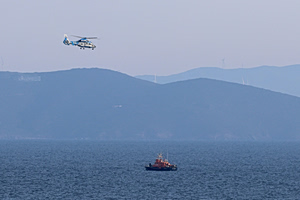
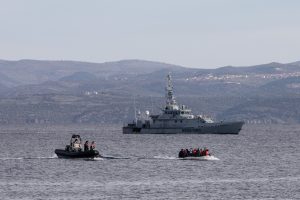
The report credits Greece, alongside Italy and Spain, with successful cooperation with Frontex in rescuing people attempting to reach EU territory on unseaworthy boats, describing a significant contribution to saving lives at sea. Monitors focused on sea patrolling around Crete, where Frontex was deployed to support rescue operations amid a high number of arrivals from North Africa.
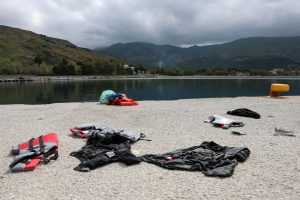
Conditions upon disembarkation from Frontex vessels, however, often failed to comply with fundamental rights standards. The report lists the absence of water and food distribution, no available toilets, delays of buses and ambulances in harsh weather, and excessive security measures. In the Aegean, the Office raised concerns over detection, interception and rescue operations, where incidents of loss of life and allegations of irregular returns, so-called pushbacks, continued to be reported.
Evros and the visibility question
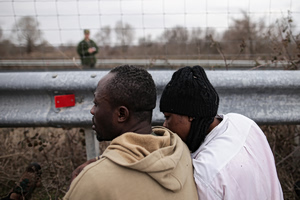
In the Evros region, the Office found that Frontex teams performing land patrols had a relatively low level of participation in migrant incidents, remaining in most cases assigned to operational areas away from the border line despite the number of incidents reported there. Toward the end of the operational year, involvement increased, with a higher presence of Frontex officers in operations focused on detecting and apprehending migrants at the border with Turkey, a shift the report attributes in part to the Office’s presence in the field and cooperation with the relevant Frontex Contingent Commander.
Greece was one of the two most heavily monitored countries during the year, with 310 of 1,576 field monitoring days, roughly 20%, matched only by Spain with 312. Greece, together with Cyprus, also hosts the largest number of Frontex return specialists.
Among the few practices the report singles out as positive, Frontex staff in Greece conducted basic screening in compliance with fundamental rights obligations using a child and family friendly approach, and in Lesvos, cultural mediators supported registration at the reception and identification center in response to a shortage of interpreters.
The Office states that it will continue to closely monitor all Frontex operational activities in Greece and welcomes the agency’s initiatives to ensure stricter oversight in the next operational cycle.
Source: FRONTEX