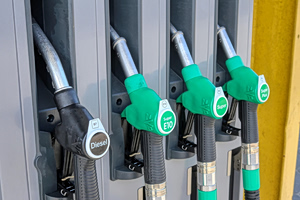
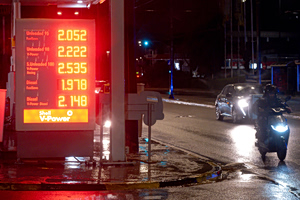
Greek authorities have fined several fuel stations on the island of Rhodes after inspections revealed widespread violations of government-imposed price caps, officials said.
The total penalties imposed amount to €65,000 and were issued by the Independent Authority for Market Control and Consumer Protection, which has recently intensified inspections aimed at enforcing limits on fuel prices. Inspectors examined roughly two-thirds of the island’s gas stations and found that about half had exceeded the maximum allowed prices for both unleaded gasoline and diesel.
Some stations were also found to be in breach of transparency rules, having failed to report pricing data to the national Fuel Price Observatory, a system designed to monitor market compliance.
In total, 13 fuel stations in Rhodes will face administrative fines.
The findings are part of a broader nationwide effort. In the Attica region, which includes Athens, authorities last week identified eight additional stations that had violated the same pricing rules. Those cases resulted in fines totaling €40,000.
Officials signaled that enforcement efforts are expected to continue. “There will be no tolerance for profiteering or the illegal distribution of products,” the authority said in a statement.
During the same operation in Rhodes, inspectors uncovered a warehouse storing counterfeit goods, including clothing and toys. More than 15,000 items were seized, and fines of €111,000 were imposed.
The price caps were introduced by the Greek government in response to rising fuel costs linked to the war in the Middle East. Under current regulations, fuel companies are allowed a maximum gross profit margin of €0.05 per liter based on refinery supply prices.
Additional distribution costs are permitted for island regions, where transporting fuel is more expensive. These range from €0.06 to €0.15 per liter, depending on the location.
As a result, the maximum allowable profit margin for fuel stations on Greek islands currently falls between €0.17 and €0.32 per liter. On the mainland, the cap is set at €0.17 per liter for both gasoline and diesel.
The measures are set to remain in place through June 30, as authorities seek to contain price increases and ensure compliance across the market.
How Greece’s fuel price cap works
The price caps were introduced following government measures aimed at curbing rising fuel costs linked to the war in the Middle East.
Under a ministerial decision, fuel trading companies are allowed a maximum gross profit margin of €0.05 per liter based on refinery supply prices.
For gasoline and diesel, companies may also add a distribution surcharge in island regions, reflecting higher transportation costs. This ranges from €0.06 to €0.15 per liter, depending on the area.
More specifically, the additional distribution cost is set as follows:
- Crete and the Ionian Islands: €0.06 per liter
- Islands of the Attica region: €0.06 per liter
- North Aegean islands: €0.14 per liter
- Sporades: €0.14 per liter
- Thasos: €0.14 per liter
- Kythira: €0.14 per liter
- Skyros: €0.14 per liter
- Samothrace: €0.14 per liter
- South Aegean: €0.15 per liter
Taking these adjustments into account, the maximum allowable gross profit margin for fuel companies and gas stations on Greek islands ranges from €0.17 to €0.32 per liter, depending on the location.
On mainland Greece, the cap remains fixed at €0.17 per liter for both gasoline and diesel.
The measures are set to remain in place through June 30, as authorities seek to limit price increases and ensure compliance across the market.