Greece remains one of the most expensive countries for fuel in the European Union, underscoring a growing imbalance between energy costs and income levels across the bloc.
While global comparisons place Greece among the world’s priciest markets for gasoline, the European dimension reveals a sharper contrast: the country consistently ranks near the top of EU fuel prices, alongside far wealthier economies.
Near the top of EU rankings
Greece is among the most expensive countries in the eurozone for unleaded gasoline, ranking third behind only the Netherlands and Germany. Across the entire European Union, it ranks fourth, following the Netherlands, Denmark and Germany.
These countries, however, have significantly higher per capita incomes, highlighting a key disparity: although Greece does not top the EU price list, the relative burden on consumers is far heavier.
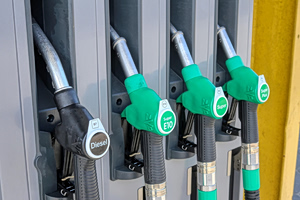
Fuel prices have continued to rise. By March 31, 2026, the average price of 95-octane unleaded gasoline in Greece stood at €2.049 per liter, while diesel reached €2.122 per liter—both at or near record levels.
A European market under pressure
The increase in prices is not unique to Greece. Across Europe, fuel costs have risen following a sharp surge in global oil prices.
Since the outbreak of war in the Middle East on Feb. 28, Brent crude has climbed by roughly 50%, rising from $72 per barrel to over $100, and at times reaching $120.
Disruptions such as the closure of the Strait of Hormuz and attacks on energy infrastructure have affected supply and pushed prices higher across EU markets.
However, while the upward trend is common across Europe, its impact varies significantly from country to country—depending largely on taxation and market structure.
Taxes keep Greece among the most expensive
One of the main reasons Greece ranks so high within the EU is its tax structure.
Fuel taxation in Greece is among the highest in the European Union. Value-added tax (VAT) has stood at 24% since 2016, while excise duties have been set since 2017 at €700 per 1,000 liters for gasoline and €410 per 1,000 liters for diesel.
As a result, taxes account for the majority of the final price paid by consumers.
On March 26, 2026, the refinery price of unleaded gasoline was €0.7955 per liter. Taxes, fees and other charges added €1.1138 per liter—meaning more than half of the pump price was tax-related.
By March 27, the average retail price reached €2.049 per liter. Of that:
- 54.36% came from taxes
- 38.82% from the refinery price
- 6.82% from margins for fuel companies, transporters and gas stations
The estimated margin for retailers and distributors stood at €0.1397 per liter.
source: TA NEA