Some news stories make a country shudder and trigger painful associations. This was one of them.
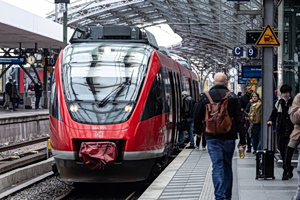
A week ago, on regional train RE 4131 traveling from Landstuhl to the town of Homburg in southwestern Germany, ticket inspector Serkan T. confronted a young passenger who was traveling without a ticket.
Following standard procedure, he asked for the passenger’s ID and requested that he get off at the next stop. At that point, the passenger suddenly stood up, shoved him violently and began punching him in the head.
The attack was so brutal that Serkan T. collapsed unconscious. A uniformed passenger on the train provided first aid and attempted resuscitation. The inspector was then transported to hospital, where he died a few hours later from a brain hemorrhage despite doctors’ efforts to save him.
The crime stunned German public opinion. But what followed added another troubling dimension.
The suspect’s origin—and its political use
According to a statement by the Zweibrücken public prosecutor’s office in the state of Rhineland-Palatinate, the alleged perpetrator was not a refugee from Syria or Afghanistan—an assumption that would have reinforced the narrative of the far-right Alternative for Germany (AfD) party, which campaigns against immigration and what it calls “culturally alien” influences.
Instead, prosecutors say the suspect is a Greek citizen and a resident of Luxembourg, as he himself declared.
The tragedy, already shocking on its own, was quickly instrumentalized—both in Germany and in Greece.
A frenzy of misinformation
Munich newspaper Abendzeitung suddenly claimed the suspect was a Syrian who had entered Greece illegally and later obtained Greek citizenship. The article even named him, alleging that the “Hellenized Syrian perpetrator” was called Mustafa Aslan and that he killed the German railway inspector of Turkish origin.
On Greek social media, other claims circulated: that the suspect was West African, Senegalese, or Syrian with a Greek passport who had moved to Germany and committed the crime. Some posts added a “moral” footnote, arguing that naturalized citizens are not truly Greek and should not tarnish Greek honor, insisting that Greeks excel wherever they go and should not be smeared.
One financial website even spoke of a “revelation,” claiming Greek TV channels were hiding the name Mustafa Aslan so as not to expose how Greece allegedly grants citizenship to “just anyone.”
What we know so far
One day after the incident, Greek newspaper To Vima contacted the Zweibrücken prosecutor’s office, which confirmed that the accused holds a Greek passport, has a Greek name and lists Thessaloniki as his birthplace. A news site subsequently published a correction rejecting the Mustafa Aslan claim.
A German journalist covering court reporting in Rhineland-Palatinate, who is familiar with the case file, told To Vima that the suspect—identified as Vasilis I. under German privacy rules (which often limit publication of full names)—was born in Thessaloniki on January 25, 2000.
He was initially held at Zweibrücken prison and later transferred to Wittlich prison, the largest correctional facility in the state. The modern complex was recently renovated to improve detention conditions. Cells are bright, designed to be more humane and include sanitary facilities. A notable feature is a dedicated courtroom equipped with video-conferencing technology, allowing hearings to take place inside the prison without transporting inmates.
“He said he had martial arts experience”
From the start, the suspect declined contact with Greek consular authorities. As of two days ago, prosecutors appointed a female defense lawyer and requested a psychiatric evaluation.
According to the uniformed eyewitness in the carriage, who serves in the German armed forces, Vasilis I. spoke English and was highly aggressive from the beginning.
“He looked physically fit and kept saying he had martial arts experience,” the witness told news site t-online.
“He hit him at least three times and then simply sat back down. Shortly before the train reached Homburg station, Serkan T.’s condition worsened dramatically and he no longer had a pulse. When I began resuscitation, the ambulance and police arrived.”
His testimony, along with video footage from the carriage and other passengers’ accounts, is expected to be crucial when the trial begins. The final judgment will be delivered by German courts.
Open questions
It remains puzzling why so many scenarios and fake news stories circulated around a case that shocked both German society and the Greek community in Germany.
Why were some people offended by mentioning the suspect’s nationality? Are there not Greeks who violate criminal law in Greece and around the world? And why has the German prosecutor not released the suspect’s first name—as is often done in similar cases—even a week later?
There were also whispers that Greek correspondents in Germany “stayed silent.” That is not true. Access to information has been very difficult, and the suspect does not want contact with consular authorities. For official updates, journalists were referred to a press office in Athens, though it remains unclear why. As of last night, contact had still not been established.