A Greek prosecutor has called for the charges against the two main defendants in the OPEKEPE agricultural subsidy trial to be significantly upgraded, recommending that a document concealment charge be reclassified as a felony and referred to a higher court.
The defendants, former OPEKEPE president Dimitris Melas and former director of direct subsidies and technical projects Athanasia Reppa, are accused of concealing an audit report compiled by key prosecution witness Paraskevi Tycheropoulou. According to the indictment, the report, which documented findings pointing to fraud, was never forwarded to the relevant judicial authorities.
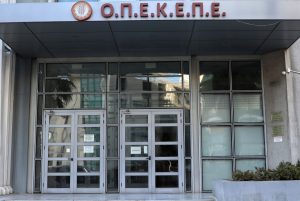
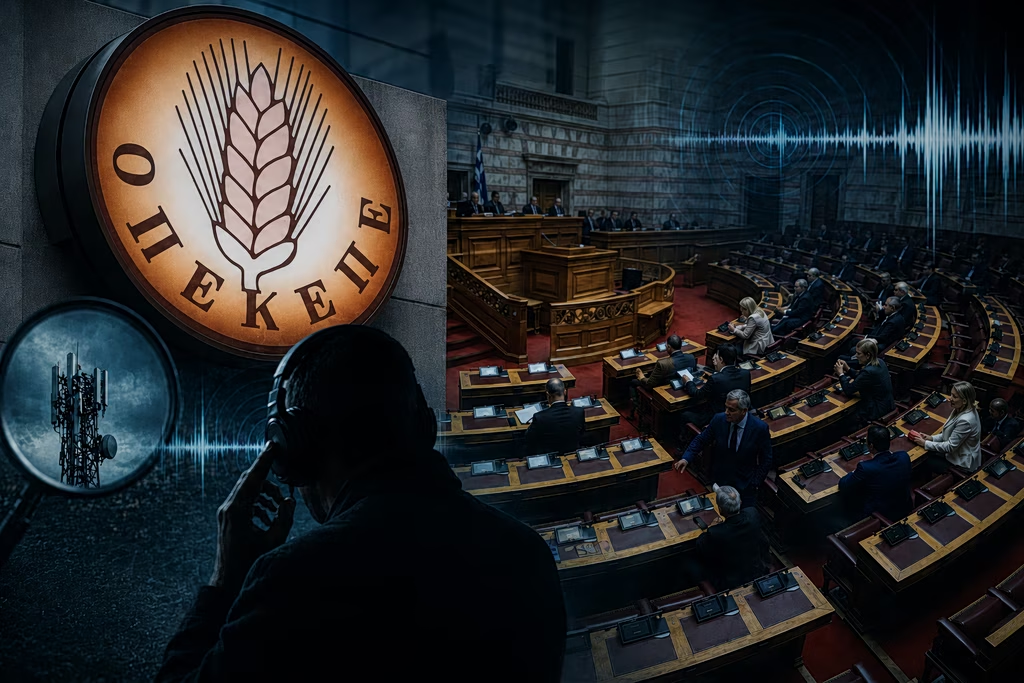
OPEKEPE, the Greek agency responsible for administering and overseeing EU agricultural subsidies, sits at the center of one of Greece’s most politically charged corruption investigations in recent years.
Prosecutor Anastasios Panagakos, addressing the Athens Three-Member Misdemeanor Court, also recommended that both defendants be convicted on two additional counts: harboring a criminal and breach of duty. Both Melas and Reppa denied all charges during their testimony.
How the fraud came to light
In his closing address, the prosecutor reconstructed in detail the sequence of events that led to the case. He described how Grigoris Varras, who was appointed OPEKEPE president in November 2019 following a prime ministerial recommendation to then-Agriculture Minister Makis Voridis, became aware of complaints suggesting that approximately 3,500 farmers had attempted to, or had successfully, defrauded the agency to obtain subsidies they were not entitled to.
Varras subsequently formed a committee to audit specific producers and determine the extent of the fraud. It was during this process that Tycheropoulou, one of the auditors, went beyond her assigned nine tax file numbers and reviewed 99, documenting findings that pointed to systematic fraud. Varras, recognizing that a broader audit was feasible within a short timeframe, decided to extend checks to additional producers ahead of a scheduled National Reserve advance payment for 2020.
Panagakos was pointed in his assessment of what followed. He noted that the audit report compiled by Tycheropoulou was never sent to judicial authorities, and questioned why the defendants had not asked her to complete or supplement it, and why no formal audit procedure had been initiated through proper channels.
“Tycheropoulou acted on Varras’s instructions, not on her own initiative,” the prosecutor said. “But even if she had acted on her own initiative, would we fault an employee who brought a fraud case to light? I cannot fathom that.”
He added that the defendants had been obligated to inform the agency’s legal department so that a decision could be made on whether to forward Tycheropoulou’s reports to judicial authorities, and that their conduct “was not in keeping with their professional profiles.”
What comes next
If the court accepts the prosecutor’s recommendation to upgrade the document concealment charge to a felony, the case would be transferred to a higher court for trial on that count. The trial continues Thursday with closing arguments from defense counsel.