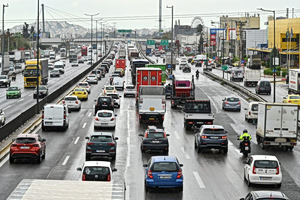
New artificial intelligence-powered traffic cameras installed in the Greek region of Attica have recorded more than 13,700 traffic violations within just one month of operation, underscoring the scale of road rule breaches and the rapid expansion of digital enforcement tools.
According to official data, between March 30 and April 29, 2026, eight pilot AI cameras positioned at high-risk intersections across the region detected a total of 13,705 violations. The offences mainly involved the use of mobile phones while driving, running red lights, and not wearing seatbelts.
Despite being limited to just eight cameras, the volume of recorded violations has been described as particularly high. The system was introduced by Greece’s Ministry of Digital Governance and Artificial Intelligence following recommendations from the national police, with installations taking place in areas identified as having elevated accident risk.
In addition, a separate pilot system installed on 10 public buses recorded 328 further violations during the same period, focusing on misuse of bus lanes.
Digital enforcement and automated fines
Under the new system, violations are now processed electronically and sent directly to citizens’ digital government inboxes via national platforms. Drivers receive notifications through official digital channels, marking a shift away from traditional paper-based fines.
Where the cameras operate
The eight AI cameras currently operate at key intersections across Attica, including central Athens, suburban districts, and coastal roads. Locations include major avenues and junctions in Athens, Agia Paraskevi, Rafina-Pikermi, Kallithea, Vari-Voula-Vouliagmeni, Alimos, Elliniko-Argyroupoli, and Filothei-Psychiko.
These cameras are capable of detecting a wide range of offences, including speeding, red-light violations, mobile phone use, seatbelt or helmet non-compliance, illegal use of bus lanes and emergency corridors, as well as illegal stopping or parking.
They also use automatic number plate recognition technology to cross-check vehicles for insurance validity, roadworthiness inspections, road tax compliance, and restricted traffic zone access.
Expansion of surveillance infrastructure
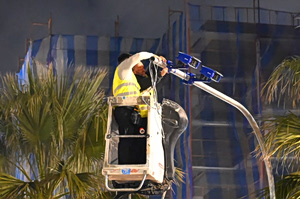
At the same time, a larger infrastructure rollout is underway, with the installation of 388 additional traffic cameras across Attica. More than 60% of supporting infrastructure has already been completed, with full deployment expected by mid-July.
Authorities say the cameras will primarily focus on red-light violations and will be integrated into a unified national digital traffic enforcement system.
The broader digital platform is designed to centralize traffic violation data from cameras, police devices, and other sensors. It will process encrypted images, video footage, and location data, enabling automated issuance of fines, digital appeals, and online payment systems.
Officials expect the system to significantly modernize traffic enforcement, introducing real-time notifications, digital license management, and automated penalty point updates.