The world-famous Louvre Museum in Paris, closed its doors to the public on Monday after employees staged a spontaneous strike over worsening working conditions caused by overcrowding and understaffing.
Staff at the world’s most visited museum, which included gallery attendants, ticket agents, and security personnel, cited “untenable” working conditions caused by the soaring number of visitors and exacerbated by the lack of resources and deteriorating infrastructure.
On Monday, thousands of visitors, many with pre-booked tickets, found the doors to the Louvre closed. According to media reports, the museum is set to reopen on Wednesday.
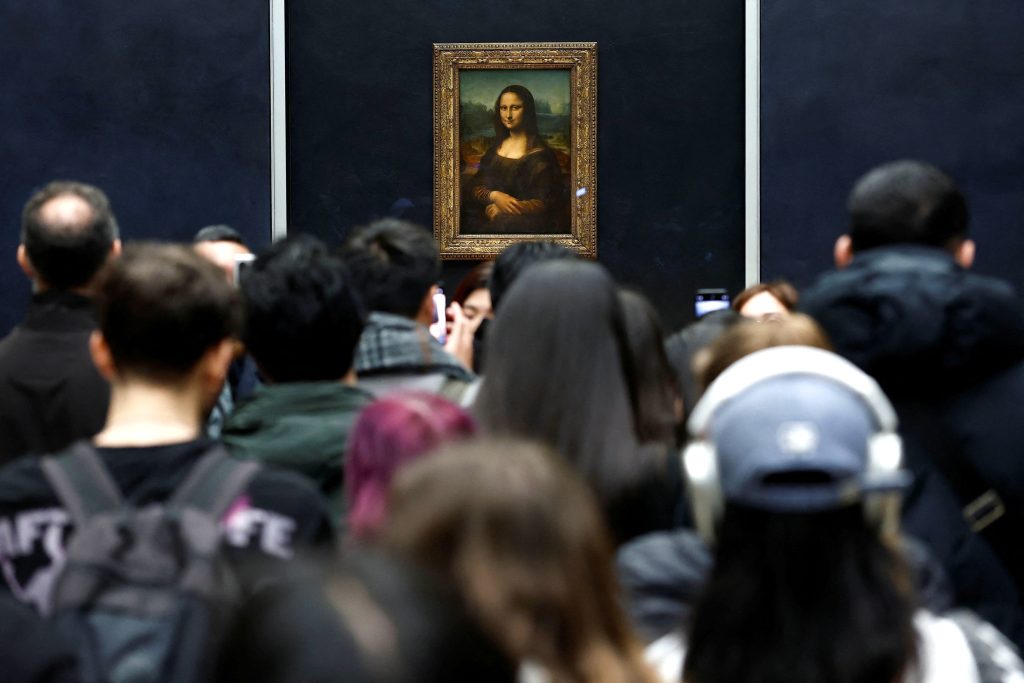
Visitors admire the ‘Mona Lisa’ by Leonardo da Vinci at the Louvre Museum in Paris, France. Photo: Reuters/Benoit Tessier
A report by the Associated Press noted that as many as 20,000 people often cram into a single room every day to view the Mona Lisa, often ignoring surrounding works of art. Among the proposals being considered is the creation of a limited “masterpiece route”, which would allow access to key highlights like the Mona Lisa and the Venus de Milo.
Earlier this year, French President Emmanuel Macron proposed an 800-million-euro renovation plan to modernize the Louvre by 2031. Under that plan, the Museum was set to introduce a surcharge for non-EU visitors to fund the overhaul.
The Louvre strike is part of a wider wave of anti-tourism protests across southern Europe. Residents in places like Mallorca, Barcelona and Venice, among others, are arguing that increasing numbers of tourists are straining communities, infrastructure, and heritage sites.
In Greece, many popular destinations such as Zakynthos, Santorini, and Athens welcome millions of tourists primarily in the summer impacting local communities, driving prices and rents up, and taking a toll on infrastructure. To manage the surge in visitors, Greek authorities capped daily entries to the Acropolis in Athens at 20,000 in 2023, in a bid to protect the UNESCO World Heritage Site. The daily cap remains in place.