The second day of the Tempi train disaster trial is underway in Larissa, where proceedings are continuing Wednesday amid repeated interruptions, verbal outbursts and clashes inside the courtroom.
The session began with a 30-minute delay and in a strained atmosphere, as judges, lawyers and victims’ relatives entered a newly reconfigured courtroom. Long lines had formed earlier outside the venue, where strict identity checks slowed entry and limited access. Cameras and photojournalists have been barred from the courtroom, with only a small number of accredited reporters allowed inside.
Despite efforts to impose order after the breakdown of the first day, tensions quickly resurfaced once proceedings got underway.
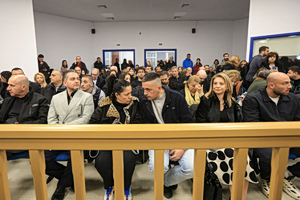
The courtroom has been modified in an attempt to address earlier concerns. Seating capacity has been increased and the layout reorganized, including the removal of part of a suspended ceiling to create additional space. Around 250 seats have been allocated for lawyers, while designated areas have been set for defendants and accredited journalists. Access for victims’ families remains restricted, with only a limited number allowed inside at a time and others directed to auxiliary rooms.
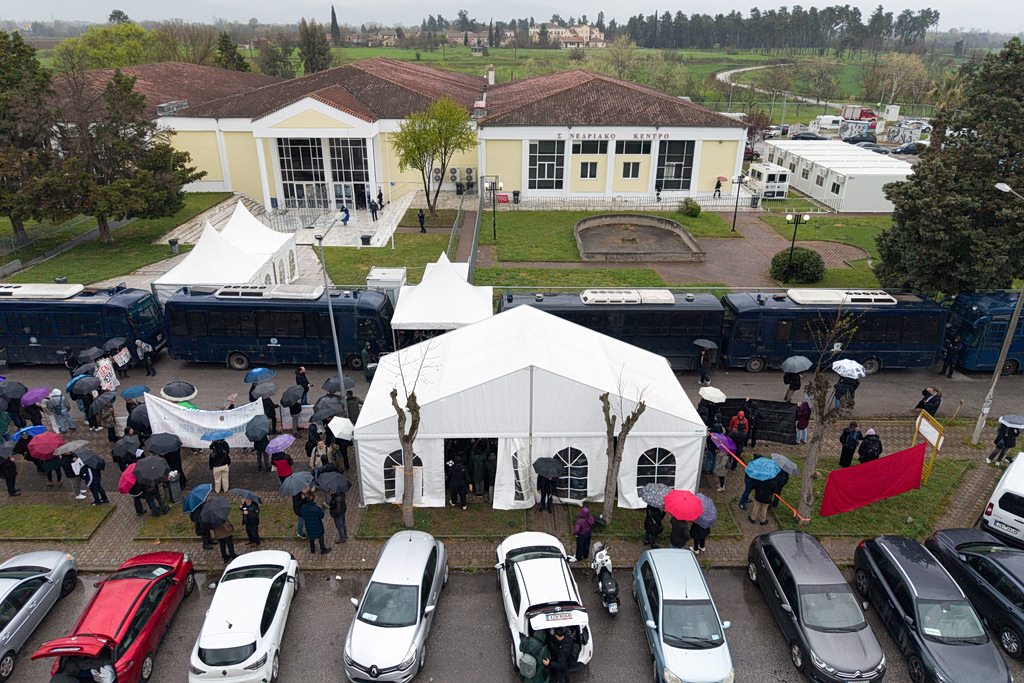
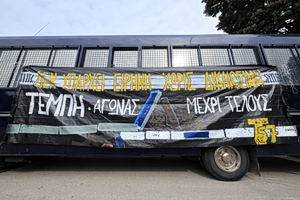
Trial for the Tempi train accident, `Geopolis` conference center, Larissa, April 1, 2026 (SOOC)
Even with these changes, objections have continued. Some relatives have complained about limited access and seating arrangements, while lawyers have questioned whether the venue is appropriate for a case of this magnitude.
Disputes and Interruptions Persist
Proceedings have been repeatedly interrupted as tensions inside the courtroom remain high.
At one point, Nikos Plakias, who lost his twin daughters and niece in the disaster, shouted, “You should all go to prison,” prompting applause before the presiding judge intervened.
Clashes have also emerged between lawyers and the bench. Zoe Konstantopoulou has repeatedly challenged the procedure, raising objections and attempting to move toward the front of the courtroom to reach her client. Police officers prevented her from doing so. “Let me go to my client,” she said.
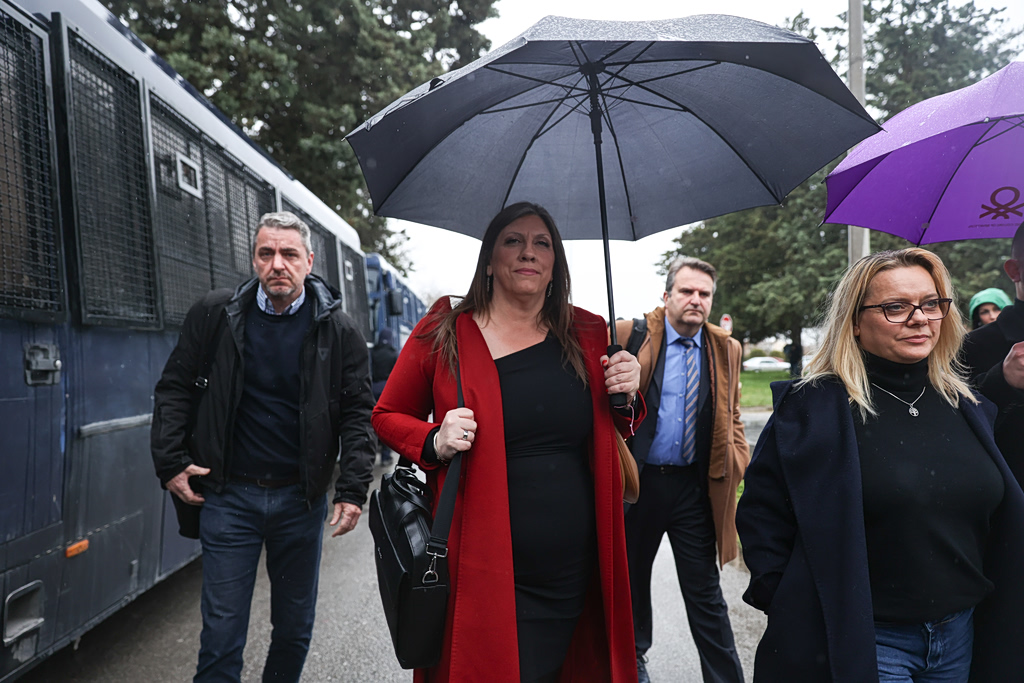
Zoe Konstantopoulou at the trial for the Tempi train accident, `Geopolis` conference center, Larissa, April 1, 2026. (SOOC)
Other lawyers intervened, arguing that counsel should not be obstructed. Additional disputes have arisen over seating arrangements and the handling of legal authorizations.
Konstantopoulou has also submitted a request for the trial to be recorded and broadcast, despite the court’s ban on televised coverage.
Families Raise Objections
Victims’ families have continued to voice objections throughout the session, focusing on access restrictions and conditions inside the courtroom.
Maria Karystianou addressed the court, saying, “Today would have been my daughter’s birthday.”
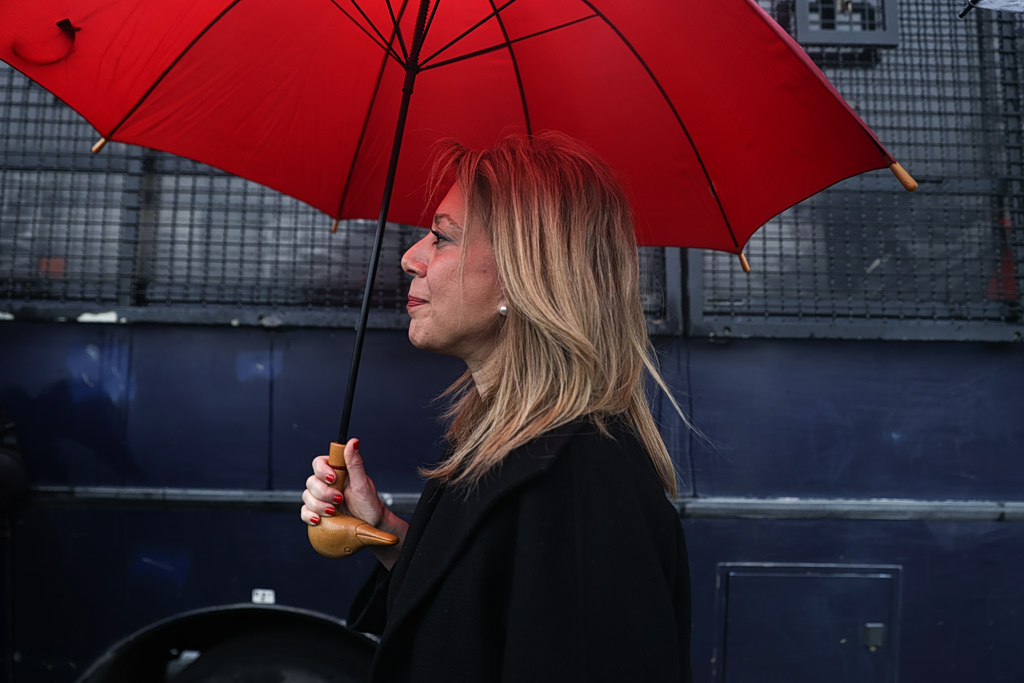
Maria Karystianou entering the courtroom where the trial for the Tempi train accidents will take place. Larissa, April 1, 2026.
She and Konstantopoulou later stated that they do not consent to the procedure, while Karystianou also criticized the handling of the trial.
Other relatives have raised concerns about being separated from the main courtroom or required to follow proceedings from auxiliary spaces. Panos Routsis said all families should be present and treated with respect.
At one point, Routsis was taken to the medical unit after feeling unwell and was later transported to a nearby hospital by ambulance.
Families Describe Lasting Impact of Disaster
Statements from victims’ relatives during the session also highlighted the long-term impact of the disaster on survivors and families.
The father of the sole survivor from the first carriage described his son’s condition in stark terms. “Gerasimos is living in darkness, unjustly,” he said, referring to the severe injuries his child continues to endure. He added that other survivors remain in critical condition, with some undergoing repeated surgeries or facing lasting psychological trauma.
Despite the hardship, he said the family had waited three years for the trial to begin, expressing hope that responsibility would be assigned and justice delivered.
Nikos Zisis, the husband of a victim, asked to move closer to the front of the courtroom so he could see the defendants. “Can I come forward? I want to see the people who left my child without a parent,” he said.
Antonis Psaropoulos, who lost his daughter in the disaster and is also representing other families as a lawyer, spoke about his dual role in the proceedings.
“Life has forced me to balance being a father and a lawyer in the most painful way,” he said. “This trial is the fight of my life — to find the truth, for my daughter and for the other victims.”
He said he expects the process to provide answers and lead to accountability.
Proceedings Move Forward in Stages
Despite the disruptions, the court has continued with procedural steps related to the legal representation of defendants and the formal participation of victims’ relatives.
The prosecution has accepted that absent defendants may be represented by their lawyers. Relatives have continued to formally declare their participation in support of the charges.
The case involves 36 defendants, including Greek and foreign nationals, facing a range of charges that vary by group.
The process is moving forward in stages, with participants called in groups, although interruptions have slowed progress.
Security Measures and Ongoing Concerns
Security remains tight throughout the venue.
Police officers are stationed both inside and outside the courtroom, including near the bench and behind the defendants. Entry is controlled, with identification required for all attendees.
The courtroom has been expanded to include adjacent areas, while additional rooms equipped with screens are being used for overflow.
Despite these measures, criticism has continued from both lawyers and families, who argue that the conditions remain inadequate for a trial of such importance.