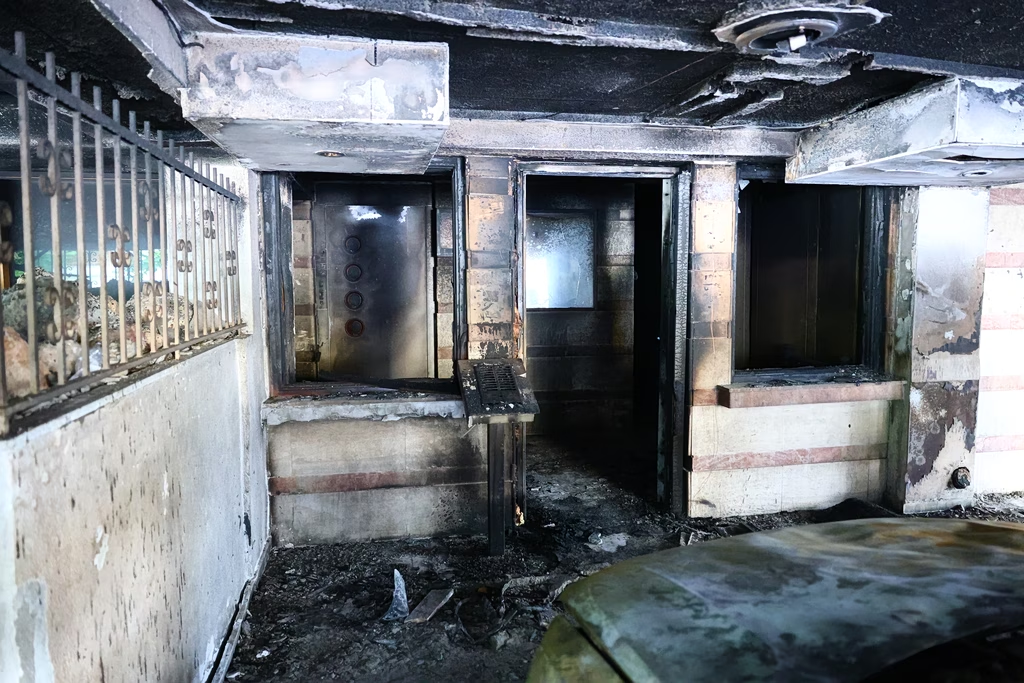
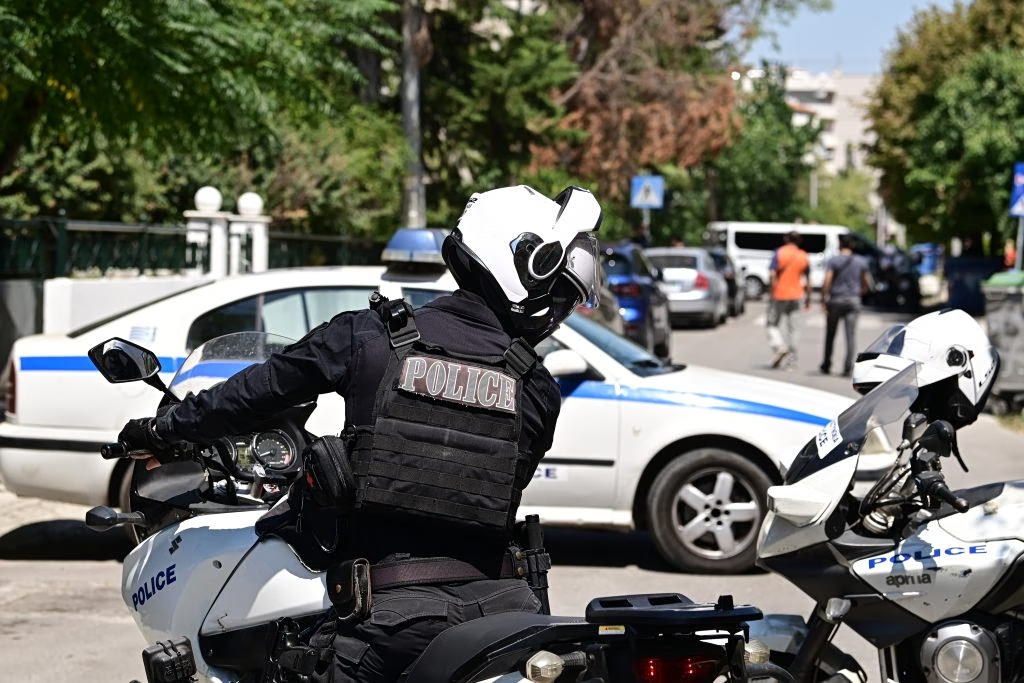
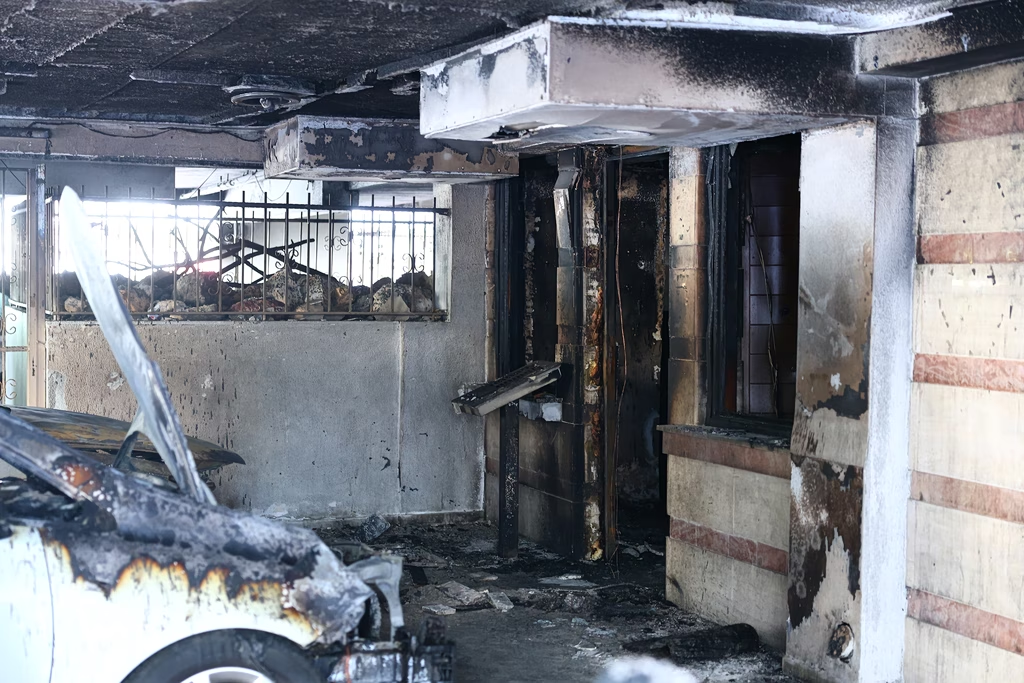
Greek counterterrorism police have arrested three people in connection with the July 1 arson attacks on the homes of three New Democracy (ND) officials in Thessaloniki, in a large operation still underway in Thessaloniki and Crete, according to reports.
The attacks killed Vagia Nestora, mother of ND parliamentary candidate Afroditi Nestora, and injured four other people.
Two separate groups behind the attacks
According to reports, the investigation has established that one group carried out the first two attacks and a different group was behind the third, the firebombing of the Nestora home that proved fatal. All three people arrested so far are linked to the third attack.
Among them are a man and a woman who has a prior criminal record and conviction, according to the same reports. Rather than wait until all members of the group were identified, police reportedly moved quickly to detain the three, fearing the suspects would slip away.
A 26-year-old woman was arrested in Chania, on Crete, where she had reportedly gone into hiding with friends after the attacks. She reportedly has a criminal record linked to Greece’s anti-authoritarian scene, a loosely organized anarchist and far-left milieu with a long presence in the country’s political fringes. In Thessaloniki, police arrested a 29-year-old man believed to have physically carried out the attack, along with a third person who owns the apartment where the suspects reportedly took refuge afterward.
Surveillance a day before the attack
One of the pieces of evidence that led investigators to the suspects was reportedly their presence at the scene at least 24 hours before the attack, when they scouted the Nestora home to plan the operation.
Investigators believed from the start that at least three people took part in the attacks. Searches of homes and other properties are still underway as police look for evidence tied to the firebombings, and the operation was expected to continue for several more hours.
Police caution on evidence
Hellenic Police spokesperson Konstantina Dimoglidou, speaking on the television channel MEGA, had previously warned that the case could still fall apart in court, saying there is a real risk the detainees walk free if the evidence does not hold up. “Gathering the kind of evidence that will actually stand up in court is not easy in a case like this,” she said. “During a preliminary investigation, it is easy for us as police officers to draw our own conclusions. But once a case reaches a prosecutor or a courtroom, you need hard proof, not just indications.” Dimoglidou noted that forensic traces such as DNA or fingerprints are rarely recovered in attacks of this kind, which makes the job harder. Police are hoping lab results will shore up the case, she said, and further investigative work will be needed to prove the suspects’ involvement.