When it comes to adult happiness, countries like Denmark and Finland are often at the top of global rankings. But what about children? A recent report from UNICEF has shifted the focus—and the answers are not quite what you might expect.
According to UNICEF’s 2025 “Report Card 19: Child Wellbeing in an Unpredictable World”, the country that currently offers the most supportive environment for children to thrive is the Netherlands.
The report examines how children across 43 OECD and EU countries fared in the years following the COVID-19 pandemic, taking into account mental wellbeing, physical health, and essential skills. The findings paint a complex picture of how the world’s most developed nations support their youngest citizens—and not all rankings reflect traditional assumptions.
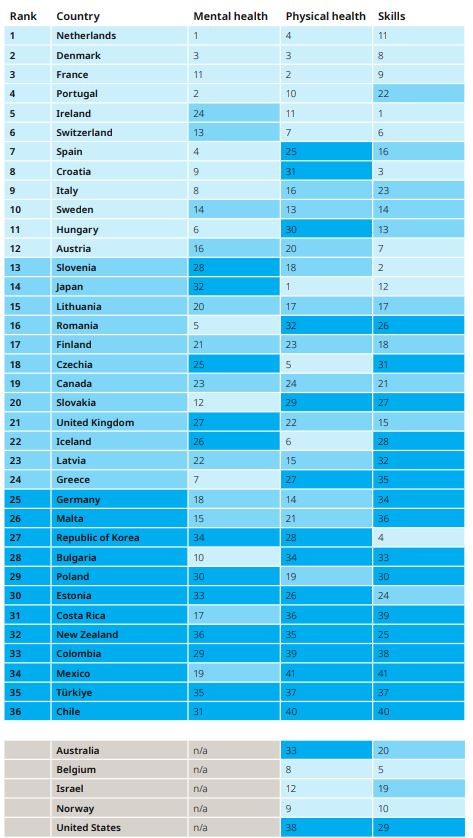
Credit: Unicef
Netherlands Tops the List for Child Wellbeing
The Netherlands retained its top spot for raising happy and healthy children, followed closely by Denmark and France. Portugal and Ireland complete the top five. These countries are known for their progressive educational systems, generous parental leave policies, and strong state support for families—factors that clearly influence overall child wellbeing.
UNICEF’s analysis reveals that, while wealth and infrastructure remain important, a child’s happiness depends on a balance of factors: health (both physical and mental), education, psychosocial support, and a stable home and community environment.
Contrasts and Contradictions
The report also uncovered stark contrasts. For instance, Japan ranks first globally in children’s physical health, yet falls to 32nd place in terms of mental wellbeing—raising concerns about pressure and stress in academic and social environments. Similarly, Ireland performs strongly in education and skills, but only ranks 24th in mental health.
Such disparities underscore UNICEF’s central message: child wellbeing cannot be measured by academic performance or healthcare access alone. A truly supportive environment requires holistic care and inclusive policies that address children’s full range of needs.
A Troubling Picture for Greece
One of the most disappointing findings in the report is Greece’s ranking. Among 25 of the most developed countries included in the detailed analysis, Greece ranks 24th—a sobering result that highlights systemic challenges facing Greek children today.
According to the report, Greek children are growing up in conditions that do not adequately support their overall development and wellbeing. This reflects broader societal, political, and educational issues, as well as challenges within the family structure itself. While these findings do not apply to every household, they reveal a worrying national trend that calls for urgent attention.
Top 10 Countries for Child Wellbeing (UNICEF Report Card 2025)
- Netherlands
- Denmark
- France
- Portugal
- Ireland
- Switzerland
- Spain
- Croatia
- Italy
- Sweden