A foreign woman who officially declared herself homeless was actually living in a 280-square-meter villa with a pool in Athens’ northern suburbs, according to Greek authorities who identify her as the mastermind of a massive tax evasion scheme.
Her arrest, along with two other individuals, exposed a well-organized network built around fake invoices, “vanished” traders, and shell companies that were dissolved in record time, costing the Greek state millions of euros. Foreign traders tied to the same network remain untraceable despite records showing they made over €40 million in merchandise purchases.
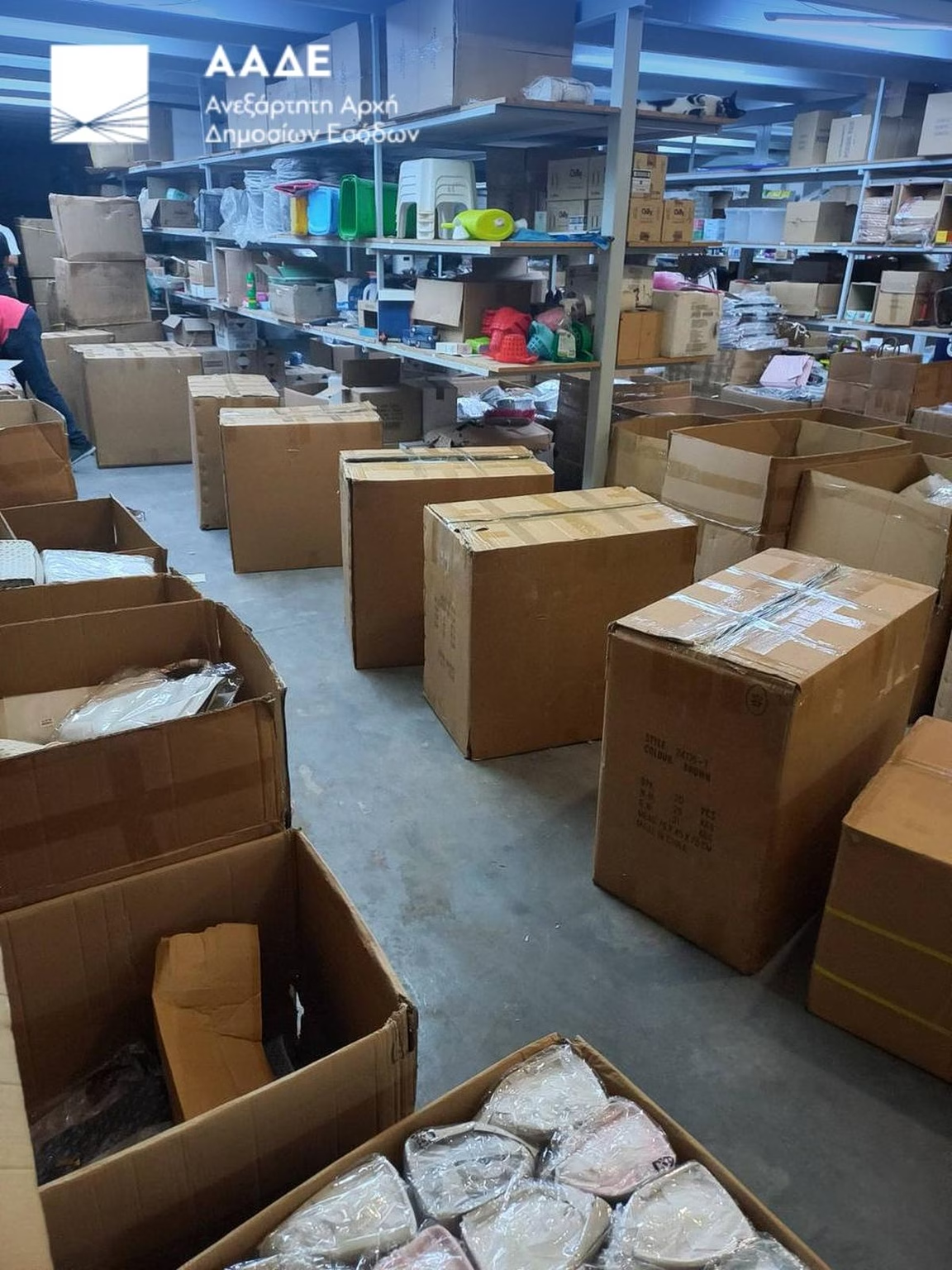
So far, investigators have confirmed €9.6 million in evaded VAT and €8.3 million in evaded income tax. Authorities have begun freezing the bank accounts and assets of those involved and have already seized more than 32,000 units of merchandise.
The case was uncovered by auditors from Greece’s Independent Authority for Public Revenue (AADE), who cross-referenced on-site inspections, the myDATA platform, the business registry, and corporate ownership records. Investigators found a tightly linked network sharing a common operating pattern, management structure, and transaction behavior: the same individuals repeatedly served as managers or partners across different companies, new firms were formed as soon as older ones closed or changed hands, participating businesses shared offices, phone numbers, and nearly identical corporate structures, and different Greek companies within the network dealt with the same foreign firms using the same corporate seals and identification documents.
The Wholesale of Clothes and 95 Million Euros in Ficticious Transactions
The network operated mainly in wholesale clothing, footwear, and related goods, using these businesses almost exclusively to issue and receive fake invoices of enormous value.
Identified cases so far, representing only part of the overall scheme, include three sole proprietorships with fake transactions worth €28 million, €25 million, and €25 million respectively; an online store with €15 million in fake invoices; an import firm with €3.25 million in fake transactions; and a physical retail store with €2.5 million in fake transactions.