
 Μake us preferred on Google
 In the not-so-distant past, life in the cities of Greece, including Athens, was relatively easy. Everything you needed was within walking distance: the market, school, church, pharmacy, coffee shop, parks and squares, even many municipal services.
Today, getting to any of these can mean endless hours in a car stuck in traffic, or on a crammed bus taking twice as long because of cars illegally parked along major streets.
And if someone is bold enough to walk, particularly in Athens, they face a grueling obstacle course of vehicles parked on pavements, dangerous open holes from never-ending telecommunications works, and chairs and tables occupying almost every available space in squares and on sidewalks.
Imagine what this experience must be like for a child, a mother pushing a baby stroller, a visually impaired person, your ageing parents or someone in a wheelchair! This is the sad reality of many Greek cities today. It is also what the relatively new urban planning concept of the 15-minute city is trying to change.
TO BHMA International Edition sat down with spatial and mobility planning expert Kosmas Anagnostopoulos, founder of CIVINET Greece-Cyprus, to discuss whether the 15-minute city can realistically be applied to Greece.
What is a 15-minute city?
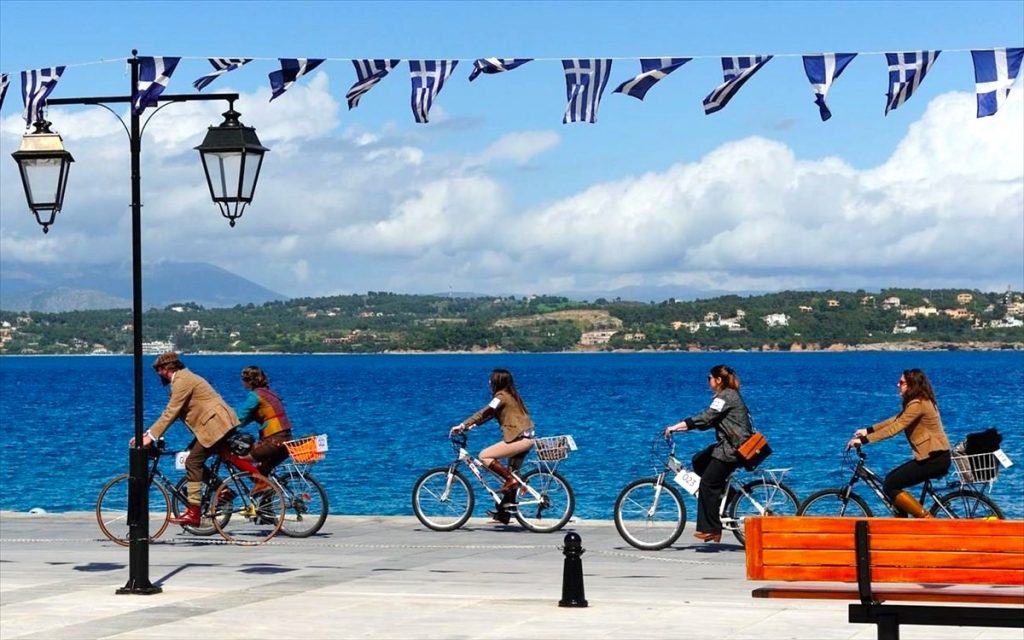
Cycling is becoming very much a part of Greek life. Photo credit: Bike Friendly Greece
“In practice, in a ‘15-minute city’ you don’t need more than 15 minutes to complete the majority of your daily chores and movements, whether you’re walking, cycling, using micromobility, taking public transport–or a combination of these,” says Anagnostopoulos.
This requires a city where homes, workplaces, shops, schools and services are distributed in a way that favors short journeys, supported by infrastructure that allows people to move without relying on a car.
Simply put, a 15-minute city is a city where more people can walk, cycle or use public transport to get where they need to go. But it’s also about much more than transport. A low-traffic neighborhood with shops and services nearby can create stronger communities, support local businesses, encourage people to be active and interact.
Proximity and convenience are the priorities.
The idea was developed and popularized in the 2010s by French-Colombian urbanist and Sorbonne University professor Carlos Moreno, who argued that essential urban functions should be close to where people live. The concept gained even greater attention during the COVID-19 pandemic, when lockdowns and restrictions made access to nearby services critical. At its heart, however, the idea is simple: your everyday life should not require a car.
Greece’s head start
Looking back to the 1970s and early 1980s, many Greek cities already had the characteristics of what is described today as a 15-minute city. Homes, markets, schools, workplaces and public spaces were often close by. Small businesses and mixed-use neighborhoods meant that people could meet many of their daily needs locally.
Urban growth changed that. Greece’s economic development, internal migration and successive waves of immigration contributed to the rapid expansion and transformation of its cities. Urban development became more about accommodating growing populations, cars and construction than about preserving proximity and liveability. Yet Anagnostopoulos believes that much of the original advantage remains.
“I don’t think the advantage of Greek cities—their mix of land uses and the preponderance of small and medium-sized businesses and micro-property—has been lost,” he tells TO BHMA International Edition.
He does, however, see growing pressure from what he calls “Big Capital”, particularly investment coming from abroad.
“The government seems unwilling to curb these trends, which are spiralling out of control. Citizens are gradually losing their homes, neighborhoods and hangouts, not only in cities but also on the islands,” he says.
To counter this, he believes stronger social movements are needed to pressure municipalities and governments to rethink urban policies.
Making it happen
No major city has completely transformed itself into a perfect 15-minute city. But places like Paris, Barcelona, Melbourne, Portland and Milan have implemented significant elements of the model. In fact, Barcelona is frequently cited in the academic literature as a pioneer in this area.
Ljubljana and Seville are also examples Anagnostopoulos cites as places that have successfully implemented cycling infrastructure and pedestrian areas, green spaces, school streets and traffic-calming measures.
“Cities were not designed according to the principles of urban planning as we understand them today,” he says. “But many cities are transforming and adapting to new global directions.”
And Greece, he believes, is particularly interesting because parts of its urban fabric already function in a similar way.
“Greek cities already have the structure that could allow the 15-minute model to become a reality. What they lack, for the most part, are green infrastructure and mobility policies that would also unlock the potential hidden in their public spaces.”
Athens’ first steps
The idea is not entirely new to Greece. The Municipality of Athens has launched its “15-Minute Open Neighborhood” plan, designed to address accessibility, mobility and functionality. Design and mapping workshops have been organized in each of Athens’ seven municipal districts with the aim of identifying deficiencies and prioritizing interventions.
The northern port city of Thessaloniki, meanwhile, is already considered a bright example of the proximity model in Greece. Research published in the “Journal of Transport Geography”, which included assessments of walking and cycling accessibility, land use, transport infrastructure, and service location, found that, given its compact urban form, the city already “largely embraces” the concept.
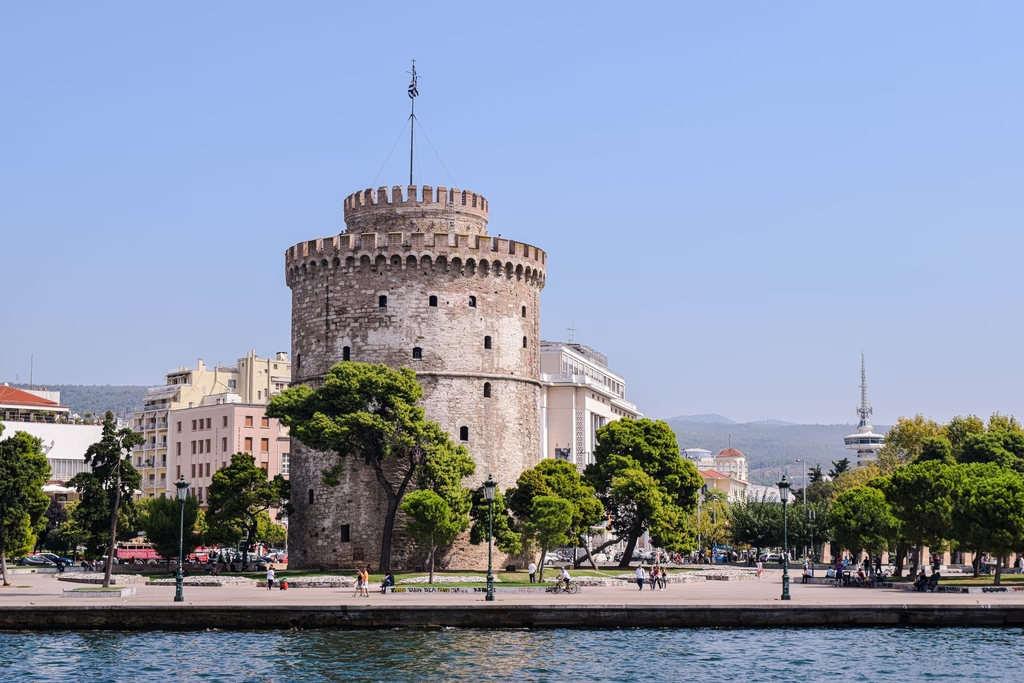
The northern port city of Thessaloniki is already considered a bright example of the proximity model in Greece.
But in Athens the challenge remains. Central Athens may be compact and walkable, but getting around safely is becoming harder every day. Cars parked on sidewalks, privately owned outdoor seating in public spaces, poorly designed pavements, and ongoing utility works can turn a short journey into a dangerous sport. For a 15-minute city to work, reaching a destination in 15 minutes is not enough; people must also be able to get there safely and comfortably.
Where could it work?
Anagnostopoulos singles out smaller cities that already have the structure and infrastructure needed to support sustainable mobility. Karditsa in central Greece, he says, is one example.
If he could choose three very different places to apply the scheme, he would choose Zografou in Athens, the island of Aegina, and his hometown of Zitsa, a mountain village in Epirus. In all three cases, he would propose “soft mobility” networks allowing residents to move around without cars, plus controlled traffic and parking zones to protect residential areas and town centers, and a general 30 km/h speed limit. The latter, he says, could “really change our lives.”
The principle is straightforward: people should be able to physically reach their destination within 15 minutes, get there without having to deal with obstacles, and enjoy access to pleasant, safe and shaded routes and public spaces.
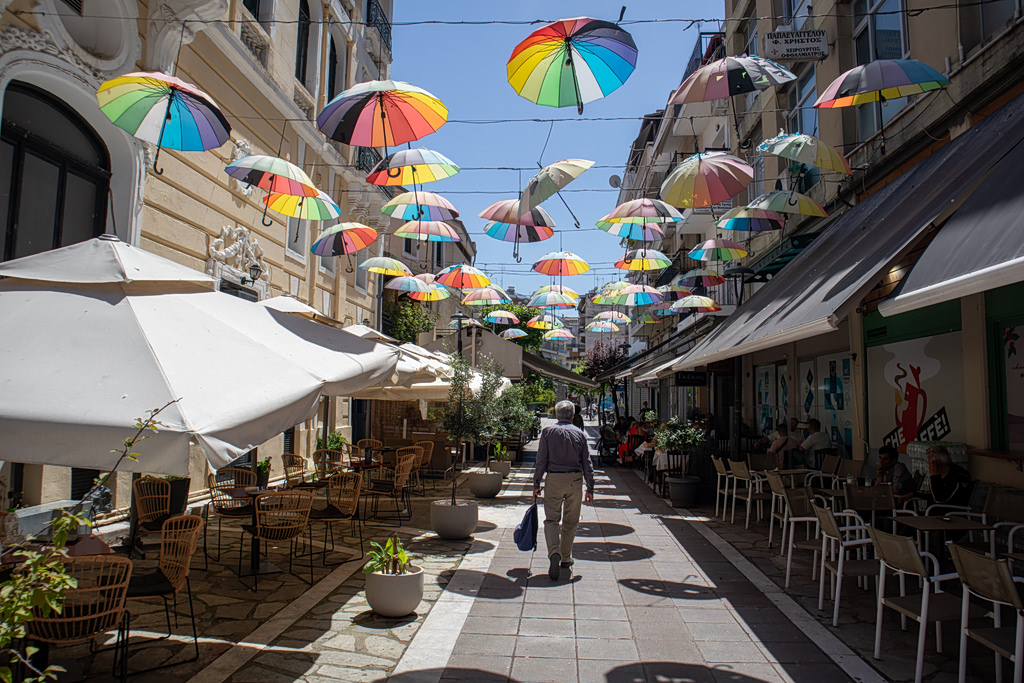
Colorful umbrellas hanging above a pedestrian street with cafes and people in the city of Karditsa, Greece.
The arguments
The 15-minute city has not escaped criticism. One of the biggest concerns is that urban regeneration can increase property prices and force existing residents out. This is particularly relevant in Athens, where the proliferation of hotels and short-term rental properties has already transformed many neighborhoods.
So can a city become more liveable without becoming unaffordable?
“It depends on how the urban regeneration is carried out,” says Anagnostopoulos. For him, the 15-minute city should work as a blueprint for a better quality of life. “The issue is not simply traffic congestion, but how people and goods can move in more sustainable ways, without deaths from traffic accidents and without restricting people with disabilities to their homes.”
He acknowledges however that greener, safer and more functional neighborhoods will inevitably become more desirable.
“This is where the state must intervene and regulate the market, so that all citizens can enjoy the same quality of life,” he says. “Airbnb activity and tourism have provided Greeks with extra income and created jobs, to an extent. But we must move away from the monoculture of tourism and services, and regulate these activities before it is too late.”
There are other concerns. In some cities, improvements have failed to reach poorer or peripheral neighborhoods. And during the COVID-19 lockdowns, the 15-minute city was also the subject of conspiracy theories claiming that the model was designed to trap people inside restricted zones or prevent them from owning cars.
The city we choose
For Anagnostopoulos, the future of Greek cities comes down to decisions that have to be made now.
“The most difficult decision we have to make is prioritizing our actions, starting today,” he says.
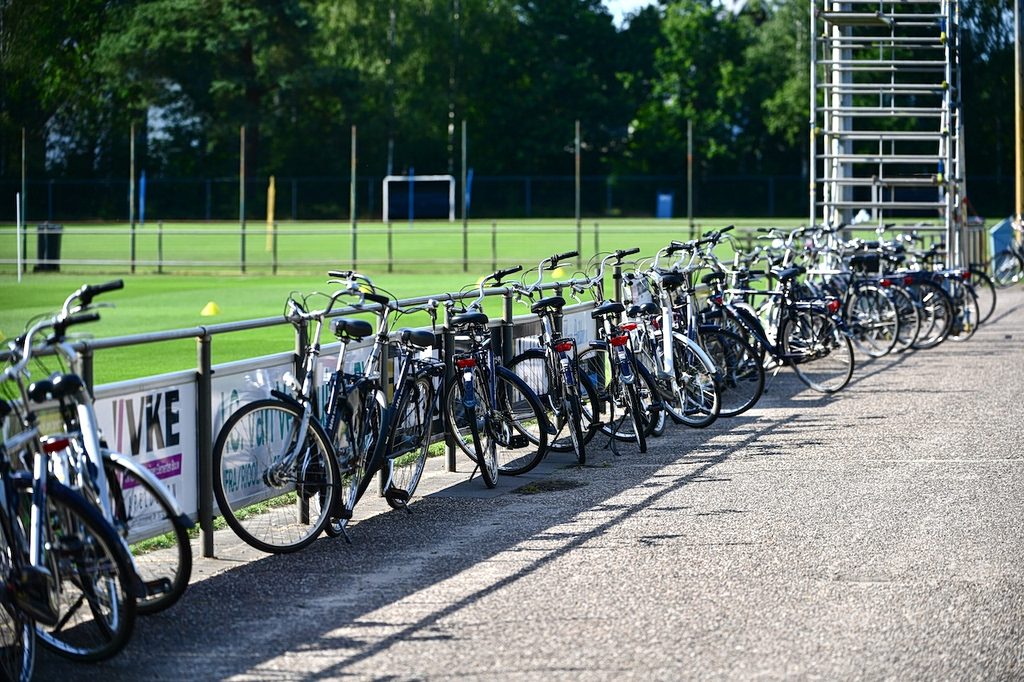
A row of parked bicycles in Apeldoorn, Netherlands. Photo: Lato Klodian/Eurokinissi
“Do we want the unobstructed, expensive and dangerous movement of our cars, or the unhindered, affordable and safe movement of all people equally, in beautiful, quiet and accessible public spaces with greenery everywhere?”
His questions continue.
“Would we prefer easy parking for our car outside our home, work or cafeteria, or to see our children walking or cycling safely to school, the square or the sports center?”
And finally: “Do we want a car as a sign of wealth, social advancement and recreation, or do we want our elderly parents and siblings with disabilities to be able to spend quality time in public spaces?”
For Anagnostopoulos, the answer is clear. The ART 2438 strategy, a national campaign by CIVINET Greece-Cyprus, sets out actions local authorities can take to make immediate changes. The plan is due for presentation at the CIVITAS Forum, in Thessaloniki on September 14.
The 15-minute city, he stresses, is not a single policy. It is a collection of policies that have to work together.
“The smell of freshly washed laundry, the sound of chirping birds and children playing in the streets must immediately return to Greek cities,” he says, “because they are tangible indicators of a city worth living in.”