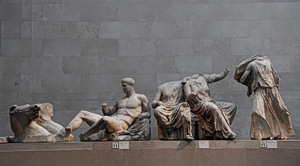
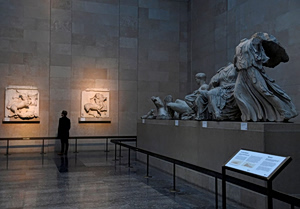
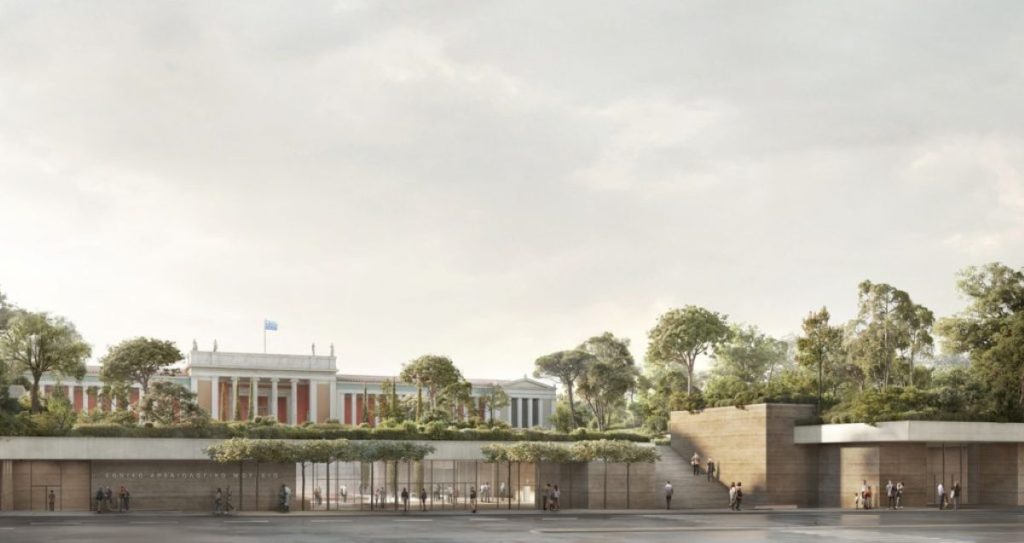
For decades, the campaign to reunify the Parthenon Marbles has been carried by governments, seasoned archaeologists, lawyers, museum professionals, diaspora organizations and cultural figures. Greece says the sculptures are inseparable parts of a monument conceived as a whole and that their permanent home should be Athens. Meanwhile, the British Museum has long defended their display in London as part of a global collection, even though recent talks have explored possible partnership or loan arrangements. Despite efforts from both sides, the dispute remains unresolved.
Now, Remarble Greece is trying to bring younger generations into the debate.
Founded by Thanos Georgountzos, the youth-led initiative works through education programs at schools, research projects, public events and international conferences. It says more than 500 young people have joined its ambassador network, part of an effort to recast a long-running cultural dispute as a contemporary question of heritage, justice, identity and civic responsibility.
The test for Remarble Greece is whether it can make the Parthenon Marbles matter to young people whose immediate concerns are often elsewhere: the cost of living, climate change, AI, and geopolitical instability.
In an interview with TO BHMA International Edition, Georgountzos discusses how the group is trying to mobilize young people in Greece and abroad, how it fits within the wider reunification movement, and why he believes “history deserves to be united.”
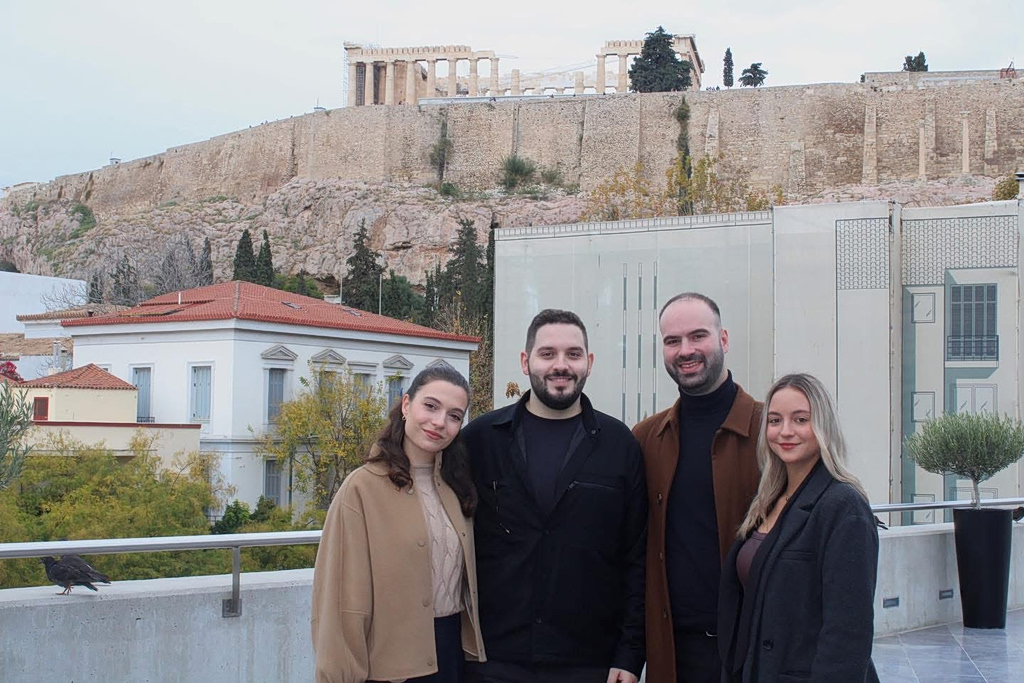
Remarble Greece core team.
How would you describe the level of youth engagement around the reunification of the Parthenon Marbles today- in Greece and internationally? Where do you see momentum, and where is more work still needed?
Youth engagement around the reunification of the Parthenon Marbles is stronger than ever. Through initiatives such as Remarble Greece we are witnessing a new generation that no longer sees this issue as a distant diplomatic debate, but as a contemporary question of cultural justice, identity and historical integrity. Young people across Greece and abroad are increasingly participating in educational initiatives, international discussions and advocacy efforts, proving that the movement is entering a new era driven by youth voices.
What is particularly encouraging is that the reunification debate no longer appears only as a temporary headline. Internationally, there is growing recognition that the Parthenon Marbles are not isolated artworks, but inseparable parts of a monument that can only be fully understood through unity. At the same time, we still need to engage more young people globally and continue building awareness that cultural heritage is not simply about the past, but also about the values societies choose to defend today.
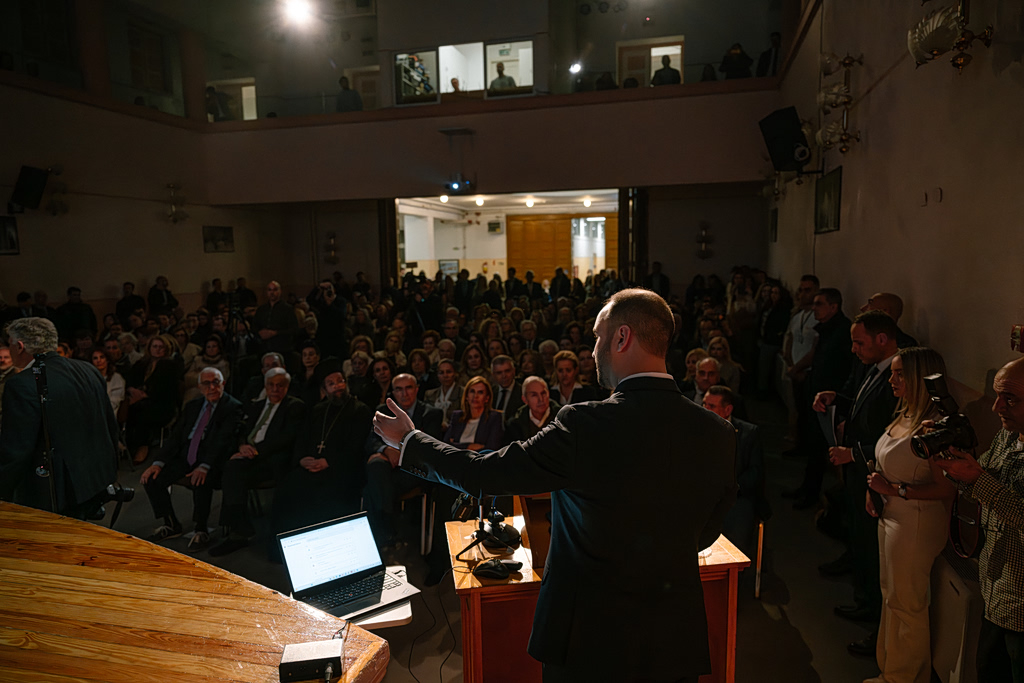
Georgountzos speaks to an audience of dignitaries about the mission of Remarble Greece.
At a time when young people are focused on climate change, cost of living, artificial intelligence, war and political polarization, why do you believe cultural heritage, and specifically the Parthenon Marbles, still matters to them?
Because cultural heritage is deeply connected to identity, democracy and collective memory. The Parthenon Marbles are not simply museum objects; they symbolize the values that shaped Western civilization and continue to inspire the modern world: democracy, knowledge, aesthetics and respect for human creativity. For many young people, the issue reflects broader contemporary questions about justice, ethics and historical responsibility.
In a world marked by uncertainty and polarization, heritage offers continuity and meaning. The reunification of the Marbles reminds us that progress should never come at the expense of historical truth. As we often say at Remarble Greece, history deserves to be united.
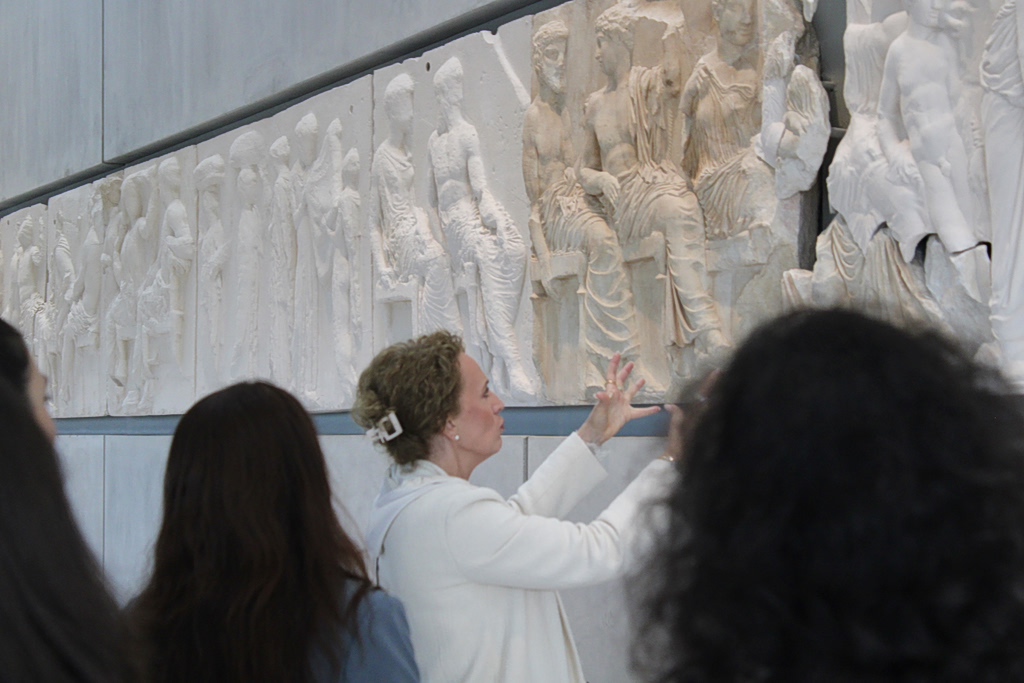
Irini Stamatoudi, Director UNIC Athens Law School, Professor and Member of the Advisory Board of Remarble Greece.
What does advocacy look like in practice for a youth-led organization like Remarble Greece? Are you focused on public awareness, education, media campaigns, institutional partnerships, international networking, or direct engagement with decision-makers?
For us, advocacy means transforming awareness into action. Through Remarble Greece, we combine education, research, international networking, public dialogue and institutional collaboration in order to build a meaningful global movement for the reunification of the Parthenon Marbles. Our work includes conferences, campaigns, school visits, partnerships with academics and cultural institutions, as well as international outreach aimed at mobilizing younger generations worldwide.
A central part of this effort is ParthenonEdu, through which we visit schools across Greece and engage students in discussions about cultural heritage and cultural justice. So far, we have visited schools across the Attica region, including the American College of Greece – Pierce, Arsakeio School of Psychiko, and the General High School of Vrilissia, while also traveling to regional communities and villages across Greece, including schools in the region of Messinia such as the Kalamata Primary School and the Primary School of Aris Messinias.
Our goal is to expand ParthenonEdu nationwide, reaching schools across both urban centers and regional communities, while also building connections with Greek diaspora schools abroad. Through this initiative, we aim to empower the next generation to actively engage with issues of cultural heritage, identity, and cultural justice, ensuring that the message of reunification reaches young Greeks around the world.
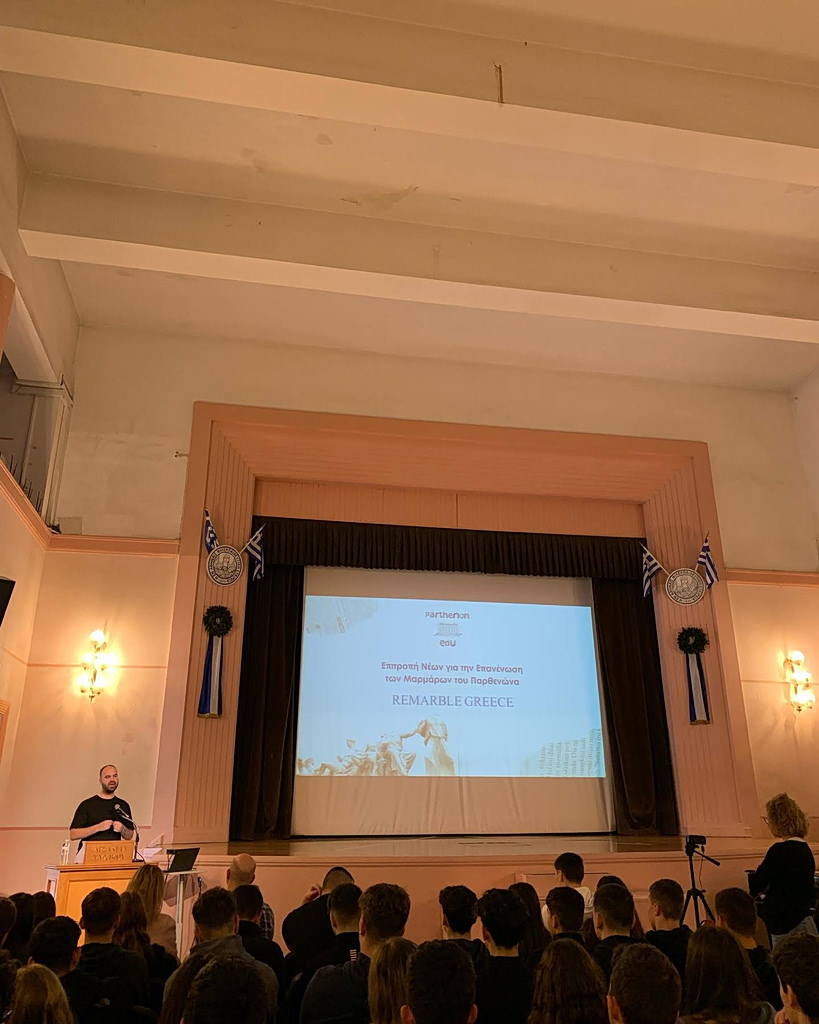
ParthenonEdu at the Arsakeio School of Psychiko.
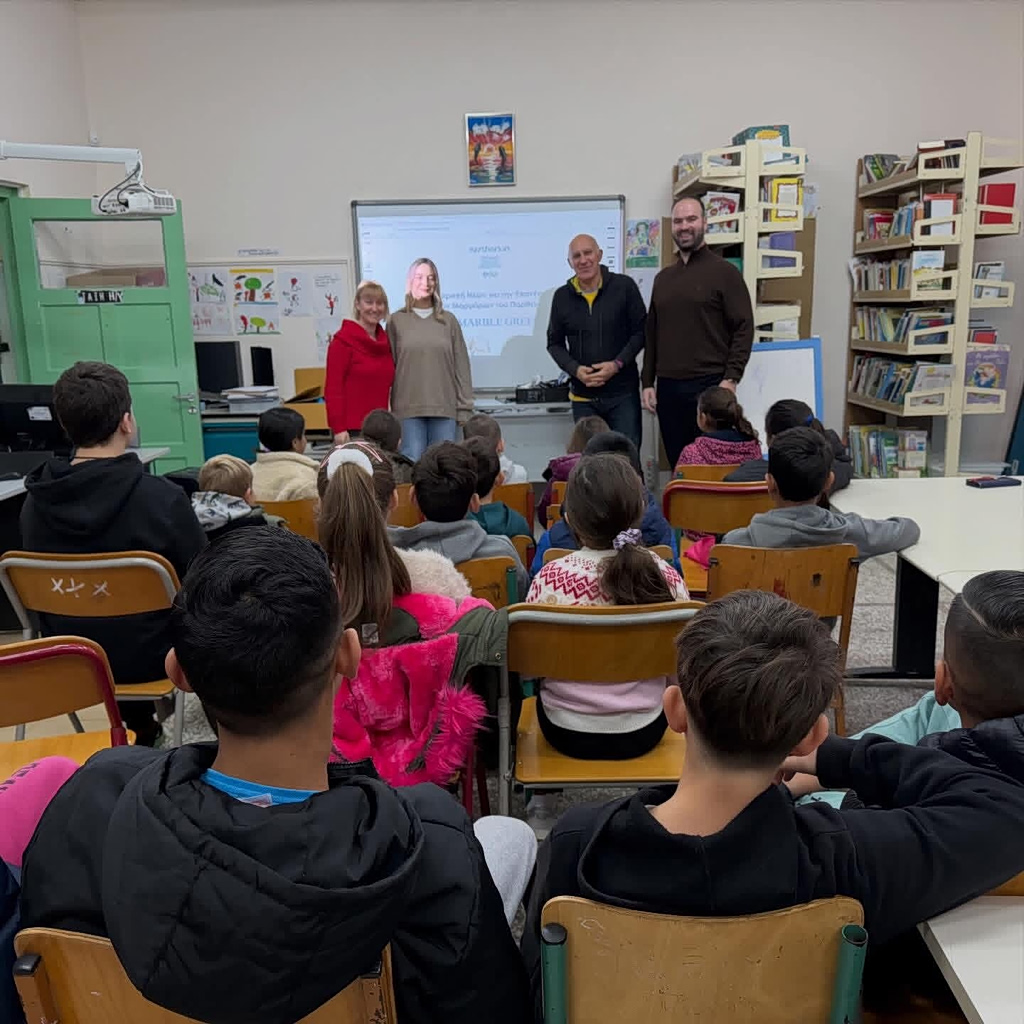
ParthenonEdu at the Primary School of Aris Messinias.
At the same time, through the Parthenon Clinic, we promote multidisciplinary research on the historical, legal and diplomatic dimensions of the issue (download our recent report here). The findings of our research were presented at a major public event held under the auspices of the Hellenic Parliament and the UNESCO Chair on Threats to Cultural Heritage, bringing together academics, students, institutional representatives and members of the public. This reflects the grassroots nature of our movement: a youth-led initiative that connects research, public engagement, and civic participation around the shared goal of reunifying the Parthenon Marbles. We believe that young people should not simply inherit history; they should actively help shape it.
Over 500 young people from Greece and abroad have already joined our movement as Ambassadors of Remarble Greece, forming a growing international youth network for cultural justice. Individuals become Ambassadors by participating in our initiatives and demonstrating a strong commitment to promoting the cause through advocacy, public engagement and awareness-raising activities within their own communities and networks.
The campaign for reunification has been led for decades by governments, archaeologists, museum professionals, lawyers, scholars, diaspora organizations and cultural figures. Where does Remarble Greece fit within this broader movement, and how do you work with other actors advocating for reunification?
Remarble Greece represents the voice of the new generation within a historic international movement. We deeply respect the work carried out over decades by governments, scholars, cultural institutions and diaspora organizations, and we see our role as complementary: bringing youth engagement, fresh energy and international outreach to a cause that transcends borders and generations.
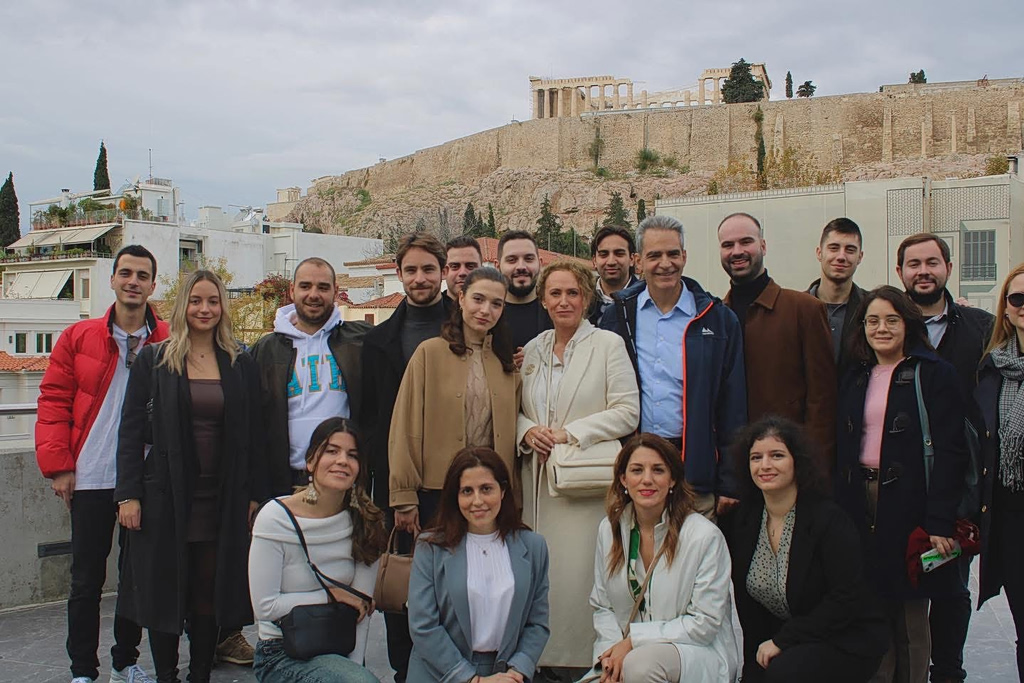
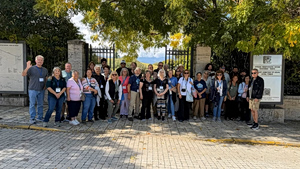
Members of the Remarble Greece community.
Our movement works closely with academics, legal experts, cultural institutions and international supporters who share the belief that the Parthenon Marbles are inseparable parts of a universal monument. Significantly, our latest major event was held under the auspices of the Hellenic Parliament and the UNESCO Chair on Threats against Cultural Heritage, bringing together leading political, legal and cultural figures. The support we have received from figures such as former U.S. Congresswoman Carolyn B. Maloney and Congressman Gus Bilirakis demonstrates that this effort is gaining international recognition and momentum far beyond Greece.
Some observers might wonder what tangible role a youth-led group can play in an issue shaped largely by governments, museums and diplomacy. How do you define Remarble Greece’s practical contribution?
Our contribution is practical because it focuses on education, research and international mobilization. Through the Parthenon Clinic, we created a multidisciplinary initiative examining the legal, historical and diplomatic dimensions of the issue with academic rigor. Through ParthenonEdu, we bring these discussions directly into schools and encourage students to engage critically with questions of heritage and cultural justice.
Equally important is our ability to mobilize a new generation internationally. Public opinion and cultural diplomacy are shaped gradually by society itself, and youth movements play a vital role in keeping important issues visible and relevant. We are building a global network of young advocates who understand that the reunification of the Parthenon Marbles is not only a Greek demand, but also a universal cultural imperative.
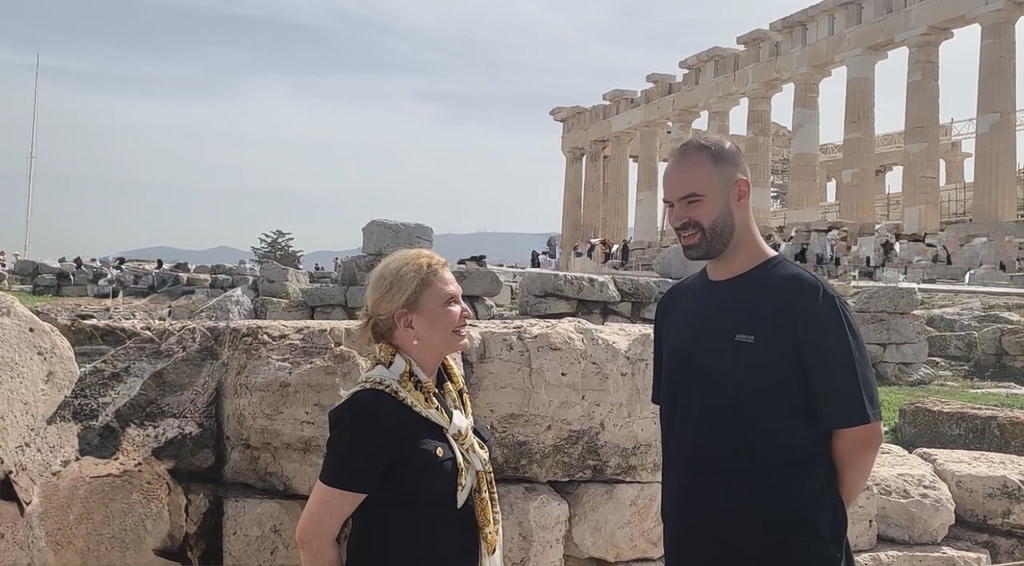
Carolyn B. Maloney, Honorary President of Remarble Greece.
What would you say to a young person- Greek or non-Greek- who sees the Parthenon Marbles as an important historical issue, but not an urgent contemporary one?
I would say that the Parthenon Marbles are ultimately about the kind of world we want to build today. They raise contemporary questions about justice, identity, historical responsibility and respect for cultural heritage. The way societies respond to historical injustices reflects the values they choose to uphold in the present.
The reunification of the Marbles is not simply about returning objects; it is about restoring the unity of a monument created as a whole. Culture cannot fully fulfill its universal role through fragmentation. This is why the issue concerns not only Greece, but everyone who believes that history, truth and heritage deserve to remain united.
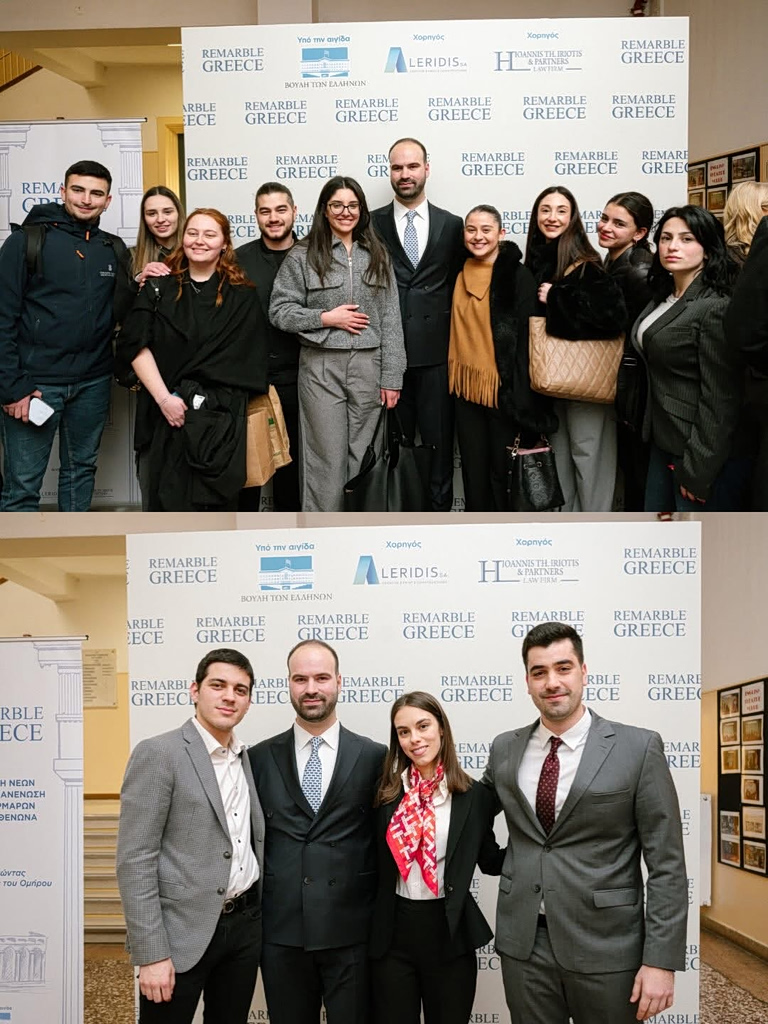
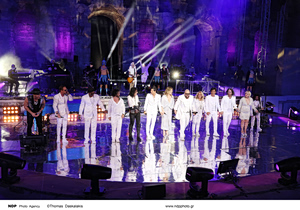
Members of Remarble Greece during a recent event.