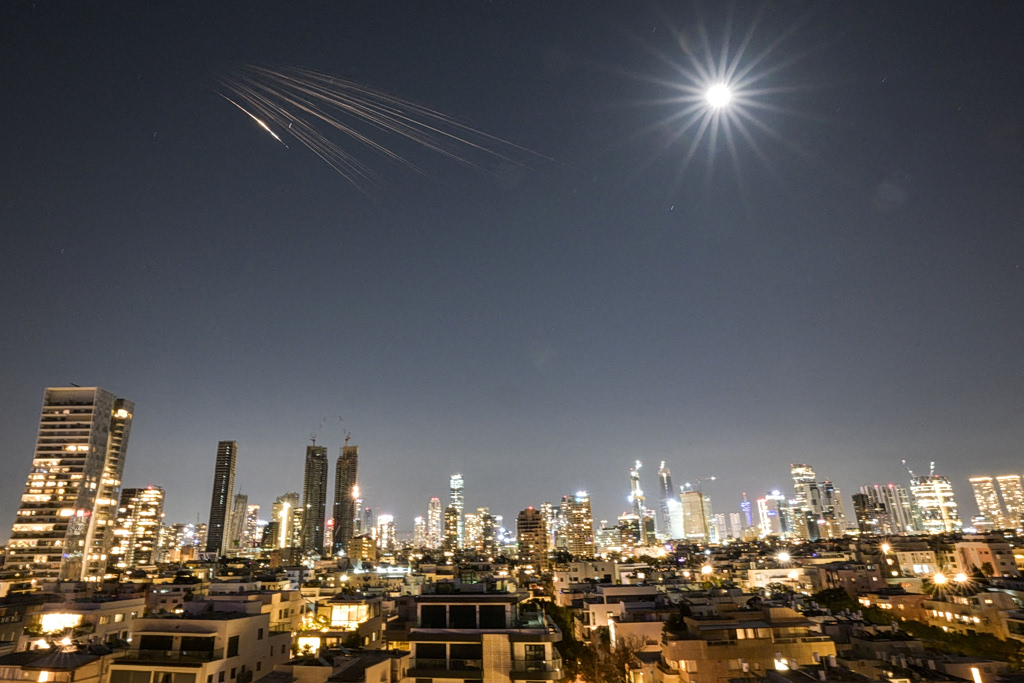
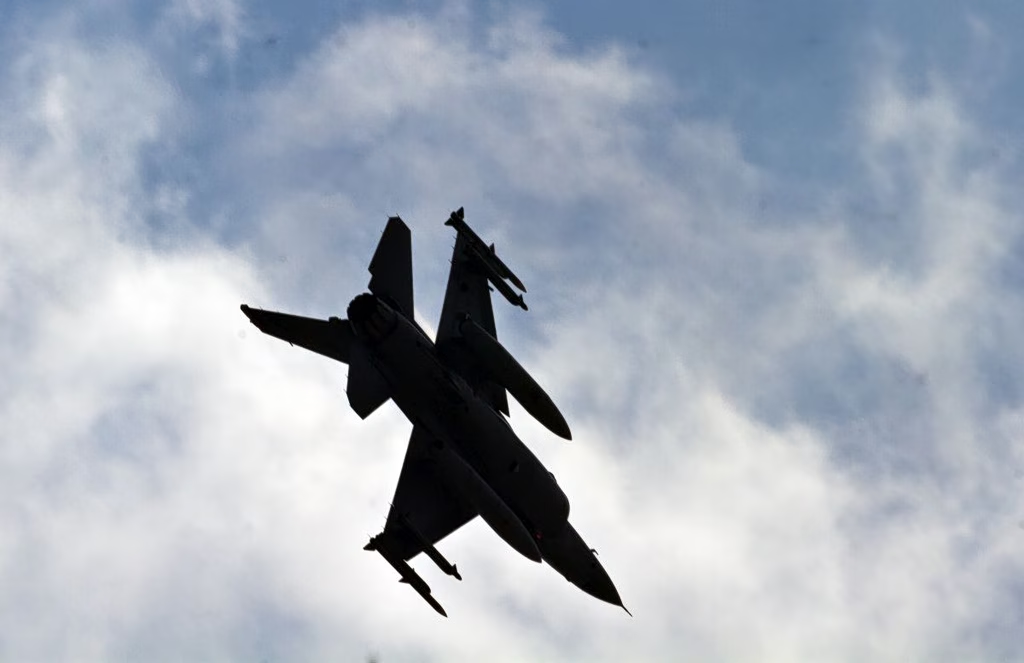
As the US-Israeli war against Iran rages on, policy makers in both countries do not yet seem to have a clear notion of even the basic parameters of what a post-war Iranian government will look like. What we appear to be seeing is a play-it-by-ear approach, with the specific objectives both for the US and Israel still blurry.
Will the US be able to achieve some variant of the ‘Venezuelan model’ if it can find more moderate, cooperative elements of the current regime that are willing to accept all the American-Israeli demands?
While US President Donald Trump has intimated that he could potentially work with willing figures in the current regime, Israel (and Trump earlier) have posited Reza Pahlavi, the son of the late shah, as a viable alternative as a transitional leader. Is he still truly under consideration?
He has not so far demonstrated an ability to rally the opposition either within Iran or among the strong expat community.
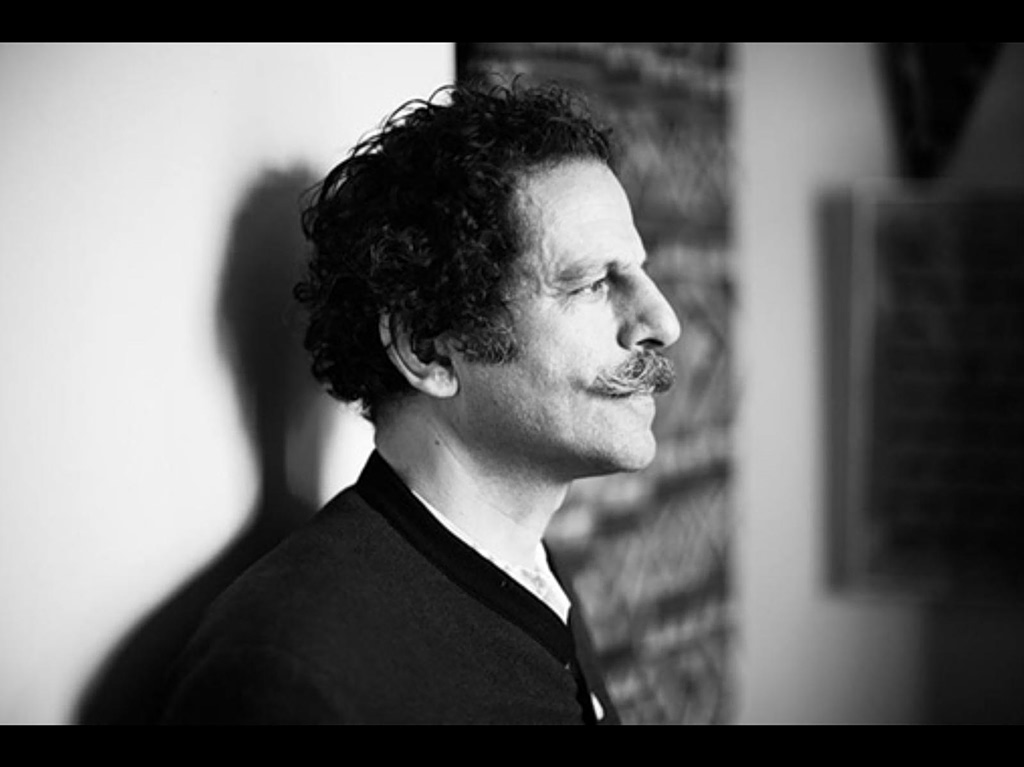
Dr. Amir Ali Farman-Farma, a prominent scion of pre-Pahlavi the Qajar Dynasty (1789-1925, which created the country’s lion and sun symbol, kept by the Pahlavis)
Dr. Amir Ali Farman-Farma, a prominent scion of pre-Pahlavi the Qajar Dynasty (1789-1925, which created the country’s lion and sun symbol, kept by the Pahlavis), in an interview with To Vima International, outlined the complex parameters of building a democratic regime in his country, the importance of granting substantial autonomy to the country’s seven ethnic minorities, and the global implications, most notably vis a vis China, of what will happen in Iran
A leading expert internationally on counter-revolutions, the subject of his Oxford D.Phil. in politics, Farman-Farma is an emerging markets and commodities investor, philanthropist, and Middle East consultant residing in London.
He was only 15 when his family fled the country, but he has made several visits since, including a one-and-a-half-year stay. He knows the realities on the ground, and has a broad network of contacts with Iranian expats.
Bringing in the Iranian people ASAP
Farman-Farma’s main contention is that before discussing the shape of the future regime, the Iranian people must be brought into the process as soon as possible through polling surveys (he notes there are technical means, such as Starlink, VPNs, or internet-sharing apps like Conduit to achieve this) and voting, because “no one else has the right to determine the 92 million people there”.
Farman-Farma underlines that nationwide voting must ensures that all minorities are included in the process, and that the whole focus of everyone within and outside must be exclusively to build democracy. He says he would vote for as much autonomy as possible for the minorities.
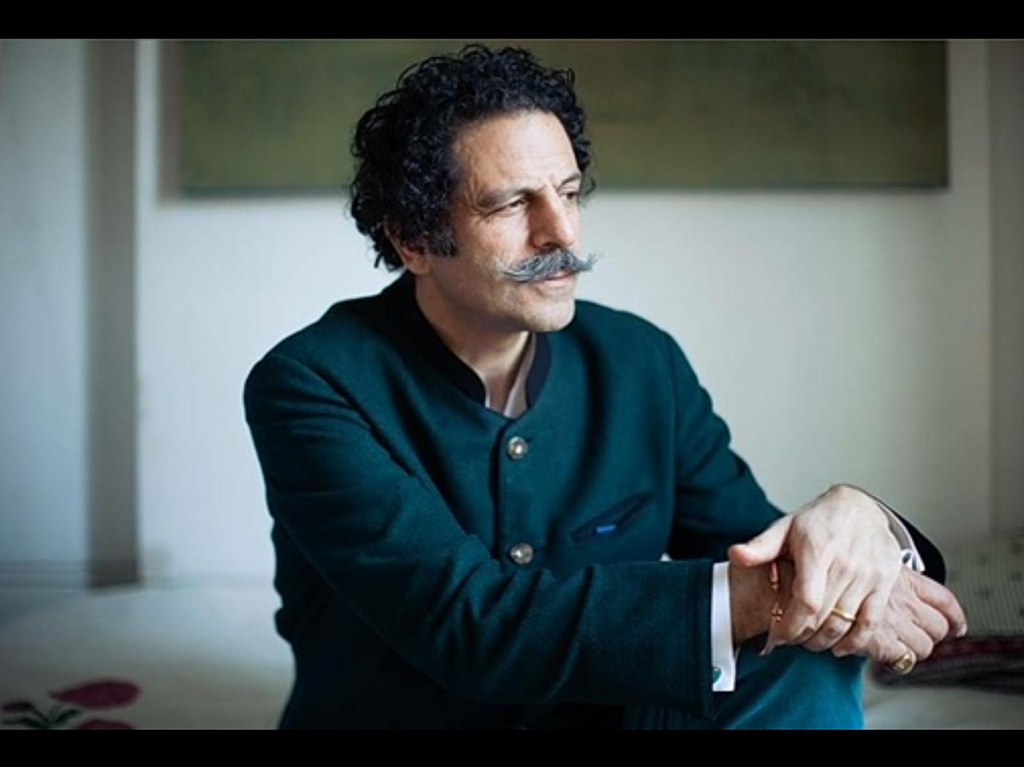
Dr. Amir Ali Farman-Farma, a prominent scion of pre-Pahlavi the Qajar Dynasty (1789-1925, which created the country’s lion and sun symbol, kept by the Pahlavis)
The future of Iran, he says, will be largely determined by the country’s Turkic peoples, which represent almost the majority of the population. For the past 1,000 years, he notes, Iran has been governed by people of Turkic descent.
As an Iranian expat involved in the opposition over the decades, what were your emotions and your reaction to the decapitation of the Iranian regime?
This was nothing short of a miracle to take out the enemy’s Supreme Leader and 40 of his top brass in the first 50 seconds of the war. It is unprecedented. I and everybody that I know, and everybody that I’ve come across in demonstrations here or online were all elated and hopeful that the main obstacle to change having been removed, that our country would move in the right direction, in a better direction.
Of course, I am profoundly grieved by the loss of innocent Iranians’ lives at the hands of US and Israeli attacks. However, I hold the Iranian regime — entirely and unavoidably — accountable. The Iranian people never chose this war footing against Israel and the US. The Iranian people were promised democracy, but received theocratic despotism. They have been fighting this regime and its policies for decades. The IRI has responded with bullets. Videos show regime enforcers machine gunning civilians with heavy Russian machine guns that can be used to bring down aircraft.
Do you think Israeli Prime Minister Netanyahu forced Trump’s hand to enter the war, as Secretary of State Rubio initially said the US entry was triggered by intelligence showing there would be an imminent attack against Israel?
It is clear that Netanyahu did force Trump’s hand, as alleged by Senator Elizabeth Warren and acknowledged by Secretary of State Marco Rubio.
Trump justified it to the US populace on the basis that Iran posed an imminent threat to the United States, perhaps not now, but certainly they are posing threats, as we’ve seen in the past few days, to the US allies in the region, to US interests there, and as the range of their missiles and their technology improves, they would be a threat to the United States as well.
I think that the foreign policy priority of the United States is to deal with China and the unfair advantages China has in its battle for economic supremacy, those being its low cost of production, low cost of labor, its very cheap currency, and the cheap oil that it was buying from sanctioned countries – Venezuela and Iran. So, this very important strategic objective is also being met by this war.
Trump has shilly-shallied between saying he likes the idea of regime change on the one hand, and then promoting the ‘Venezuela model’ of taking out the leadership and working with cooperative elements of the existing system. Which do you think he will choose in Iran, as he has declared he wants a say on who will be leader?
The US has oscillated between wanting regime change in Iran under hardline Republican presidents, and wanting the behavior of the regime to change in Iran. Trump is in the former camp. But ultimately, what counts for America is that the behavior of the regime must change.
I don’t have a crystal ball, but if moderate elements, hopefully secular ones, would take over, after this leadership has been decimated, and if they behave, if they meet America’s and Israel’s criteria, I’m sure the latter two would be satisfied.
If, however, that kind of leadership doesn’t arise, then the only choice would be to back somebody from outside the leadership. The only candidate I can think of in that case is Prince Reza Pahlavi, the son of the former Shah.
You’ve argued that parts of the Iranian power structure are pragmatic and capable of compromise. Why do you believe that?
Because survival tends to produce pragmatism. Many actors within the system care less about ideological symbolism than about maintaining stability and preserving their material interests. If the alternative is losing everything — including their lives — compromise becomes possible.
A realistic settlement would distinguish between what can be stabilized and what must be corrected. For instance, Iran’s vast network of quasi-state “foundations” that took over assets after the 1979 revolution represents a major breach of property rights. Those structures would need to be dismantled over time, and confiscated assets returned to their rightful owners.
But the transition does not require destroying every existing economic structure overnight. It requires restoring rule of law and gradually correcting the injustices that followed the revolution.
Farman-Farma, Pahlavi family ties
I have a lot of respect for Reza Pahlavi, whom I’ve known since I was a teenager. We had sporting games between his school and mine in Iran and also in the United States. And our mothers are friends, and I have the highest respect for his mother, Queen Farah Pahlavi, whose conduct since the revolution has been impeccable and who is loved and heralded as the mother of the nation by a majority of people in Iran, including senior reformists that I met in Iran on my last trip there in the last decade.
Yes, there are differences in the opposition. I can’t say everybody supports him and that doesn’t really matter. What matters is how the people in Iran feel about him. And I haven’t heard the people in Iran chant anybody else’s name. He called for people to come out, as you know, on the eighth and ninth of January in Iran, in support and millions did.
Unfortunately, they were slaughtered. On the 14th of February, he asked for people to abroad to show their support, and hundreds of thousands of people demonstrated in Sydney, in Munich, Berlin, Toronto, Los Angeles and elsewhere. So, he has demonstrated that he has a mass following, and he is the most important asset that the opposition to this regime has.
Pahlavism represents secularism, modernism and nationalism. That is what his grandfather and father stood for, and he does too. If I were in his shoes, I would also call for a referendum, and it is entirely possible that the people will go for the constitutional monarchy as a guarantee that Iran will not veer off course as it has in the past 47 years, in a way that is so destructive for the country, the region and the world.
Pahlavi and his descendants are Western, educated, molded like you and I, and they would be a bulwark against superstition, mixing religion and state affairs, radicalism and supporting Shia groups abroad. And keep in mind that in the region, all monarchies are doing reasonably well. They include Saudi Arabia, Kuwait, the United Arab Emirates, of which there are seven, Amir, Oman, and Jordan. All regional republics are Basket Case countries, topped by Syria, Iraq, Libya, Yemen, and to a lesser degree, Egypt.
From ultra-centralised “Emergency Phase” manifesto to 5-point plan
In 2024, just as his close ties with Israel were openly growing stronger, Reza Pahlavi released a post-Islamic Republic ‘Emergency Phase’ plan that seemed less like a transition to a full-fledged democracy, anytime soon at least, and more like an extremely centralized system of government that subordinated the executive, legislative and judicial branches of government to a central, unelected authority. Now he has issued a much vaguer 5-point plan that does not negate the former. So why should Iranians entrust him with leading a truly popular democratic transition?
Pahlavi’s plan has been updated, and I read a Harvard scholar’s review, which expressed some reservations about the power held at the center, not enough checks and balances against the power of the ruler, and I hope that that would be changed.
The overarching imperative is to put the choices to the greatest extent possible in the hands of the people, and that can start with polling, as a precedent for voting.
A vote will determine the shape of the future government.
In the meantime, the conducting of polls can give us the direction. We have means to set up the polls via satellite TV or hacking Iranian TV (as has been done recently) and social media platforms. People reply via internet with help if Starlink, VPNs and internet sharing apps like Conduit. This can serve as an important compass to determine opposition strategy and Western government strategy.
Israel has supported Pahlavi, who over the last several years has developed close ties with Jerusalem, as a transitional leader, and during the June war circulated a barrage of bogus text messages, supposedly written by Iranians, to Iranians, calling for the shah’s son to return as leader. Given this background, would Iranians not view him as a US-Israeli puppet?
Pahlavi’s public association with Israel has cost him dearly ever since the 12-day war, and perhaps before, due to the regime’s ideology. Due to Israel’s own behavior in Palestine, the Israeli regime is detested, not just in Iran, but by humanitarians everywhere.
However, Israel is also protecting us in the West from jihadism, Islamic radicalism, suicide bombers, and mercenaries. One should note that there’s also huge appreciation for Israel, inside Iran and outside. I’ve been to the demonstrations here in London. My mother’s been in Rome. I’ve seen videos of other countries, this operation, “Rising Lion” (June, 2025) and now “Epic Fury” (currently) enjoy great support. People, are very grateful.
Iran was at a great impasse for 47 years. Every time there was a reformist candidate like Rouhani and before him, Khatami, they couldn’t achieve anything. And some of them are still under house arrest, and it looks like Ahmadinejad stole the election from [reformer] Mir Hossein Mosavi.
Can Iran’s ethnic minorities, which have pushed for autonomy or even secession in the past, expect constitutional guarantees of lesser or greater autonomy in a post-theocratic Iran?
The regime has a strong record of either crushing or co-opting reform movements, so people had given up hope. By killing Khamenei and his gang, Israel has opened the way for change and given people hope. Of the seven the ethnic minorities [Azerbaijanis, Kurds, Lurs, Baloch, Arabs and Turkmens] you mentioned, the Azerbaijanis actually have the largest percentage in Iran. The Azeris in a real sense have built modern Iran for the past 1000 years.
Every regime dynasty in Iran has been of Turkic nature – Timurids, Seljuks, Safavids. Even under the Pahlavis they were very prominent. Under the Islamic Republic, Iran’s current president, Masoud Pezeshkian, is Turkic, and it was with the support of the Azeri population that he won the presidency. I think they number 40 or more million in Iran. They’re not just in Azerbaijan.
The Kurdish conundrum
The Kurds, however, are problematic. They dislike Pahlavi because they were suppressed under the Pahlavi regime and their leader, Sheik Qazi Muhammad was hanged for treason in 1947 by the Iranian government
Kurdish leader Mustafa Barzani escaped to Soviet Azerbaijan. Then his son, Masoud Barzani, headed and still heads the Kurdish Democratic Party in Iraq. Masoud’ s son, Masrour Barzani, has been serving as Prime Minister of the Kurdistan Regional Government (KRG) since 2019.
The Kurds are now backed by the West and they are infiltrating from Iraq into Iran and will be fighting for territory. It’s possible that there would be fighting also in Arab Kahuzestan. There already have been exchanges of fire and a lot of killing in the uprisings in Khuzestan.
‘Earnest desire’ of Trump, Netanyahu to see ‘a free Iran’
Given the fact that neither the Israelis nor the Americans have a clear plan for post-war Iran – Trump says top leaders are being killed so rapidly he doesn’t know who to talk to – does that not give the impression that they would be willing to place in power moderate, cooperative cadres of the current regime (Venezuela model), Pahlavi, or whomever else is willing to be a pliant puppet?
I don’t question either Trump or Netanyahu’s earnest desire to see a free Iran. Trump has many Persian friends. I have met him several times myself, and he knows how the country has suffered under the Islamic Republic and caused problems everywhere. And he would love for Iran to have secular and enlightened leadership, as of course, would Israel.
Pahlavi ‘best bet’ for transition, like Chalabi in Iraq
The mechanics of how this will happen, I don’t know. I think our best bet for the transition is Reza Pahlavi. That would be what happened in Iraq with Ahmad Chalabi of the Iraqi National Congress, heading that transitional phase. He was the first leader. I also spent time with him in Erbil and Salah Ed din in 1993 when the Kurds under Barzani, KDP and Talabani (Patriotic Union of Kurdistan, PUK) and Ahmad Chalabi hosted a gathering.
That was the first in-country gathering of the Iraqi National Congress They brought change to Iraq by lobbying the Americans to intervene, but also by fighting in northern Iraq with Kurdish fire power, under a no-fly zone. We don’t need a no-fly zone in Iran, as the whole country is a no-fly zone. The Iranian Air Force has been destroyed already, and American and Israeli jets fly in the sky over Iran with impunity, taking out whatever target they wish.
The Arab Gulf States pleaded with Trump not to start this war, as it will have serious negative regional repercussions. Why do you think he ignored these allies?
I understand why the Arabs pleaded with Trump not to launch a war. They have a lot at stake. They’re vulnerable, and they’re sitting pretty. Usually, life’s good for them. So why take this kind of risk? Trump’s motives, I believe, are many.
One is that the US president doesn’t have much leeway, because now more than ever, Israel and Israeli interests in the US determine American foreign policy in the region. One can see the writings of our old Harvard Professors John J. Mearsheimer and Stephen Walt (The Israel Lobby and US Foreign Policy) as well as of Jeffrey Sachs. All administrations have been influenced by this.
The United State, however, has its own crucial, geostrategic objective, because taking out Iran impacts China adversely, and that’s Trump’s main preoccupation.
He is taking away from China discounted sanctioned oil, first from Venezuela and now from Iran, the same way that the Ukraine war has been used to bleed Russia. This makes a lot of strategic sense for America. He himself said it was because Iran posed an imminent threat to the United States, which allowed him to order it. If it weren’t imminent, he’d have to go to Congress, and he couldn’t act immediately. It probably would never have happened.
How do you view the prospect of the war triggering a global energy and commercial crisis, as the Iranians have vowed to set fire to ships attempting to cross the vital Straits of Hormuz?
This is something I know something about. I have published in energy and geopolitical journals on Middle East oil for decades, and invest in that space, and advise on that as well. At the moment, with Brent trading in the low 80s, around $84 per barrel, the market is not discounting this scenario that you describe. It’s discounting a shortish war.
The fact that the US has obliterated the Iranian Navy, including a submarine and one ship that was in the Indian Ocean that got torpedoed is a great thing, and they are offering insurance.
That’s really the choke hold. Without insurance, and Lloyds of London stopped the insurance for shipping, ships can’t sail. Ship owners won’t risk cargo worth hundreds of millions of dollars, cargo and ship, without insurance. But now the US will provide that insurance, and they’ll provide naval escorts.
And don’t forget that in the tanker war during the Iran-Iraq War, oil was shipped out of the region under escort, Allied escort, and I believe it will be again soon. In a worst-case scenario, the US could land Marines on the north shore of the Straits of Hormuz on the Iranian side, and just control the straits completely and not allow any projectiles to be launched from those mountains, and the longer-range missiles hopefully won’t be launched. If they are, they’ll be shot down, as will the drones, and the area will be swept from mines. I think it’s achievable. That’s what the markets are predicting.