 Μake us preferred on Google
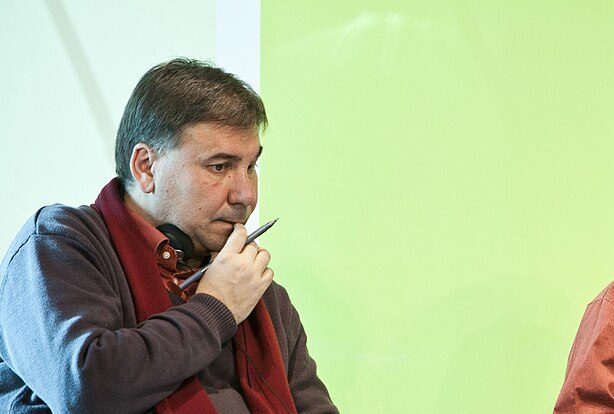
 In this interview, political analyst Ivan Krastev* shares his insights on some of today’s most pressing issues: the ongoing conflict in Gaza and the recently recognized peace plan, Tony Blair’s controversial role in international diplomacy, the complex dynamics of the war in Ukraine, and the evolving challenges facing democracy in an era of rapid political change. Krastev notes that for Putin, Ukraine is more important than Trump, highlighting the strategic depth of Russia’s focus. He also emphasizes that Europe is now being forced to imagine a world very different from the one we know — a shift that is not simply political or economic, but also deeply cultural and intellectual. “It’s not that you’re losing the game,” he says. “It’s that the game has changed.”
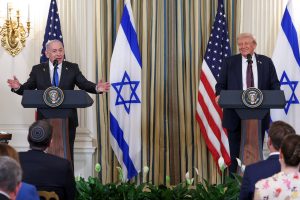
I would like to begin by discussing the situation in Gaza and the plan recently recognized by Trump and Netanyahu. What are your thoughts on this, and how do you interpret what might be happening there?
At least three things are clear. One is that Netanyahu has decided that for him, politically, it’s now more beneficial to stop the war than to continue. The elections are coming anyway, and he’s ready basically to lose the coalition with the Far Right, and the war is also becoming exhaustive on the Israeli side. Secondly, there is major pressure on Trump coming from the Arab world. Leaders who are basically telling him, we want stability, it cannot go on like this. And certainly, there has also been a change of sentiment within the United States.
For Trump, this is becoming a domestic political issue. How is the idea is going to work? It’s not going to be easy, because everything is going to be about details and sequences.
The only thing we know is that Hamas most probably agrees, and it’s not easy for them to disagree because then they’d be blamed for continuing the war. But you’re going to have to stop the military operation and, at the same time, basically stopping pushing people to leave. After that, everything else is going to be about details and the main story, which is going to be “What if?”
How effectively Gaza is going to be rebuilt, what kind of government, what kind of relationship… These really are questions that are easier to ask than to answer.
Do you believe Tony Blair can contribute effectively? I understand his appointment came in for severe criticism, largely due to his involvement with Iraq and related controversies. What is your perspective on this?
Blair has one advantage, and it’s this: he’s a heavyweight. He can call anybody and everybody. And in a situation like this, that makes a difference. Because, don’t forget: the moment the war stops, none of the problems are solved, but Gaza is suddenly out of the headlines. And one of the major risks is that a new conflict is going to emerge somewhere else, and everybody is going to forget about Gaza. But a lot of money will have to be invested, if people are going to be able to live in Gaza. And there are going to be difficult political compromises, too. So, from this point of view, having a political leader with Blair’s stature is better than having somebody who is just a bureaucrat no one has heard of, however capable they are. And secondly, it’s important that it’s going to be very hard for the Israelis to frame Blair as anti-Israeli. So he’ll be able to apply far more pressure than almost anybody else who is not a major American political figure.
You’ve argued that Europe’s biggest challenge isn’t the failure of its model, but the burden of expectations created by its success. What happens when societies begin to expect more than politics can realistically deliver?
The European Union was created at a very special historical juncture, and it was very well positioned in a world that no longer exists. Particularly after the end of the Cold War, the European Union saw itself as a laboratory for the world to come. Post-sovereign states, a high degree of economic integration, really cool. A lot of rights allowing people to move, to work in different places. So the Europeans bet on the world becoming a lot more like us. And secondly, Europe was the place where war was perceived as unthinkable.
So we’re in a totally different world now, and from this point of view, the very advantages and strengths of the European model are kind of becoming its weaknesses. It’s really difficult to change the system, which was based on consensual politics to a considerable degree, at a moment when you have major political polarization both within societies and between states. Secondly, economically, Europe has prepared itself—and very well—for a much more globalized world.
So Europe is now being forced to imagine a world very different than the world we know. And that’s no simple thing, of course. It has an economic dimension and a political dimension, but it’s also cultural and intellectual. It’s not that you’re losing the game; it’s that the game has changed.
And what can Europe do about that?
Europe is a big place. There are half a billion people living here. Highly educated people, the best social services, the best health care. Those aren’t things that just disappear. But one of the things that is happening is that Europeans are starting to realize that, basically, we’re on our own now.
In the case of a nuclear war, the American can do this or that, but otherwise, the Europeans are realizing for the first time that you can’t outsource your defense. Which doesn’t just mean you should start investing in military budgets, spending money you… never really thought you’d have to spend. It also means you should try to talk to the population in a different way. European societies were post-sacrifice societies. Governments didn’t believe until yesterday that they had the right to ask people to sacrifice their lives for any cause.
And now, suddenly, this has changed. Of course, it’s different in different countries, but you can see this transformation taking place in the Baltic republics, in Poland, in Scandinavia.
Obviously, new arrivals never felt at home, but people who are living here get their feeling their neighborhood has changed beyond recognition. So suddenly, everybody feels homeless. And politically, this is very difficult. The change is more painful for Europe, because change is always more painful for yesterday’s winners—and that was Europe far more than even the Americans.
Why do people think populist leaders will solve their problems? Why, when the world is changing, are people placing their trust in politicians like Orban?
They’re ready to trust any charismatic leader. Changes in technology now allow politicians to talk to people directly through social media, and it’s easier to trust a person than faceless institutions.
And as a result, I do believe we are going to see a rise of charismatic leaders on all sides.
And it’s not about solving problems, which benefits far-right leaders most of all. So, for example, Mrs. Meloni getting elected in Italy hasn’t led to a reduction in migration. What people like is the feeling that these leaders share their sentiments. So they weren’t rewarded for producing solutions, they were rewarded for wanting the same solutions.
It cannot go on like this, of course, which is why Mr. Orban is facing problems in Hungary, which is clear from the polling.
I’m saying this, because I don’t believe we’re going to see much more personalization of power, and it is not going to be restricted to populist leaders. Because people are suddenly going to want people who are ready to take responsibility for the change that is needed, for good or for bad.
It appears that many voters are increasingly turning to far-right parties, while labor and socialist parties in countries like France seem unable to connect with the public. It’s as if they don’t fully understand people’s concerns. We’ve seen a similar trend in the United States. What do you think is driving this shift, and how can traditional parties respond?
The Left is now very much what the best-educated members of a society vote for.
You see this very clearly in the United States, where you have this strange coalition between the people at the very top in terms of educational achievement, though not necessarily in terms of incomes, and a lot of people at the bottom, particularly foreigners and migrants.
Both Left and Right have become nostalgic, but the nostalgia of the Right is much easier. Essentially, what the Right is offering voters is a ticket back to how the world used to be, particularly in demographic terms. I like to live among my own people. And the Right is saying, “Yes, we want that, too.”
So this is why they are in a better position, and sociologically too. Take Germany, for example. When the Greens were in power there, they reduced the carbon footprint quite a lot. Still, actually achieving what they had promised to do didn’t help them at all, because they were going against public sentiment at the same time. You see, they hadn’t realized that the vast majority of the people had actually told them this: “I’m ready, we’re giving you a mandate to change the world, but not my way of life.” So from this point of view, you have this situation in which the Far Right is in a much better position structurally.
Does that mean it’s going to stay this way forever? Probably not, because the situation is also changing here and there. But we are living through a revolutionary period. This is very clear in the case of the United States, which is experiencing a revolution in which it’s not only power and policies are changing, it’s the identity of the players, too.
The Republican Party is a different party today. And the Democratic Party is going to be a different party as a result. We don’t know what it will turn into, but making and shaping your identity in response to the other side is just how things are. The United States is a different country. You can like it or dislike it, but Trump’s major argument is that America was not the hegemon of the liberal order, it was its hostage.
So I do believe this moment of identity change is universal. And that Europe is changing, too, as a result of it. Could anyone have imagined five or six years ago that the major stressor was going to be the defense industry?
And I know this is a tough situation, and particularly tough for liberal parties, of course, and liberal politicians. As one of the famous French liberals of the late 18th century said, when asked late in life what he had done at the peak of the French Revolution: “I survived.”
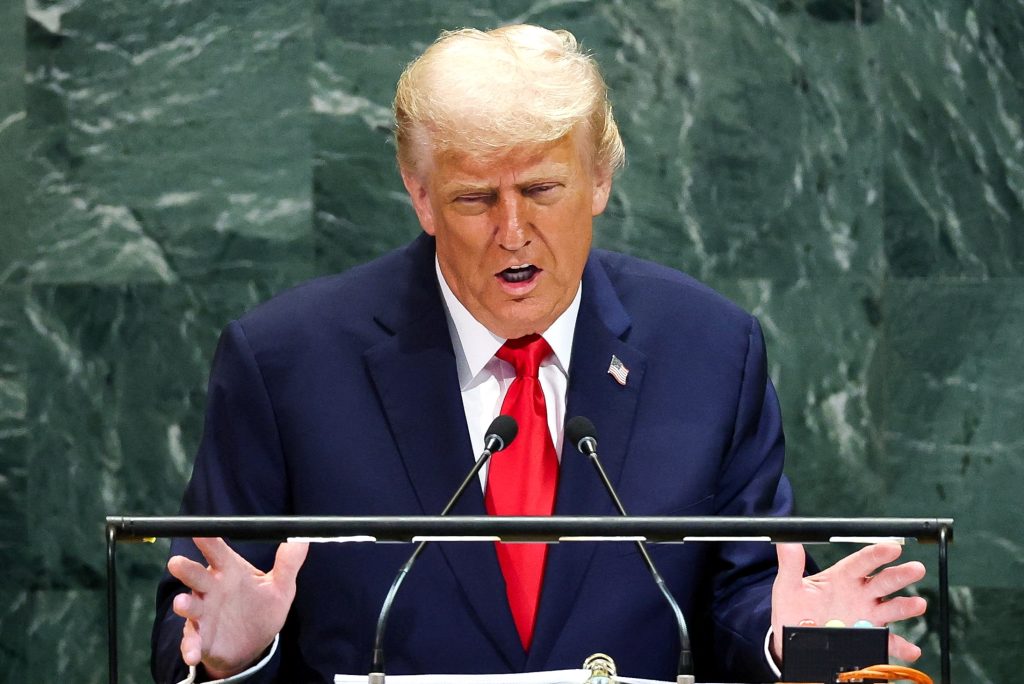
Do you believe that Trump’s statements are accurate, and how do you assess Donald Trump’s role and impact?
Donald Trump is a very specific personality, and also someone who has managed to capture certain trends. There are certain things that are very specific about Trump—the rise of nationalism, for example.
But he is a very strange nationalist. Normally, nationalists are obsessed with history, and perceive themselves as the embodiment of a certain trend in their nation’s history. Trump isn’t like that. If you see his speeches, he very rarely refers to any previous American presidents, and when he talks about them, it’s only to say that he’s better than they were. Also, in a strange way, he’s not particularly interested in what’s going to happen after him.
When he was basically talking about the Taiwan issue, he said, “The Chinese president promised me they would do nothing while I am president.”
So with Trump, we have the first political leader who is not interested in anything beyond the span of his own life.
The major changes in American politics did not start with Trump. And by the way, they’re not going to end with Trump, either. You could see that during the Biden presidency and its industrial policies. I mean that this same protectionism was there, just in a much softer form. All the trans stuff was there. The anti-globalization sentiment was there. Trump is part of a trend and the same backlash against globalization that is evident in other places, too.
Do you think he can make a real difference in the war in Ukraine, or is it impossible for the conflict to end as long as Putin stays in power?
It’s not easy for people to be dispassionate about him, but there’s one thing about him that can’t be denied: he’s someone who hates war from a very strange perspective. He’s a typical child of 1968.
He knows how to make love. He doesn’t know how to make war.
So when he was talking about Ukraine or even Israel, I believe he was being genuine about his intentions. And something else: for his own very special reasons, he is terrified of the possibility of nuclear war. I don’t believe that’s just rhetoric. But he is totally lacking in three things. One is patience.
He believes and considers himself like a magician of sorts. He believes that he has such amazing charisma, he only has to enter a room for everyone in it to change their perspectives. But that isn’t the case.
He believes that if he goes to the Russians and says, ‘Listen, I have a great deal. You can be our friends, we’re going to do business and so on,’ that Putin will stop the war that same day. But much to Trump’s surprise, Ukraine is more important to Putin than Trump.
But suddenly, Trump kind of understood that, even if his magic doesn’t work, he’s not entirely ready to withdraw. And I also believe the American military are telling him, ‘Listen. Anyone who isn’t in Ukraine is going to know very little about the future of the world.’
Because what’s happening there, particularly at the level of drones, is amazing. Every innovation survives for six weeks.
The next few months between November and March are going to be the most important; it’s when the different sides will make their decisions: what they can achieve, what they’re ready to lose. And the Americans aren’t going to be critically important in that. Honestly, even now, I get the feeling it’s the Brits who are actually coordinating the Western effort when it comes to Ukraine.
*Ivan Kratsev is a participant in the Athens Democracy Forum