5th century BC.
Athens finds itself at a crucial crossroads, politically speaking.
Cleisthenes, one of the greatest politicians of his time, takes the initiative to formulate a new system of government that will change the course of history forever. Introducing a series of radical reforms, in 508 BC he will abolish the old clans based on lineage and social status and establish new ones based on equality and areas of residence.
His aim is to ensure that all citizens will henceforth participate equally in public life, regardless of their social background. And so the first democratic state in history is born, with the Assembly of the Demos at its center, the Council of 500, and the citizenry’s ability to participate directly in the taking of decisions. The new form of governance espouses equality before the law, the equal right of every citizen to be heard, and the accountability of authority to the people.
Although limited—as only Athenian men enjoyed these rights—Athens’ democracy was the first historical example of a state in which power resided not in the one or the few, but in the many, which is to say in everyone considered a citizen. The first step had been taken. An idea born in the assemblies on the Pnyx and in the marketplaces of Athens would leap across centuries, inspire revolutions, and become the foundation of modern political thought.
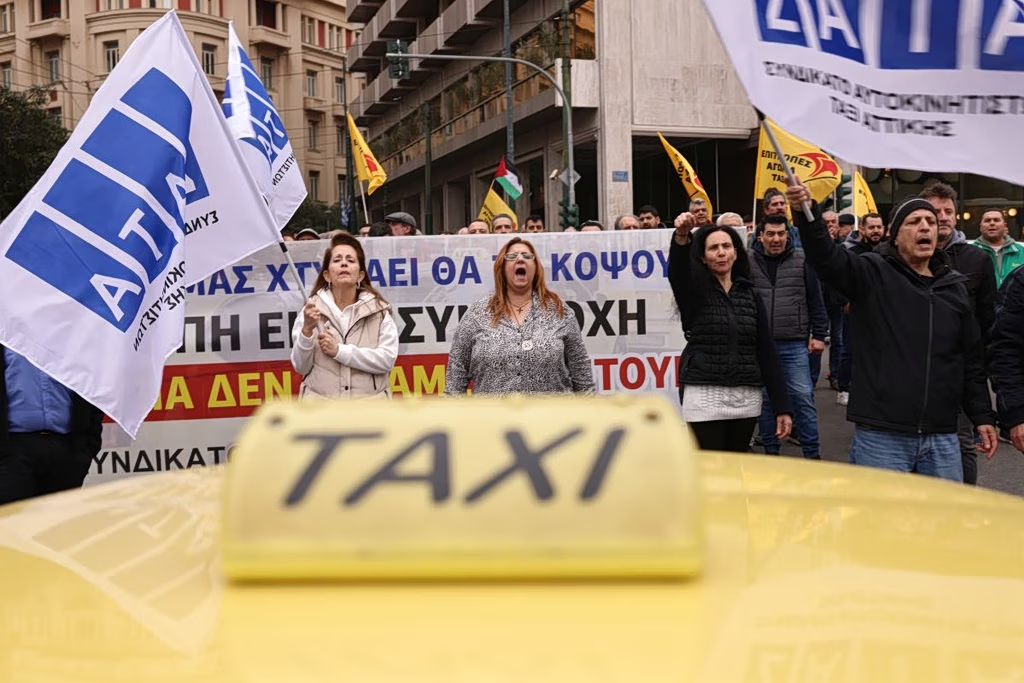
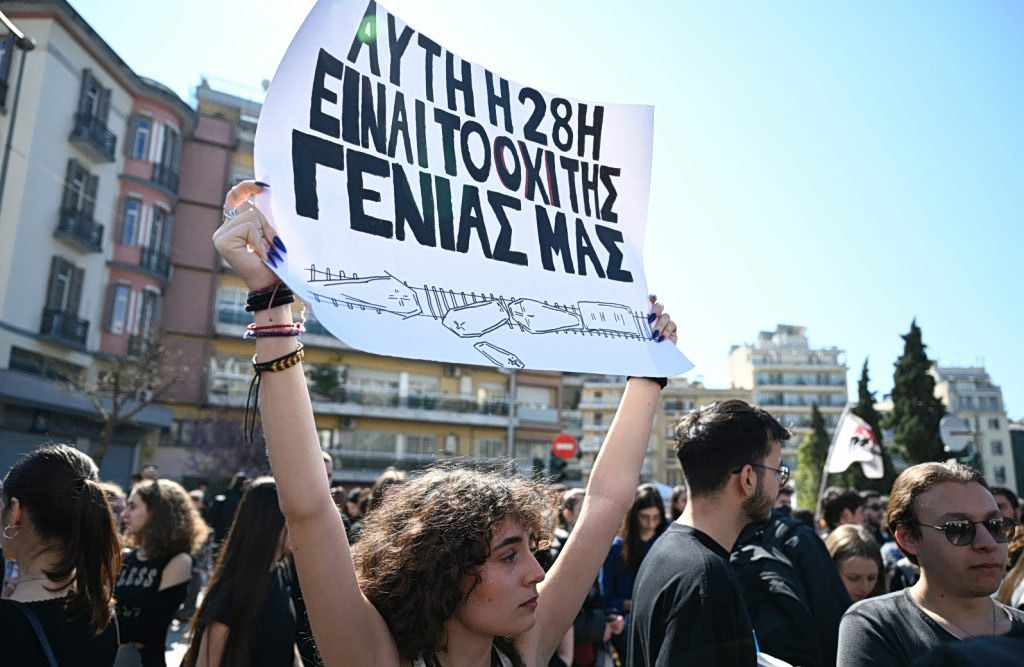
28 February 2025
Almost 2,500 years after the birth of democracy in Athens, Greece has neither forgotten nor forgiven. Joined at vast protests, millions of voices demand justice, because Tempi has left a gaping wound in the body politic.
The tragic accident revealed in the most brutal way the rottenness of a system steeped in irresponsibility… and opacity and abandonment. And when the moment of truth came, the system did not step up. Instead of taking charge, it covered up. In place of punishment, we got communication management. The mechanisms of power worked like a well-tuned instrument of suppression.
The judiciary stayed silent. The guilty stayed silent behind their TV smiles. The institutions went into hiding. The people were beaten. And the dead were buried in a land-fill. And democracy, as Cleisthenes would have wanted it, was left a shade. Today, in the country that gave the world democracy, we have this and only this to say: “There is no air to breathe”. The state is not simply in crisis; it is violated, mutilated, traumatized. It does not protect. It does not hold itself to account.
It does not represent. When, along with freedom and equality before the law, justice—a core democratic values—has been reduced to a slogan unfurled for show, a comatose institution (or, better, one that operates a la carte), the answer to whether democracy is in danger is that it is not. Tempi buried our democracy. The system sold it out. Democracy has been brought low. And we have been brought low with it!
This article was originally published in the insert “The European BHMA” published with “TO BHMA on Sunday” on 11 May 2025.