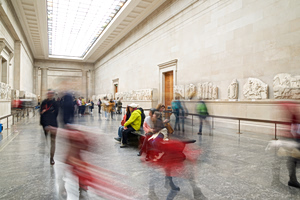
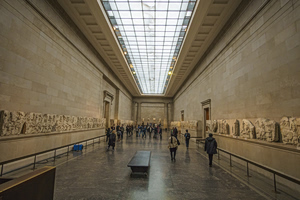
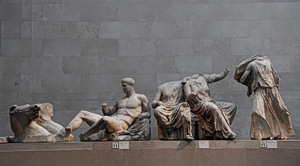
At last! The dream of more than two centuries is becoming reality: more than 220 years after their seizure by Lord Elgin, the Parthenon Marbles will take the road back to Athens, after first falling victim to a “kidnapping” in London. Scientists from the Institute of Digital Archaeology (IDA) in Oxford intend, within the day, to “empty” the Duveen Gallery of the British Museum, where the masterpieces of Phidias are exhibited, and in their place to install other works of art.
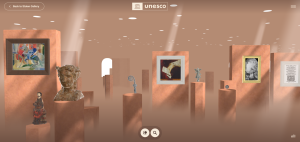
Only this spectacular kidnapping will not trigger the intervention of… Scotland Yard or MI5 – quite simply because it will not take place in the physical world, but in the digital one. Thanks to an innovative virtual reality program, presented by “TA NEA,” internet users – and soon, those visiting the London institution – will be able to see what the Duveen Gallery will look like the “day after” the return of the Marbles to Greece. The project premieres today, initially at the address digitalarchaeology.org.uk, while in a few weeks it will also be available inside the British Museum itself: staff of the renowned Institute will offer visitors to Room 18 special virtual reality glasses that make the repatriation of the treasures of classical antiquity a (digital) reality.
“Today, the dream of the reunification of the Parthenon Marbles becomes reality! It is our gift for Valentine’s Day both to Greece and to the British Museum,” Roger Michel, director of the IDA and fellow of Trinity College of the University of Oxford, tells “TA NEA.” “Some believe that with the return of the Marbles a part of the British Museum will collapse. The truth, however, is that their repatriation constitutes an ideal opportunity to envision the museum of the future,” notes Michel, who served for 25 years as a lecturer at the Boston University School of Law.
“Life After the Marbles.” The Institute’s initiative allows the public to tour a digitally transformed “Parthenon Gallery.” “We will show the world that there can be ‘life’ after the Marbles for the Museum,” he underlines. “Visitors will wear special glasses and will see around them, instead of the Marbles, other emblematic works that narrate the history of art, culture, and aesthetics of ancient Greece: some of these already belong to the collection of the British Museum. Others are objects that, as has been said, the Greek government is willing to lend in exchange for the Marbles.”
The British scientists created their application by “marrying” virtual reality with geotagging technology. “We scanned the Duveen Gallery from end to end and ‘built’ our own virtual Duveen Gallery, which is ‘geotagged’ with the exact coordinates of the physical space. What the visitor sees corresponds fully to what he hears, feels, and smells around him,” explains the director of the Institute. “It is a digital representation with absolute fidelity. We captured every tiny detail – even the… chewing gums stuck under the benches, the stains on the floor and walls, and the marks left by water that accumulated for years when the roof was leaking,” he adds, clarifying that “it took a year and a half to develop the program, which will be implemented gradually over the next six to eight weeks.”
However, the virtual Room 18 has one fundamental difference from the real one: “The space has been completely emptied. All the Parthenon Marbles have been removed.” When visitors cross the threshold of the Duveen Gallery and put on the special glasses, “they will see it fill with other exhibits and become as we believe it should be after the reunification of the Marbles,” Michel notes. “Ninety to ninety-five percent of these objects are ancient Greek and the remaining five to ten percent Roman. We will also ‘display’ copies of the Marbles that we have constructed from Pentelic marble. In fact, on the surface of some of them the color that the original Marbles once had will be added.”
In Two Ways. The virtual reality experience can be “lived” in two ways, the head of the Institute explains: “The first is through the geotagging method I described earlier. The user must visit the Museum and wear the VR glasses. What is exciting is that for whatever he sees through the lenses – for example, a bench or a door – he can stretch out his hand and touch it. The second way is for someone to tour the gallery from… his home, something very practical, especially for those who do not have the ability to go to London.” The first method will be tested within the next two months. “We will distribute glasses to visitors, of course without hindering the smooth operation of the Museum,” he notes. “Besides, there are many tour packages that one can purchase on the Internet from private guides. Moreover, the institution’s operating regulations do not prohibit the use of virtual reality glasses,” Michel continues, admitting that he “has not informed” the Museum about his undertaking. “I hope they will treat it positively and regard it as a useful gesture on our part.” He even aspires to… put the glasses (literally) on the members of the institution’s administration: “I hope that among those who will wish to see the new Duveen Gallery will be the trustees, the keepers, and the curators of the Museum. I believe they will be curious to see what we are proposing, and indeed that they will take it into account in the decisions they will make about the future of the space.”