A few thousand years ago, young Athenian girls marked their coming of age with a sacred rite dedicated to Artemis at Brauron. To the north, the fortified city of Rhamnous guarded northeast Athens’ coastline while also hosting the most important sanctuary of Nemesis. At nearby Marathon, there is a battlefield forever etched in the history of Western civilization.
For history lovers, Athens offers far more than the Parthenon. These three destinations are ideal for a second or third visit—or even for locals, many of whom have never seen them. Each lies in the greener landscapes of eastern Attica, far from the sprawl of the city. Getting there requires some planning, but the reward is worth it: beautiful scenery, a sense of the ancient past, and in summer, the chance to end your day at the beach.
Brauron: The Sacred Grounds of Artemis
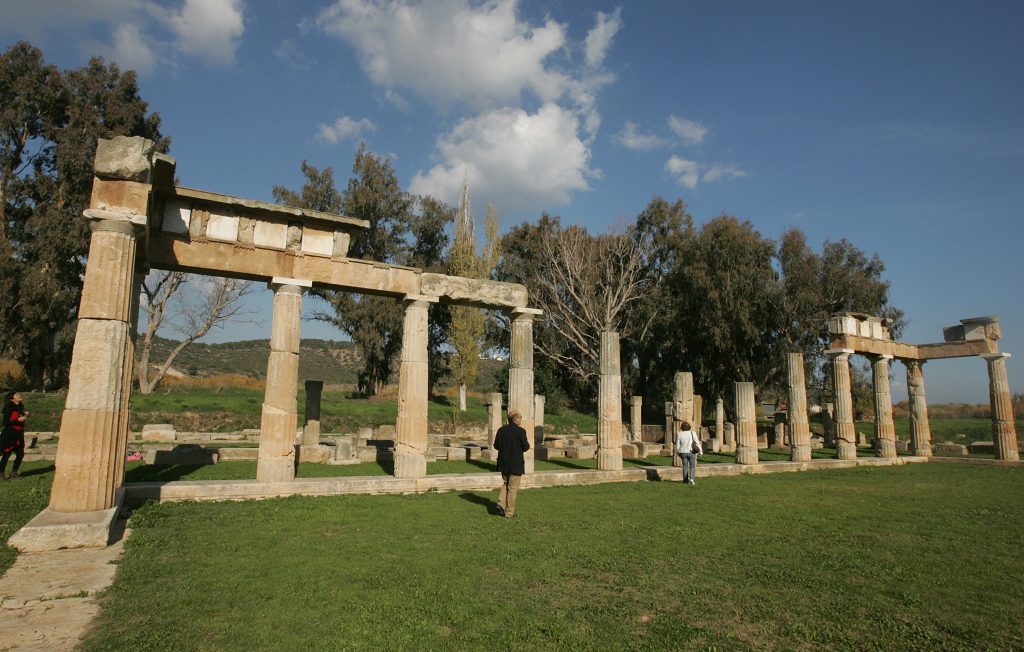
The sanctuary of goddess Artemis in Brauron. / Athens New s Agency
About 20 minutes’ drive from Athens International Airport lies Brauron (modern Vravrona), a fertile coastal valley framed by a green hillside and the banks of the Erasinos River as it flows into the South Euboean Gulf. This tranquil site has been inhabited since prehistoric times, but in antiquity it was best known as one of the most important sanctuaries of Artemis in Attica.
Today, Brauron is a place where myth, ritual, and landscape intertwine. “Brauron is dedicated to women, to the goddess Artemis,” explains Evangelos Nikolopoulos, Head of the Department of Prehistoric and Classical Antiquities and Museums of the Ephorate of Antiquities of East Attica.
According to myth, Orestes and his sister Iphigenia, children of Agamemnon, king of Mycenae, stole the xoanon (wooden cult statue) of Artemis from the land of the Taurians (present-day Crimea) and, guided by the goddess Athena, brought it to Attica. There they founded a temple at Brauron to house it. There, Artemis, though worshipped primarily as the goddess of the hunt and of nature, is revered as the protector of marriage, childbirth, and bringing up children.
One of the sanctuary’s most fascinating ceremonies was the arkteia—a coming-of-age ritual in which young girls from prominent Athenian families served the goddess as arktoi (“bears”), preparing for adulthood and marriage through a series of ceremonial acts.
Another festival, the Brauronia, saw a procession begin at the Brauronion atop the Acropolis in Athens and end at the sanctuary, where offerings were made, the cult statue was dressed, and competitions in recitation (and possibly athletics) were held.
The on-site Archaeological Museum of Brauron, just 200 meters from the temple ruins, houses the finds from the area: statues of children, votive offerings, and artifacts from the wider Mesogeia region. The sanctuary itself, set against a thriving wetland that attracts birdwatchers from around the world, still feels like a place apart—a sacred threshold between the human and the divine.
Marathon: A Landscape of Memory and a Battleground
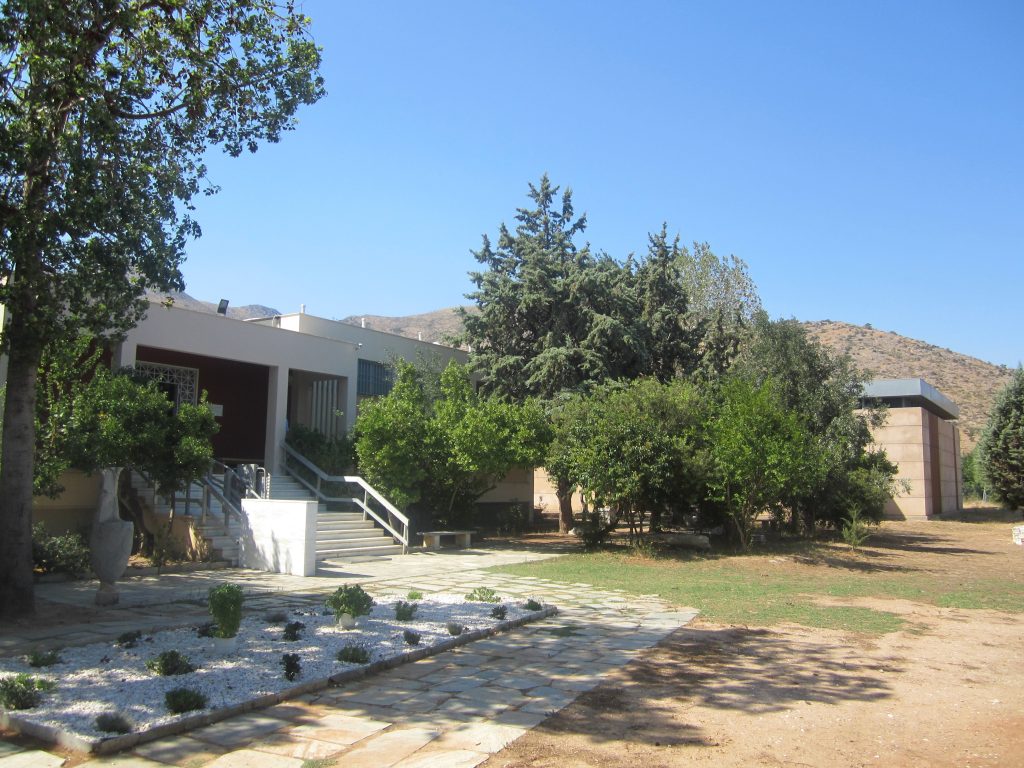
Archaeological Museum of Marathon, Greece. / Tomisti, CC BY-SA 4.0 via Wikimedia Commons.
For runners, the name Marathon conjures the legendary long-distance race. For historians, it recalls one of the most decisive battles in antiquity. In 490 BC, 10,000 Athenians and 1,000 allies from tiny Plataea, led by the general Miltiades, defeated a vastly larger Persian army—a victory that would echo through history and shape the subsequent course of Western civilization.
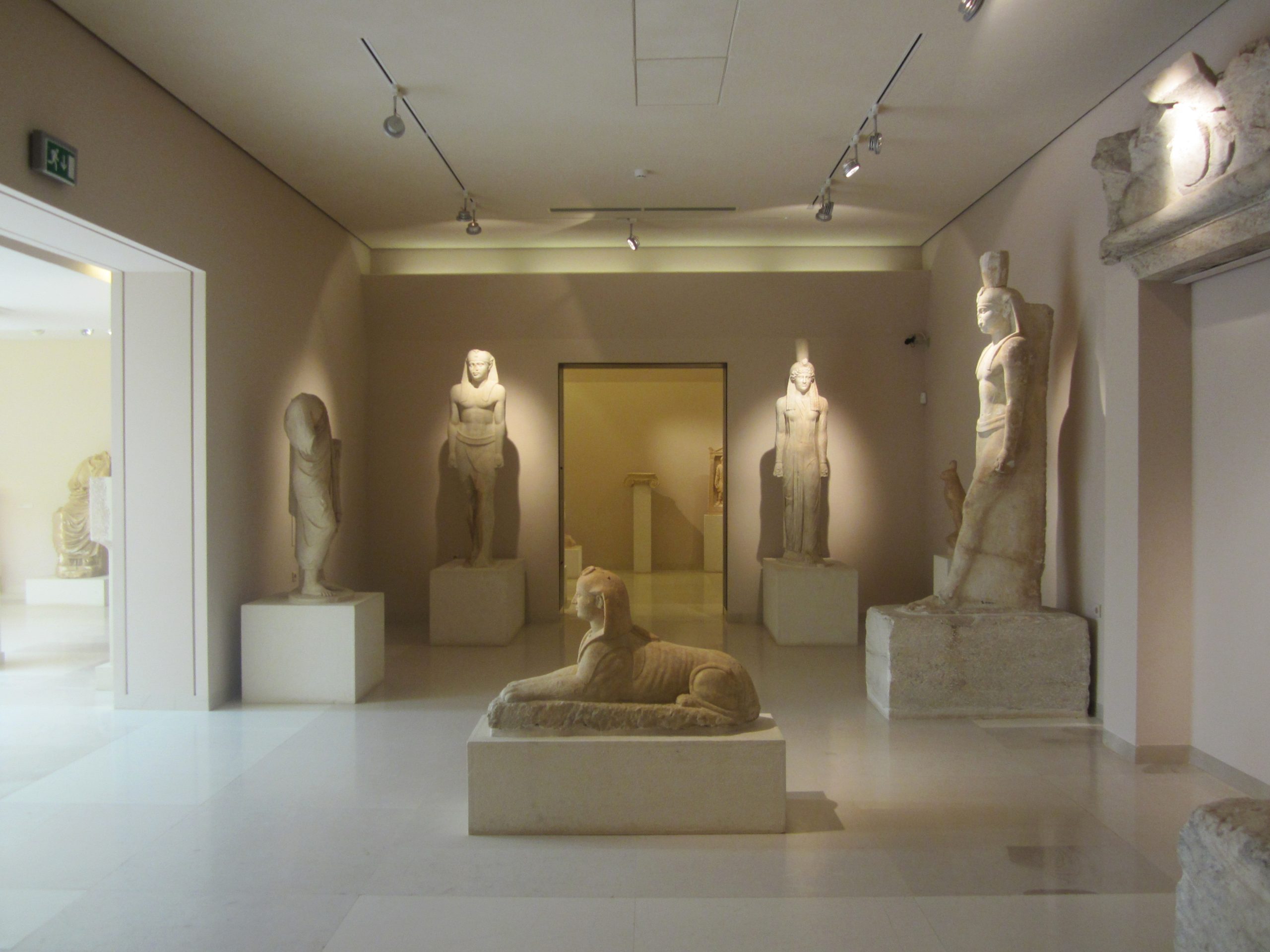
“The Marathon Archaeological Museum is celebrating its 50th anniversary this year,” Nikolopoulos notes. Built through the generosity of Greek-American businessman Eugene Panagopoulos, its five rooms display artifacts from the famous battle as well as prehistoric pottery, stone tools, marble figurines, and finds from the wider area. Particularly striking are the statues from the Sanctuary of the Egyptian Gods at Brexiza, founded by the Roman-era magnate Herodes Atticus, which include depictions of Herodes himself and his wife Regilla.
Several ancient cemeteries lie nearby. Immediately beside the museum, a Middle Helladic (2000–1300 BC) burial ground has three large funerary tumuli within the site and four more beyond it. About 150 meters away is the so called “Tumulus of the Plataeans,” which is believed it contains the graves of eleven men from the city of Plataea who fought alongside the Athenians.
Perhaps the most famous site, however, is the “Tumulus of the Athenians” 4.8 kilometers from the museum, which covers the remains of the 192 warriors of Athens who fell in the battle.
On the road to modern Marathon lies the Early Helladic cemetery at Tsepi (3000–2300 BC), where rows of stone-lined cist graves—rectangular and circular—once held the dead in the fetal position. The site is now sheltered by a striking structure that offers 360-degree panoramic views over this ancient resting place.
Rhamnous: A Strategic Fortress and the Home of Nemesis
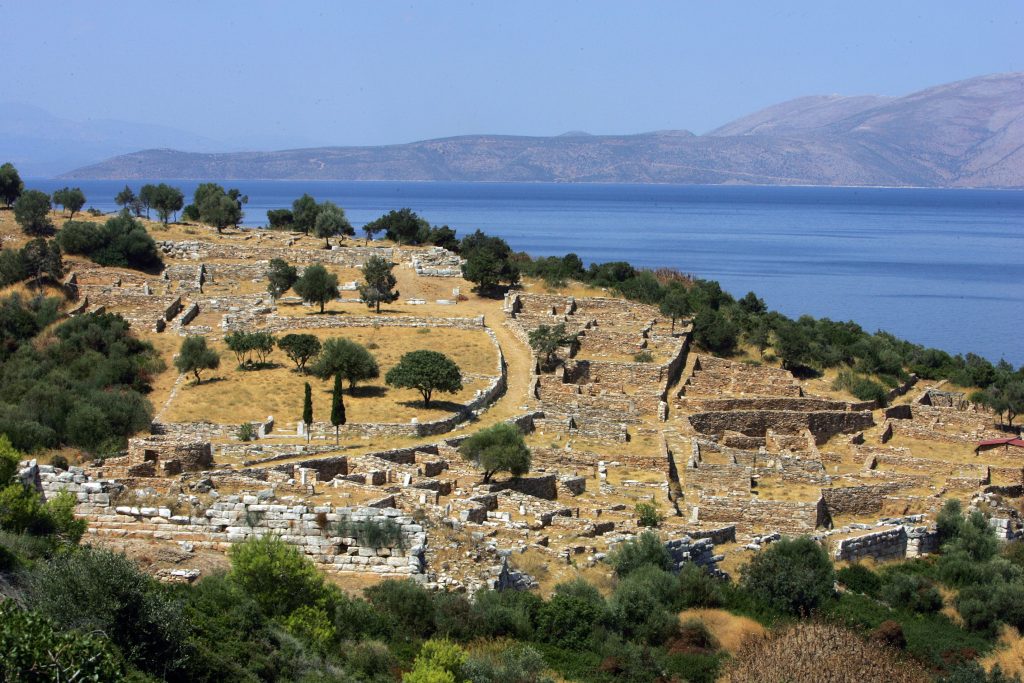
The fortified city of Rhamnous in East Attica./ Athens News Agency
Heading north from Brauron, deep into the less-trodden landscapes of East Attica, lies one of the most remarkable—and surprisingly little-known, even among Athenians—archaeological sites in the region: Rhamnous.
“Rhamnous is the prime destination for anyone seeking an alternative archaeological visit,” said Nikolopoulos. And he’s right—this is a site that even locals have yet to discover.
Once a fortified city built for strategic purposes, Rhamnous occupies a commanding position overlooking the South Euboean Gulf, its two small harbors offering both protection and control over the coastline. The area takes its name from the abundance of the thorny buckthorn shrub (Rhamnus) that still grows here.
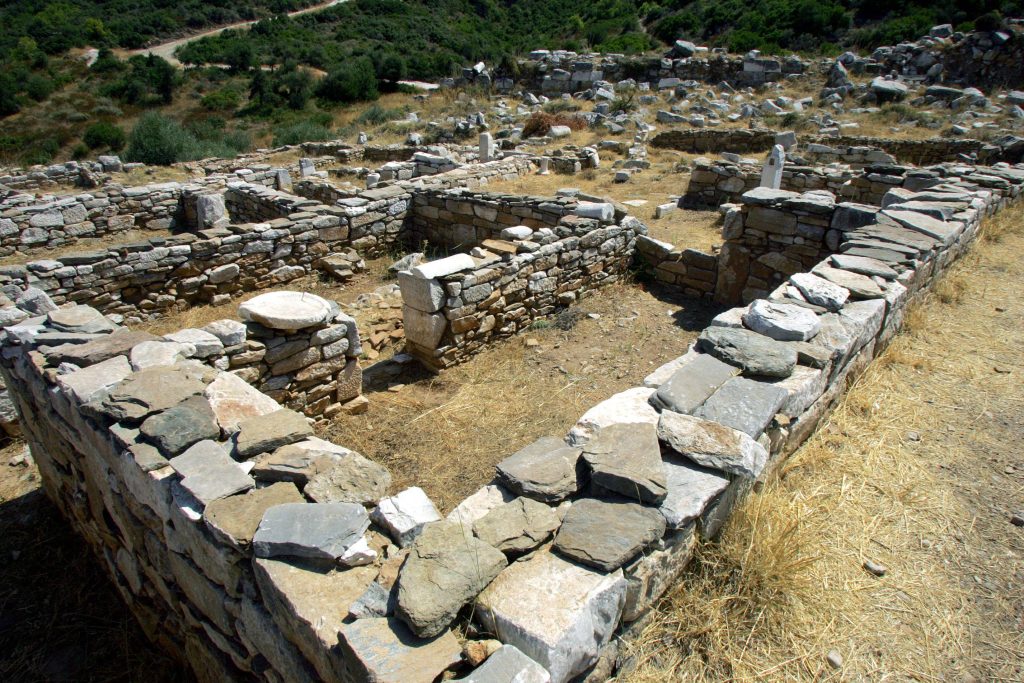
Inhabited continuously since the Neolithic period, Rhamnous boasted a fortress at whose summit stands a defensive wall constructed or renovated during the Peloponnesian War. Within its bounds were military facilities and the garrison’s quarters. On the slopes below, the town of Rhamnous included private homes alongside public buildings including a theatre, a gymnasium, and the agora.
Athens News Agency/ Symela Pantartzi
The jewel of Rhamnous, however, was its famous sanctuary dedicated to Nemesis, the goddess of divine justice and just allocation. According to myth, she was the mother of Helen of Troy. The story goes that Zeus, intent on seducing Nemesis, transformed himself into a swan while she took the form of a goose. Their union produced an egg, which was given to Leda to hatch, out of which both Helen and the Dioscuri twins emerged. Though the temple itself has not survived, it was the most important sanctuary dedicated to Nemesis in the Greek world.
Nikolopoulos underscores the exceptional significance of these sites: “The archaeological sites of Rhamnous and Brauron are exemplary, not only for their importance in antiquity but also because they have been entirely spared from any form of modern construction or development.”
“Anyone who visits Rhamnous becomes one with the site and its natural surroundings,” he adds. “You’re transported there, without even a single power line to disrupt your view.”
He concludes, “Rhamnous has it all: walls, houses, temples—all remarkably well preserved and set within an environment untouched by modernity. I sincerely hope the nature remains precisely as it is today.”
Information sourced from the websites of the Ministry of Culture: Odysseus and the Ephorate of Antiquities of Eastern Attica.