The rights we now treat as self-evident were not granted because power suddenly became generous. They were won through persistent, organized and often painful struggles by people who rejected the rule of their time.
Political ambition, institutional capacity and the missing “how”
For four years now, the Predator spyware case has repeatedly faded from view, only to flare up and return to the forefront. But as long as the matter remains unresolved, it comes at a cost
In the European context, the current status quo, both in terms of domestic governance and international relations, appears to be undergoing a period of instability and readjustment, reflecting a broader transformation in the way politics unfolds.
For more than half a century, our democracy has been taking shape and gaining strength.
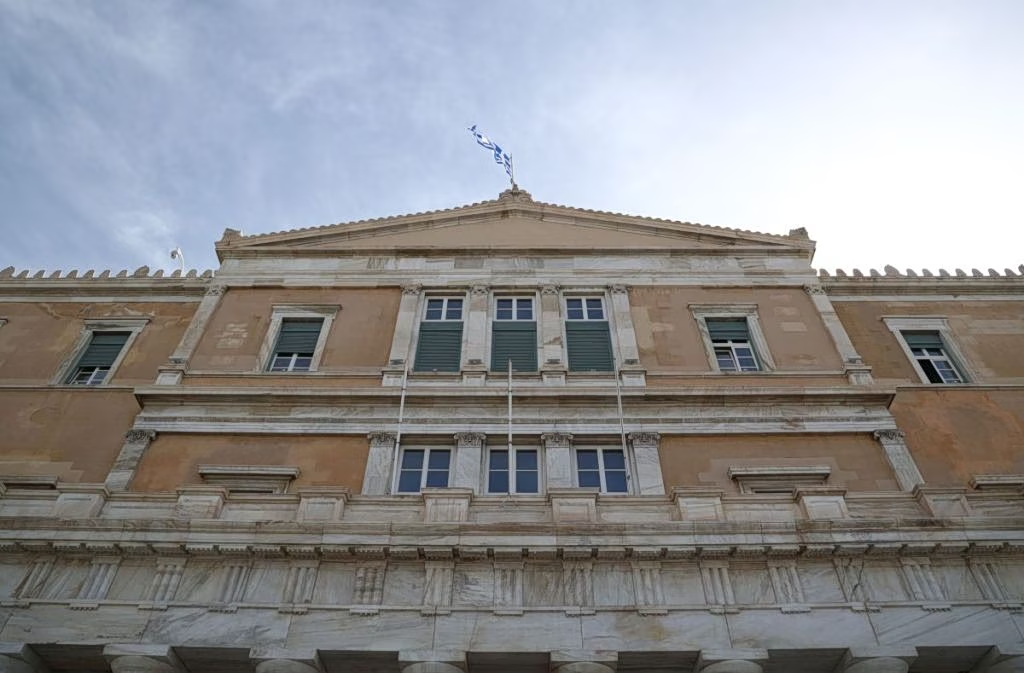
A series of high-profile controversies has intensified debate over institutional accountability, judicial independence, and the rule of law in Greece, raising broader questions about the resilience of its democratic institutions
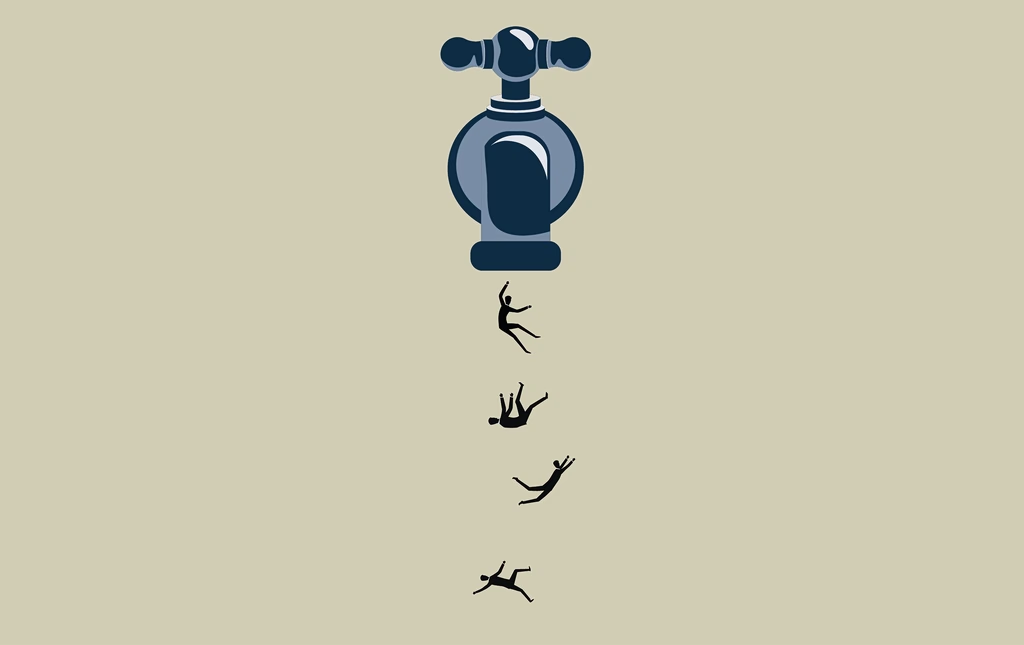
Elsewhere in democratic Europe, a government crisis has all the force of a firecracker or all the significance of a broken faucet. Not here.
According to the Reuters Institute survey, in.gr, MEGA, To Vima, and Ta Nea rank highly in credibility scores. One of the report’s key findings is the decline in overall public trust in the media in Greece. However, despite the many challenges, investigative journalism remains resilient.
Plato, Institutional Equilibrium, and the Politics of Participation in the Asia-Pacific
A persistent anxiety runs through Western democracies, often reflected in the tone of public debate, in the exhaustion of citizens, in the speed with which anger can become a political manifesto. This is a crisis of political culture.
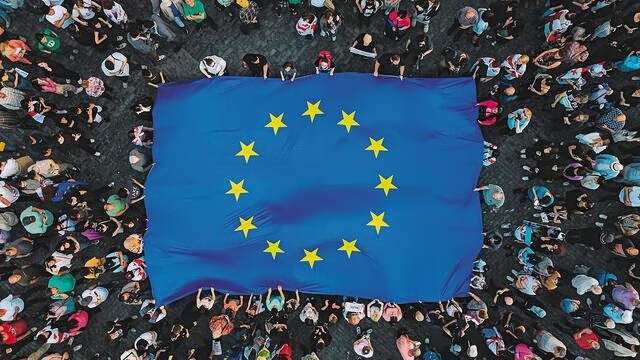
For our generation, Europe is no longer just a theoretical peace project from the history books. It is our everyday reality
Since the idea of constitutional reform was put back on the table, a lot of interesting proposals have been made. Some of them useful. Some impractical. Others redundant.
In Greek politics, scandals come and go, but the erosion of credibility remains. The recent controversy over Makarios Lazaridis’s CV is not significant in itself; it is symptomatic.
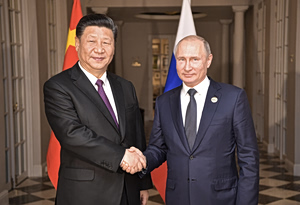
China and Russia are at the center of an axis of authoritarianism which, together with Iran, accounts for two-thirds of all global authoritarian cooperation incidents in 2024–2026.
New data highlights weaknesses in institutional checks and balances, placing Greece among the lowest-ranked EU countries amid a broader global decline in liberal democracy.
The Senior International Correspondent for Corriere della Sera, Andrea Nicastro, shares candid insights in an interview with TO BHMA International Edition on the Ukraine war, the changing global power landscape, and the forces shaping today’s international stage.
In an interview with BHMA International Edition, Tony Barber argues that one of the central problems facing European countries today is the state’s declining ability to deliver public services with the same speed, efficiency and inclusiveness as in the past
The polls keep rolling in one after another to confirm something we all sense: the political scene in Greece remains frozen in aspic.
How crises, inequality, and distrust are shaping the political views of Southeast Europe’s youth
The acceleration of far-right normalization is not limited to the transatlantic environment but occurs simultaneously in the broader international sphere