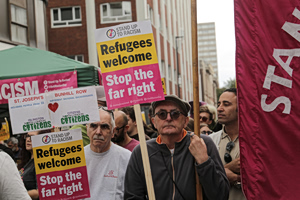
"The current model satisfies no one-locals feel ignored and asylum seekers are left in poor conditions." – Professor Jonathan Darling, Durham University
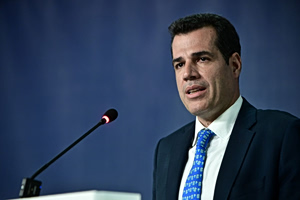
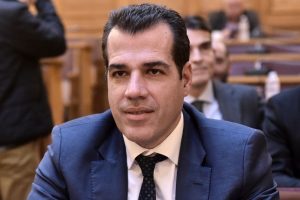
Greece signals it will not become an open-border country as migration arrivals drop. Minister Thanos Plevris outlines stricter asylum rules, upcoming legislation, and policies to integrate recognized refugees while reducing dependency on state aid
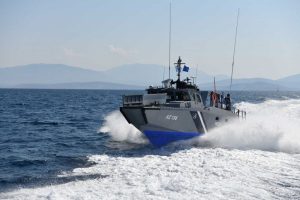
Greece has repeatedly faced criticism from human rights groups over alleged pushbacks at sea and land borders. Earlier this year, the EU’s border agency said it was examining 12 cases involving possible rights violations by Greek authorities
Under the terms of the agreement, France will accept undocumented migrants who have crossed the Channel to Britain, in exchange for the UK taking in a similar number of legitimate asylum seekers who have family ties in Britain
Earlier this month, an EU delegation including Greece’s migration minister was denied entry into eastern Libya following meetings with the Tripoli-based government
The migration route from Libya continues to pose a significant challenge for Greek authorities. According to Plevris, this area was responsible for 4,000 illegal entries last year, while numbers have already surged to 10,000 in just the first half of 2025
From Benghazi to brussels, Vandewalle highlights how the absence of unified governance in Libya continues to destabilize the Mediterranean. The Professor argues that international interventions—especially from turkey and Russia—have transformed Libya into a geopolitical chessboard.
A recent visit by Greek Foreign Minister Giorgos Gerapetritis to Benghazi was reportedly well-received by Haftar and his inner circle. Though the talks were informal, Greek diplomats interpreted the visit as a goodwill gesture, signaling Eastern Libya's interest in closer ties with Athens—even in the face of stronger economic offers from Ankara
The good news is that the European Union as a whole is slowly coming back down to Planet Earth and bidding farewell to the perilous naivety of its earlier immigration policy
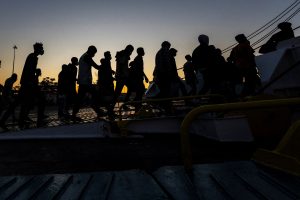
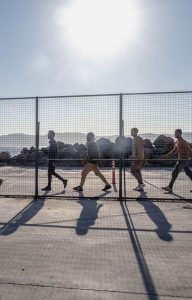
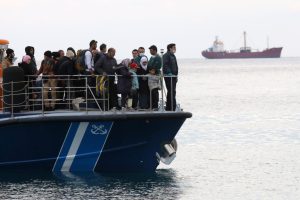
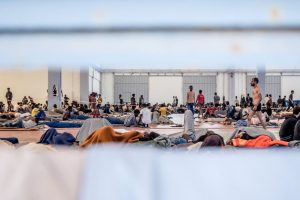
At the port of Rethymno, migrants wait in long lines for identification. Their phones are collected on a sheet spread across the asphalt. Exhausted, many collapse in the heat. Some faint
Authorities confirmed they are treating the bonfire display as a potential hate incident and are conducting an investigation. The Police Service of Northern Ireland has dealt with similar tensions in recent weeks, including violent riots in Ballymena, some 65 kilometers northeast of Moygashel
While the Greek government is taking unilateral steps to manage the situation, officials stress that a long-term solution must be shared across the continent.
The amendment stipulates that, for a period of three months, individuals arriving by sea from North African countries without formal authorization will not be permitted to file asylum applications.
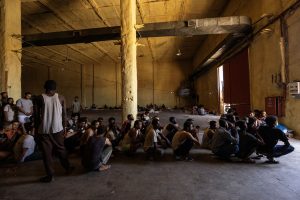
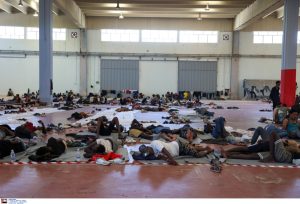
"The humanitarian situation would be manageable if authorities had addressed the lack of reception capacity in a timely manner", said the Council of Europe’s Commissioner for Human Rights, Michael O’Flaherty
The UNHCR reminded Greece of its obligations, stating that while border control is legitimate, it must never undermine the legal right to asylum
After all, sheep and goats raised by loyal party patrons seem far more politically rewarding than the chickens on the plates of Sudanese refugees.
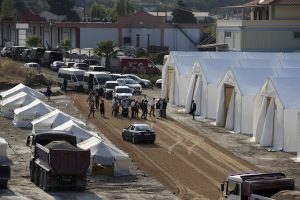
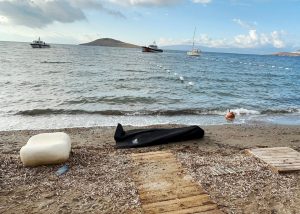
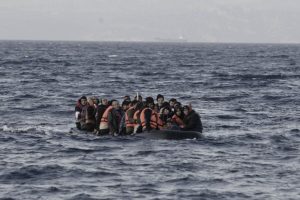
Over 1,500 migrants have arrived in Crete in recent days, overwhelming local infrastructure and prompting emergency transfers to mainland Greece amid a dramatic rise in migration
The Libyan government presented what it calls a "comprehensive national plan" to address illegal migration, which includes dismantling smuggling networks, strengthening border controls, and restoring order in areas dominated by criminal groups
As irregular migrant flows from Libya surge toward Greek shores—especially Crete—the Greek government is preparing to adopt severe deterrent measures to manage what officials describe as an escalating crisis
EU Commissioner and Ministers from Greece, Italy, and Malta declared persona non grata by eastern Libyan authorities