Greek tourism came through this spring’s Middle East turmoil with its optimism intact, but the episode laid bare a deeper vulnerability: of all the links in the tourism chain, the one Greece can least afford to lose is air travel, and it is also the one the country controls least.
That is the central tension running through a new study from the Economic Analysis Division of the National Bank of Greece, part of its “Business Trends” series. The bank’s annual survey of Greek hotels was carried out in April and May, at the height of the crisis, when oil prices spiked and fears of fuel shortages were at their peak. Even then, the industry expected a good year. The real question the study raises is what happens if the next shock lasts longer.
How much a longer crisis could cost
The bank’s core concern is exposure. Greece draws its visitors from far away and flies almost all of them in, so a sustained disruption to air travel would hit it harder than most rival destinations. To measure that sensitivity, the study models two scenarios for the next season.
In the milder case, with oil holding near $80 a barrel through the first half of 2027, up from $70 in 2025, the drag on tourism demand could approach 2 percentage points. In the case of a prolonged disruption, with prices averaging closer to $100 a barrel, that drag could widen to 5.5 percentage points. The gap between the two is the cost of a crisis that does not pass quickly.
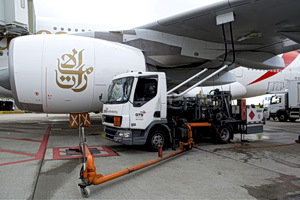
This time, it did pass quickly. The April spike that pushed oil to $120 a barrel and doubled jet fuel prices was short, and it landed at a point in the calendar that let airlines absorb part of the blow through hedging. Early fears of fuel shortages came to nothing. Had the disruption stretched on, the study suggests, the outcome could have looked very different.
Why the season still looks strong
For all the exposure, the headline from the survey is positive. Even at the worst of the crisis, hotels expected sales to rise about 3% in 2026, after 4.5% growth in 2025. That now looks cautious: the sector’s confidence index has climbed since the survey closed, as conditions settled.
The figure squares with the wider picture. European tourism is forecast to grow 3% to 4% this year, and flights at Greek airports for the May to August stretch are running 3.6% higher, against roughly 1.6% across Europe.
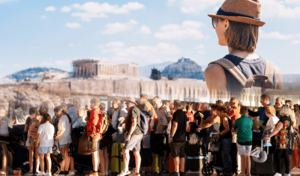
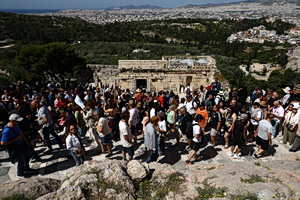
Several features of the Greek model helped it weather the spring. The country leans heavily on European visitors, who account for about 90% of foreign overnight stays, against roughly 80% for the Mediterranean as a whole, and Europeans proved eager to take summer beach trips close to home. Its concentration on sun-and-sea holidays played to that demand.
The pressure hotels did feel
None of that left the industry unscathed. The oil spike raised transport costs and fed inflation across Europe, eating into the disposable income of the markets that send Greece its tourists. Hotels felt the squeeze more sharply than the broader economy: 80% reported cost pressure and nearly half saw effects on demand and investment plans, against 70% and 30% respectively for small and medium-sized businesses overall.
What the bank concludes
The study’s broader point is that air connectivity has to be protected before the next crisis arrives, not after. It calls for a crisis-management framework built in advance, with clear triggers, agreed response protocols and room for targeted, temporary measures when conditions demand them.
That matters more now because the Greek tourism model is already in transition. The government is moving on chronic weaknesses such as spatial planning and infrastructure, and the industry itself is showing more maturity. Nearly half of hotels see the resilience levy, a charge directed toward upgrading local infrastructure, as a positive step, and many are working harder to attract visitors from more distant markets.
The warning underneath the optimism is that none of that pays off if the first link in the chain gives way. Without secure air connectivity, the bank argues, the whole effort to move Greek tourism upmarket stays hostage to the one factor the country has the least power to control.
Source: ot.gr